

Typically, when we think of “eating healthier,” we think “reduce fat intake.” And for many of us, this is sound advice: with excess fat (and processed sugar) intake being one of the primary contributors to our rampant obesity problem.1
However, the type of fat matters here.
Because while it’s smart to lower one’s trans fat intake, it’s also generally smart to increase one’s intake of beneficial fats, such as the heart-healthy omega-3s found in salmon or (the topic of this article) the brain-healthy medium-chain triglycerides (MCTs) found in coconut oil.
But what exactly are these MCTs that everyone seems to be throwing in their coffee now (à la “bulletproof” coffee) and what makes them so beneficial? Let’s read and find out!
Key Takeaways
- MCT oil is a concentrated form of medium chain triglycerides that the body rapidly converts into ketones for fast, clean energy.
- Compared with regular coconut oil, quality MCT oil focuses on the most beneficial C8 and C10 fats and leaves out less useful or irritating fractions.
- MCT oil can support keto, intermittent fasting, brain performance, exercise endurance, and appetite control when used in sensible daily servings.
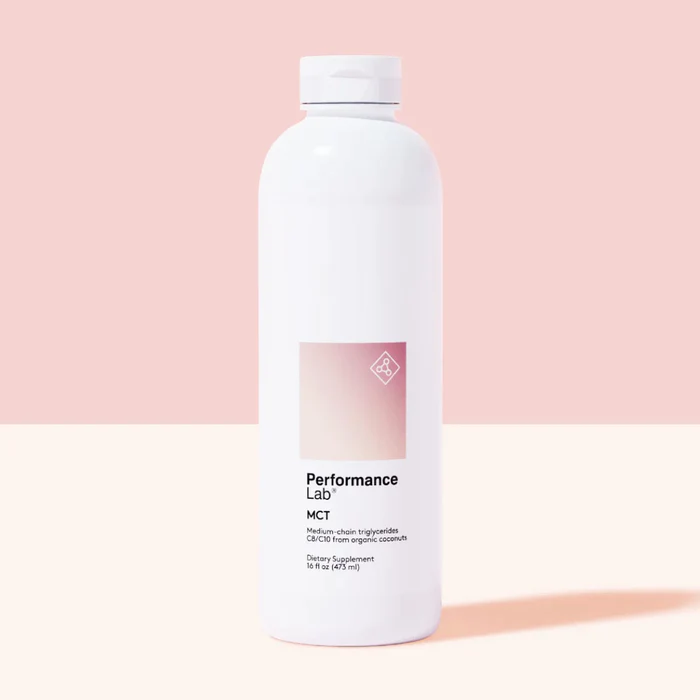
- Performance Lab® MCT delivers a pure C8 and C10 stack from organic coconut, making it an ideal “performance fuel” upgrade over standard oils.
What is MCT Oil?
Medium-chain triglyceride (MCT) oil is a group of saturated fats that, unlike long-chain saturated fats, aren’t stored as fat but rather converted into an energy fuel source known as ketones.2
As such, MCT oil is the perfect nutrient for keeping your appetite and energy levels in check, especially while trying to limit carb intake as part of, say, the keto diet or intermittent fasting.
Essentially, MCT oil acts as a sort of “performance fuel” that delivers fast-acting mental energy in support of a healthier fat-burning metabolism.
How is MCT Oil Sourced?
Medium-chain triglycerides can be found in various plant sources at various bioactive compositions. The two most notable MCT oil sources include coconut oil and palm kernel oil.
However, because palm kernel carries so few of the best MCTs (jump below to the “Four Types of Medium Chain Triglycerides” to learn which MCTs are the best) and because of the environmental issues associated with procuring and processing palm kernel oil, any MCT oil supplement worth its salt is sourced from organic coconut oil.
MCT Oil Sourced from Coconuts
On average, coconut oil comprises 90% saturated fats and 9% unsaturated fats. While, yes, saturated fats have a bad reputation among today’s nutritionists and health enthusiasts, coconut oil’s saturated fats differ from animal-based saturated fats, as coconut oil’s saturated fats are rich with beneficial MCTs—as well as the less beneficial long-chain triglycerides (LCTs).3
Roughly speaking, coconut oil’s triglyceride profile is 1% caproic acid (C6), 5% caprylic acid (C8), 7% capric acid (C10), and 42% lauric acid (C12). By extracting MCTs from coconut oil and filtering out all the unwanted unsaturated fats (including the unwanted MCTs: C6 and C12), a clean, pure MCT oil supplement essentially functions as a more improved Coconut Oil 2.0.
What Does MCT Oil Do?
Consuming approximately 20% of the body’s total energy, the brain is easily our most energy-demanding organ. This is why when our energy levels drop, specifically our glucose (the brain’s primary fuel source) levels, we feel a noticeable drop in cognitive performance.
Both brainpower and willpower take a hit in the absence of glucose (read: carb) energy, which is a constant struggle for those committed to the keto diet and/or intermittent fasting, especially while still trying to stay fit and active in the gym.
With MCT oil, you’re given an alternate fuel source to glucose that rapidly fuels brainpower with no follow-up metabolic comedown or crash.
By converting to ketones, an energy fuel source that can cross the blood-brain barrier (BBB), MCT oil drives the production of ATP in brain mitochondria, in addition to supporting mitochondrial health and appetite control.
What is the Difference Between MCT Oil and Coconut Oil?
Simply put, coconut oil is a natural dietary source of saturated fats including MCT oil, whereas MCT oil is strictly comprised of the beneficial medium-chain triglycerides found in coconut oil—minus the less beneficial long-chain triglycerides and other various unwanted nutritional components.
In other words, MCT oil is to coconut oil what choline is to eggs—the former is a constituent of the latter, but not vice versa.
With that in mind, not only is MCT oil more abundant in… well, MCTs (that’s literally all it is) than coconut oil but MCT oil is more readily metabolized and utilized as energy fuel than the MCTs in coconut oil, which dilutes its MCT oil bioactivities in a mix of various other less-easily-utilized saturated fats.4
Is MCT Oil or Coconut Oil Better?
Though there are superior and inferior MCT oil brands, MCT oil, in general, is the superior option over coconut oil, namely because MCT oil offers a more concentrated profile of the MCTs that matter most to ketosis and brain energy.
Coconut oil, on the other hand, contains all four MCTs at an ineffective ratio whose effects are diluted by coconut’s additional supply of long-chain triglycerides (LCTs), which tend to be stored as fat.
Long story short: MCT oil is better than coconut oil.
The Four Types of Medium Chain Triglycerides
While the short-chain triglycerides are too short and the long-chain triglycerides are too long, the medium-chain triglycerides are juuust right, hitting that Goldilocks “sweet spot” right in the middle. However, even the medium-chain triglycerides (MCTs) range from short MCTs and long MCTs.
In order from shortest to longest, based on carbon-chain length, the four MCTs are:
- C6 – Caproic Acid
- C8 – Caprylic Acid
- C10 – Capric Acid
- C12 – Lauric Acid
Naturally, with C8 and C10 comprising the middle of the medium-chain triglycerides, these are largely considered to be the best of the four MCTs, even though they comprise only roughly 5% (C8) and 7% (C10) of the natural MCT composition of coconut oil.
Avoid MCT Oils with C6 and C12
If you’re looking to enhance performance, whether mental or physical, the two best MCTs are C8 and C10. This, of course, means you’ll want to avoid C6 and C12 MCTs.
Respectively, caproic acid (C6) is typically avoided as it smells and tastes bad and comprises only a tiny (1%) portion of coconut oil, whereas lauric acid (C12) behaves similarly to long-chain triglycerides and, thus, is more likely to be stored as fat instead of burned as fuel.
Benefits of MCT Oil
An extremely versatile supplement, MCT oil can be added to your diet simply to increase your daily MCT intake or taken strategically to improve your mental and physical performance. In either case, the benefits of MCT oil target the following areas of health and fitness:
#1) Ketosis and Intermittent Fasting
Exercising, let alone doing anything, on an empty stomach is a difficult task. Yet, for those looking to burn excess fat via ketosis, the conversion of stored fat into ketones, and intermittent fasting, a scheduled dieting regimen that stimulates the metabolism via period fasting, this is a constant daily necessary struggle.
Fortunately, MCT oil can help on this end by promoting the use of “alternative” ketone energy fuel without breaking one’s ketosis or intermittent fast—and clinical research suggests it may even enhance one’s exercise endurance.5
#2) Nootropics and Brainpower
Nootropics, a natural class of cognitive enhancers, also boost brainpower through various mechanisms.
However, like many other nutrients and supplement types, nootropics come in water-soluble and fat-soluble forms, meaning that the fat-soluble nootropics may need to be taken with a meal or a fat source to be fully and efficiently absorbed into the body.
Of course, meals are out the question while you’re in the middle of an intermittent fast, hence why many nootropic enjoyers take their noots with a serving of MCT oil, which assists with fat-soluble nootropic absorption while also benefiting brainpower in its own way.
#3) Exercise and Weight Loss
A healthy carb stack, especially taken intra-workout (during exercise) is a smart way to prolong one’s exercise endurance and stamina before bottoming out.
Yet, entering exercise in a fasted state (i.e., in the absence of glucose) can make it difficult to find the motivation to work out at all. Especially for those who are trying to avoid carbohydrate energy fuel as a weight loss strategy to encourage stored fat-burning during exercise, not carb-burning.
By stoking a fat-to-ketone metabolism and promoting exercise endurance, pre-workout MCT oil can go a long way in enhancing one’s exercise-related fat loss efforts.
MCT Oil: Are There Any Side Effects?
If you’re sticking to a pure MCT oil, such as Performance Lab® MCT, that supplies only C8 and C10 MCTs sourced from 100% organic coconuts, the risk of side effects is virtually zero.
In general, MCT oil is one of the safer and all-around healthier supplements you can take to improve your daily performance. However, some digestive discomfort may occur if you:
- Exceed the recommended serving size
- Take an inferior MCT oil supplement with C6
Again, C6 (caproic acid) tends to taste bad and has a “burning sensation” on the throat, hence why it’s best to avoid it. Sticking to a daily serving of 1 tablespoon (15 mL) of pure C8/C10 MCT oil is widely recognized as a safe, yet effective, amount of MCT.
Can You Cook with MCT Oil?
Yes. While perhaps the most common dietary method of adding MCT oil to your meals is to use it as a condiment or dressing (e.g., mixed with your salad), you can also cook with MCT oil.
However, it’s important to note that many fats denature under high temperatures, and medium-chain triglycerides are no exception. As a cooking agent, MCT oil is stable up until 320 °F or 160 °C, which means it’s generally unwise to fry with MCT oil if you’re hoping to preserve the oil’s beneficial health effects.
Conclusion
Health noobs will tell you to “consume less fat.” Meanwhile, the real-deal health experts will tell you to “consume better fats.” And medium-chain triglyceride (MCT) oil certainly qualifies as a “better” fat—in fact, it’s one of the best.
But not all MCT oils are equal. Even as one of the better fats, there is a distinction between simply “good” MCT oil and “really good” MCT oil.
And then, of course, there is the best MCT oil you can buy: Performance Lab® MCT—a premium C8/C10 MCT oil stack sourced from 100% non-GMO organic-certified coconuts.
No additives or impurities—only clean, green MCTs. To learn more about what makes Performance Lab® MCT the best MCT oil supplement, click the button below.
Get the Best Deal on Performance Lab® MCT Here
References
- Shan Z et al. Trends in Dietary Carbohydrate, Protein, and Fat Intake and Diet Quality Among US Adults, 1999-2016.
- Jiang ZM et al. A comparison of medium-chain and long-chain triglycerides in surgical patients. Ann Surg. 1993 Feb; 217(2): 175-184.
- Boateng L et al. Coconut oil and palm oil’s role in nutrition, health and national development: A review. Ghana Med J. 2016 Sep; 50(3): 189-196.
- Norgren J et al. Ketosis After Intake of Coconut Oil and Caprylic Acid—With and Without Glucose: A Cross-Over Study in Healthy Older Adults. Front Nutr. 2020; 7: 40.
- Wang Y et al. Medium Chain Triglycerides enhances exercise endurance through the increased mitochondrial biogenesis and metabolism. PLoS One. 2018; 13(2): e0191182.