

Creatine is one of the most well-researched and effective sports supplements to exist today. It’s one of the best supplements to increase power, strength, and peak performance for any athlete at any level.
However, there are many different types of creatine, and finding the best type can be a challenge due to there being so many choices. You have many options, such as Creapure, creatine malate, kre-alkalyn, and creatine monohydrate, making it confusing to know which provides the best results.
These different creatine types can be cycled or selected based on your specific fitness goals and routines, as each type may offer unique benefits depending on your needs.
So, how can you determine which is the best form of creatine for you? Well, you’ve come to the right place…
This article weighs up the differences between kre-alkalyn and monohydrate, outlining which may be the better one to go for. We will also include some special mentions to help give you a more well-rounded perspective, as well as recommend a fantastic pre-workout that goes great with creatine.
Key Takeaways
- Creatine monohydrate remains the most researched, effective and cost-efficient form.
- Buffered creatines like Kre-Alkalyn are marketed for stability or less bloat; evidence shows similar outcomes to monohydrate.
- Loading is optional—daily 3–5 g reaches saturation over time.
- Hydration and consistent training drive most of the results you’ll feel.
- Stack selection depends on tolerance and budget more than headline claims.
Firstly, what is creatine and what does it do?
Creatine 101

Creatine is a non-essential dietary protein-like compound found naturally in the body and in some foods, such as meat and fish.
Creatine is made up of three amino acids – arginine, glycine, and methionine. Once ingested, creatine travels to the muscle cells and attaches to an energy phosphate, turning it into phosphocreatine (PCr), or creatine phosphate.
Through this process, creatine can then donate the PCr molecule, which causes a chemical reaction and creates ATP (adenosine triphosphate). This ATP production is the key process that enhances muscle performance, strength, and power by providing rapid energy for muscle contraction.
Thus, having more creatine in your muscle cells will lead to more ATP being produced, which comes in particularly useful during high-intensity activity. This then leads to gains in strength, power, speed, and muscle growth. In research, muscle biopsies are used to measure actual changes in muscle creatine content following supplementation. (1)
The primary benefit of creatine is improvements in strength and power output during resistance training. When creatine is taken alongside a resistance training program, it may help increase lean mass. Additionally, it has also been shown to have potential benefits for anaerobic running capacity and even cognitive performance. (2)
What is Creatine Monohydrate?

Creatine monohydrate is the most widely researched form of creatine, and notably the most effective in enhancing exercise performance, promoting muscle strength, and increasing lean mass.
It is the standard or 'regular creatine' used in most supplements, consisting of a creatine molecule bound to a single water molecule (creatine monohydrate).
Research has consistently shown that creatine monohydrate supplementation increases muscle creatine and phosphocreatine levels by a significant amount, thus enhancing anaerobic training capacity and increasing training volume. (3)
However, despite the much positive research in this area, creatine monohydrate does have a few rumoured drawbacks, though some of these have been debunked in recent years. Let's take a look at them...
Myths and Facts of Creatine Monohydrate
-
CREATINE CAN CAUSE STOMACH UPSET: POSSIBLY TRUE. Creatine may cause gastrointestinal distress such as bloating or cramping due to the conversion by-product, creatinine, as well as stomach issues, and stomach upset, especially at higher doses. (4)
-
CREATINE MONOHYDRATE REQUIRES A LOADING PHASE: PERSONAL CHOICE. Old advice suggests creatine monohydrate typically requires a creatine loading phase of 20g per day (split throughout the day) for 5-7 days to rapidly saturate muscle creatine stores.
However, this is not strictly true. A study examining loading versus maintenance doses of creatine concluded that muscle creatine levels increased the same (by around 20%) whether participants consumed 20g a day for six days or 3-5g a day for 28 days. It comes down to personal goals and choice.
"Accumulating evidence indicates that you do not have to ‘load’ creatine. Lower, daily dosages of creatine supplementation (i.e. 3-5 g/day) are effective for increasing intramuscular creatine stores, muscle accretion and muscle performance/recovery." (5)
-
YOU SHOULD CYCLE CREATINE MONOHYDRATE: NOT NEEDED. Earlier advice on creatine monohydrate recommended cycling to ensure the body didn't get used to it. (For instance, following a one-week loading phase, five weeks of maintenance, and 1-2 weeks off).
This is based on old evidence, and is not needed for most people. Recent studies show that continuous creatine is safe at recommended levels, and cycling isn't needed. Again, it becomes a personal choice.
"It has been recommended that due to the health benefits of creatine, individuals should consume about 3g/day of creatine in their diet particularly as one ages.
No evidence has suggested that muscle creatine levels fall below baseline after cessation of creatine supplementation; therefore, the potential for long-term suppression of endogenous creatine synthesis does not appear to occur." (6)
Additionally, the solubility of creatine monohydrate supplements is poor compared to Kre-Alkalyn, which dissolves perfectly in water and is considered superior in this regard.
Creatine monohydrate can also cause temporary water retention, leading to water weight gain or mild bloating, particularly during the loading phase. It's worth noting that this only tends to occur during the initial use of creatine and experts have concluded that it doesn't cause water retention in the longer term. (5)
Both creatine monohydrate and Kre-Alkalyn are generally considered safe for healthy adults when taken at recommended doses.
What is Kre-Alkalyn?

Kre-Alkalyn is a patented pH-corrected form of creatine, which was created to address the possible side effects associated with monohydrate, or creatinine. Kre-Alkalyn contains alkaline powder in order to adjust the pH balance, unlike many other forms of creatine which don’t have this.
Kre-Alkalyn represents a pH-buffered form of creatine designed to resist breakdown in the stomach's acidic environment, and is often marketed as having greater bioavailability and enhanced uptake compared to regular creatine monohydrate.
Likewise, Kre-Alkalyn is marketed as causing fewer digestive issues and less water retention compared to creatine monohydrate, making it a preferred option for those concerned about bloating.
Research doesn't yet prove this.
It is often taken in lower doses (1.5–3 grams per day).
CLINICAL STUDY ON KRE-ALKALYN
-
A 2012 study has been the most comprehensive study into Kre-Alkalyn so far.
-
Participants were given the buffered creatine for 28 days, and then assessed.
-
Using muscle biopsies, the study authors concluded that the buffered form of creatine increased muscle creatine content just as much as creatine monohydrate - but didn't exceed it.
-
The study also showed no discernible difference between the two forms in strength and power when tested.
-
Again, they also noted no differences in side effects between the two, and concluded there was no evidence that buffered creatine was safer than creatine monohydrate, despite anecdotal reports. (7)
One potential thing to consider - past research suggests gastrointestinal issues of creatine supplementation may be more to do with the dose than with the form. Taking 10g of creatine in one dose, for example, was proven to cause more stomach upsets and digestive issues than taking 5g in two doses. (8)
As such, Kre-Alkalyn's lower dosage may be why some users report that Kre-Alkalyn is gentler on the stomach and causes fewer digestive issues and less GI distress than creatine monohydrate.
Of course, this could potentially also be avoided if you skip the loading phase of creatine monohydrate.
In summary, Kre-Alkalyn does not require a loading phase, has minimal side effects, and is claimed - though is not proven - to be a more bioavailable form of creatine compared to monohydrate.
It may also be preferred during cutting phases to avoid the 'puffy' look associated with water retention from creatine monohydrate. Some formulations of Kre-Alkalyn may include ingredients that act as a lactic acid buffer to potentially delay muscle fatigue.
However, research on Kre-Alkalyn is limited and mixed, with most studies showing no clear advantage over standard creatine monohydrate. Its primary benefit is tolerability for those with significant digestive issues.
However, does this necessarily mean Kre-Alkalyn is the better form?
Creatine Monohydrate Vs Creatine Kre-Alkalyn
Kre-Alkalyn has its advantages, such as no need for a loading phase and benefits in enhancing exercise performance.
However, this does not necessarily mean it is the best form.
Creatine monohydrate may have some slight downsides, but ultimately it is the most inexpensive and proven type of creatine on the market.
It is also the most widely used form of creatine, and the form most used in research, which is a strong indication of its effectiveness and safety. (6, 9)
"Creatine monohydrate is the most effective ergogenic nutritional supplement currently available to athletes with the intent of increasing high-intensity exercise capacity and lean body mass during training" - Official position of the International Society of Sports Nutrition. (6)
Many, if not all, of the positive effects associated with creatine use (such as increases in muscle strength, size, and power) come from research on monohydrate. Creatine monohydrate has been shown to effectively increase lean muscle mass and improve overall performance.
Many manufacturers in recent times have made bold claims around their versions of creatine being more present in muscle. However since studies show that as much as 99% of high quality monohydrate can be delivered to your muscles anyway, there isn’t really much to improve on when it comes to bioavailability! (10)
Additionally, the effectiveness of Kre-Alkalyn is not yet widely researched, particularly when compared to monohydrate. However, you can definitely still get the gains from both of these forms of creatine!
Both forms of creatine have been studied for their impact on muscle creatine content, with research showing that they can promote significant changes in muscle creatine levels.
Both Kre-Alkalyn and creatine monohydrate are generally considered safe for healthy individuals when taken at recommended doses. Both forms may cause some gastrointestinal distress, but the severity is often related to the size of the dose rather than the specific form used.
Athletes may choose to cycle or switch between different creatine types, such as monohydrate and Kre-Alkalyn, depending on their fitness goals and routines.
Kre-Alkalyn Vs Creatine: Dosing and Safety

Let's take a look at dosing and any differences between creatine monohydrate and Kre-Alkalyn that may influence your choice...
Dosing of Creatine Monohydrate
As I already mentioned, traditional advice on creatine monohydrate typically suggested a loading phase, where you consume around 20 grams per day (split into 4 doses) for 5–7 days. (Or 0.3 g/kg/day for 3–5 days). This approach rapidly saturates your muscle cells with creatine, helping you experience strength gains and muscle growth more quickly.
After the loading phase, you transition to a maintenance dose of 3–5 grams per day to keep your muscle creatine content elevated.
However, more recent advice suggests just taking the 3-5g of creatine monohydrate per day from the start. Results may be slower but it eventually saturates your muscles with the same amount of creatine anyway. And you avoid large doses which can contribute to digestive upset.
CONCLUSION
While traditional loading protocols (≈0.3 g/kg/day for 3–5 days) saturate muscle creatine stores more rapidly, evidence shows that taking 3–5 g daily from the outset will also fully saturate muscle creatine over time.
Both approaches result in similar final muscle creatine levels, with the primary difference being the speed of saturation rather than overall effectiveness.
The International Society of Sports Nutrition in a 2017 position stand on creatine monohydrate concluded that:
-
Both short and long-term creatine supplementation (up to 30g/ day for up to five years) is 'safe and well-tolerated' among healthy people
-
Habitual creatine ingestion of 3g/ day, for example, may offer 'significant health benefits throughout life'. (6)
Dosing of Kre-Alkalyn
Kre-Alkalyn, on the other hand, is a pH-buffered form of creatine that is marketed as not requiring a loading phase.
Its dosing protocol is straightforward: simply take 1.5–3 grams per day, with no need for cycling or high initial doses. You can find this in powder or pill form. This dosing strategy is based on manufacturer recommendations and product labeling.
The theory is that the pH-buffered form of Kre-Alkalyn allows for more efficient absorption and utilization, so you can achieve the same results with a smaller dose and less risk of stomach discomfort.
However, it’s important to note that while the convenience of Kre-Alkalyn’s dosing protocol is appealing, the scientific evidence supporting its superiority is limited compared to the extensive research on traditional creatine monohydrate.
Most studies demonstrating significant muscle growth, strength gains, and performance benefits have used the traditional creatine monohydrate protocol. If you’re looking for a creatine supplement with a well-established track record and proven dosing strategy, creatine monohydrate remains the gold standard.
Cost and Value Analysis

When evaluating creatine supplements, cost and value are important factors to consider. Traditional creatine monohydrate is widely recognized as the most affordable and accessible option, with typical market costs often well under $0.30 per 5 g serving and many products around $0.15–$0.20 per serving.
This makes monohydrate substantially less expensive on a per-serving basis than many alternative creatine formulations. (11)
This makes it an excellent choice for athletes and fitness enthusiasts looking to increase muscle mass, lean muscle, and muscle strength without breaking the bank.
By comparison, Kre-Alkalyn products are typically priced higher on a per-serving basis. Retail listings and cost comparisons show many buffered creatine supplements falling in the roughly $0.20–$0.50+ per serving range, depending on brand and formulation, compared with much lower costs for basic creatine monohydrate
While Kre-Alkalyn claims to offer potential benefits such as reduced stomach discomfort and the convenience of skipping the loading phase, the scientific evidence supporting its superiority over traditional creatine monohydrate is not robust.
For most users, the additional cost may not translate into significantly better results in terms of lean muscle mass, muscle strength, or overall performance.
Given the extensive research backing traditional creatine monohydrate, it remains the most cost-effective and reliable option for those seeking to maximize muscle gains and strength.
Unless you experience significant stomach discomfort, traditional creatine monohydrate offers the best value for your investment in sports nutrition.
Special Considerations
While creatine supplementation is generally safe and effective for most people, there are certain situations where extra caution is warranted.
Individuals with pre-existing kidney or liver conditions are often recommended to consult a healthcare professional before starting any creatine supplement, including both creatine monohydrate and Kre-Alkalyn.
This is especially important because creatine is processed by these organs, and underlying health issues could increase the risk of complications.
That said, the International Society for Sports Nutrition says:
"While some have suggested that individuals with pre-existing renal disease consult with their physician prior to creatine supplementation in an abundance of caution, these studies and others have led researchers to conclude that there is no compelling evidence that creatine supplementation negatively affects renal function in healthy or clinical populations." (6)
However, it’s still important to choose high-quality creatine products from reputable brands to avoid contaminants or banned substances, particularly for athletes who are subject to drug testing.
Pregnant or breastfeeding women should also be cautious, as there is limited research on the safety of creatine supplementation in these populations.
Ultimately, the best approach is to prioritize scientific evidence, consult with a healthcare professional, and select a creatine supplement that aligns with your individual health needs and performance goals.
Whether your focus is on muscle growth, strength and power output, or overall performance, making an informed decision will help you get the most out of your creatine protocol.
ALTERNATIVE TO CREATINE
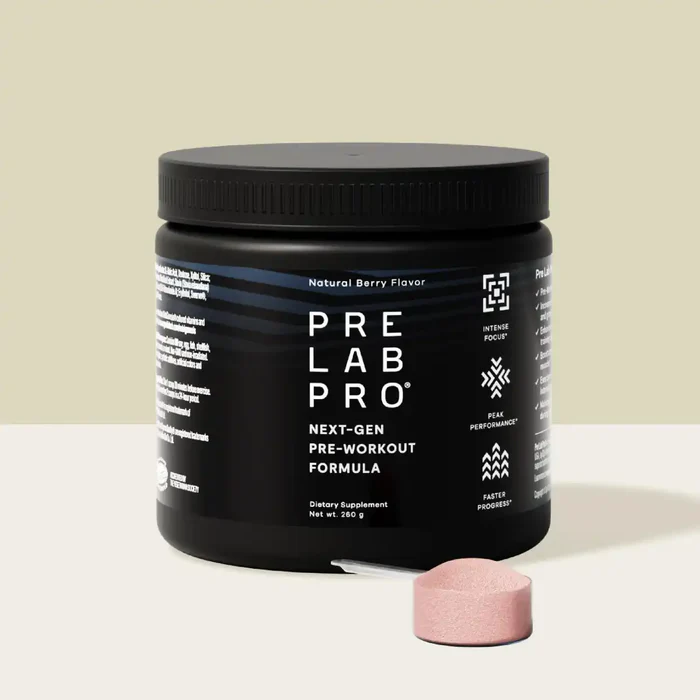
If you're looking for an alternative to creatine altogether, you may want to consider a pre workout that includes strong Nitric Oxide boosters to turbocharge your workout instead of creatine. We recommend Pre Lab Pro.
What About Other Forms of Creatine?

Creatine Hydrochloride (HCL)
The main advantages with this form of creatine is that it holds less water, thus has minimal bloating side effects, and is often taken in lower doses, which may help reduce the risk of digestive side effects.
While many manufacturers market this type as superior to monohydrate, there are not many claims to back this up. Though, it may be worth a try if monohydrate does give you side effects such as bloating and GI issues. When choosing a creatine supplement, consider your individual goals, preferences, and workout intensity to find the best fit for your needs.
Creatine Nitrate
The primary benefit of creatine nitrate is that is requires a smaller dose. Though, some claims have led people to believe that it provides additional benefits due to the nitrate molecule.
However, once again, research has not quite fulfilled these claims.
The Bottom Line: Which is the Best Creatine?
Creatine is one of the most popular and widely-recommended sports supplements on the market today. With so much research backing up its efficacy and safety, it is often a no-brainer supplement for athletes of any level.
Creatine supplementation offers numerous benefits for athletes, including increased strength, quicker recovery times, and improvement in cognitive function. (12, 13)
Creatine is especially popular among those engaging in high-intensity training, such as CrossFit workouts, due to its positive impact on performance, endurance, and recovery.
However, there are many different types of creatine which each claim to have certain advantages over the most popular and well-researched form, monohydrate.
Body composition goals, such as maintaining muscle definition or minimizing water retention, can also influence the choice of creatine type.
While creatine monohydrate does have minor downfalls, such as potential side effects, this is not particularly true for every user, nor does it impact its actual effectiveness on muscle strength and power.
Other popular forms of creatine include kre-alkalyn, creatine hydrochloride, and creatine nitrate, which all claim to have smaller advantages over monohydrate, such as no required loading phase, minimal side effects, and additional benefits.
However, there is no solid research to back up many of these claims, while monohydrate has truly been shown as the most inexpensive and effective form.
Creatine monohydrate has high solubility and bioavailability, making it very efficient and a tough form to beat!
While creatine is a well-known and effective supplement for enhancing muscle strength and performance, if you’re looking to truly maximize both physical and mental performance, Performance Lab® Pre Lab Pro® is creatine’s perfect partner.

Packed with high-quality, 100% plant-based ingredients like the Setria® Performance Blend, beetroot powder, and a perfectly calibrated ratio of L-Theanine and caffeine, Pre Lab Pro® not only supports enhanced nitric oxide production for better muscle oxygenation and strength but also sharpens focus and mental clarity.
With additional benefits from NutriGenesis® vitamins and minerals to maintain electrolyte balance and fuel recovery, Pre Lab Pro® is the all-in-one pre-workout solution for peak performance.
References
- Cleveland Clinic. Creatine. Available at: https://my.clevelandclinic.org/health/treatments/17674-creatine . Accessed January 2026.
- Wang Z, Qiu B, Li R, Han Y, Petersen C, Liu S, Zhang Y, Liu C, Candow DG, Del Coso J. Effects of creatine supplementation and resistance training on muscle strength gains in adults under 50 years of age: a systematic review and meta-analysis. Nutrients. 2024.
- Wax B, Kerksick CM, Jagim AR, Mayo JJ, Lyons BC, Kreider RB. Creatine for exercise and sports performance, with recovery considerations for healthy populations. Nutrients. 2021;13(6):1915. https://doi.org/10.3390/nu13061915 .
- Wagner JC, Faulkner M, Faulkner W, Mullins F. Gastrointestinal and fluid retention symptoms associated with creatine monohydrate with and without loading dose over 28 days of supplementation. Journal of Cardiovascular and Cardiology. 2025. https://doi.org/10.61440/JCC.2025.v3.52 .
- Antonio J, Candow DG, Forbes SC, Gualano B, Jagim AR, Kreider RB, Rawson ES, Smith-Ryan AE, VanDusseldorp TA, Willoughby DS, Ziegenfuss TN. Common questions and misconceptions about creatine supplementation: what does the scientific evidence really show? Journal of the International Society of Sports Nutrition. 2021;18(1):13. https://doi.org/10.1186/s12970-021-00412-w .
- Kreider RB, Kalman DS, Antonio J, et al. International Society of Sports Nutrition position stand: safety and efficacy of creatine supplementation in exercise, sport, and medicine. Journal of the International Society of Sports Nutrition. 2017;14:18. https://doi.org/10.1186/s12970-017-0173-z .
- Jagim AR, Oliver JM, Sanchez A, et al. A buffered form of creatine does not promote greater changes in muscle creatine content, body composition, or training adaptations than creatine monohydrate. Journal of the International Society of Sports Nutrition. 2012;9:43.
- Ostojic SM, Ahmetović Z. Gastrointestinal distress after creatine supplementation in athletes: are side effects dose dependent? Research in Sports Medicine. 2008;16:15-22. https://doi.org/10.1080/15438620701693280 .
- Pashayee-Khamene F, Heidari Z, Asbaghi O, Ashtary-Larky D, Goudarzi K, Forbes SC, Candow DG, Bagheri R, Ghanavati M, Dutheil F. Creatine supplementation protocols with or without training interventions on body composition: a GRADE-assessed systematic review and dose-response meta-analysis. Journal of the International Society of Sports Nutrition. 2024;21(1):2380058.
- Stimpson SA, Turner SM, Clifton LG, Poole JC, Mohammed HA, Shearer TW, Waitt GM, Hagerty LL, Remlinger KS, Hellerstein MK, Evans WJ. Total-body creatine pool size and skeletal muscle mass determination by creatine-(methyl-d3) dilution in rats. Journal of Applied Physiology. 2012;112(11):1940-1948.
- Fazio C, Elder CL, Harris MM. Efficacy of alternative forms of creatine supplementation on improving performance and body composition in healthy subjects: a systematic review. Journal of Strength and Conditioning Research. 2022;36(9):2663-2670. https://doi.org/10.1519/JSC.0000000000003873 .
- Avgerinos KI, Spyrou N, Bougioukas KI, Kapogiannis D. Effects of creatine supplementation on cognitive function of healthy individuals: a systematic review of randomized controlled trials. Experimental Gerontology. 2018;108:166-173.
- Rawson ES, Volek JS. Effects of creatine supplementation and resistance training on muscle strength and weightlifting performance. Journal of Strength and Conditioning Research. 2003;17(4):822-831.