


You’ve probably been told at some point that you should be taking an omega-3 supplement, regardless of whether you eat animal products or not.
And there’s merit behind that.
Omega-3 fatty acids play important roles throughout the body, including supporting skin, joint, brain and cardiovascular health. Many people choose to supplement omega-3s to help support their intake alongside a balanced diet.
Omega-3 fatty acids are important nutrients involved in many aspects of human health, but recently there’s been a lot of controversy over the efficacy of fish oils.
When choosing a supplement, it's important to consider your dietary preferences and whether you consume animal products, plus your opinion on environmental concerns. This will help determine whether fish oil or a plant-based alternative is more suitable for your health goals.
Whichever one you’re considering, here’s what you need to know about plant-based Omega 3s vs Fish Oils, including the benefits of plant based sources and plant based foods as alternatives to traditional fish oil supplements.
Key Takeaways
- Omega-3 fats EPA and DHA play important roles in brain, cardiovascular, immune and nervous system function, and are considered essential nutrients and essential fats that the body cannot produce on its own.
- Fish oils provide EPA and DHA, but can come with issues such as sustainability concerns, contaminants, odor and oxidization.
- Most plant foods supply ALA, which converts poorly to EPA and DHA, so they are not ideal as your only omega-3 source. Examples of plant-based sources include chia seeds and hemp seeds.
- Algae-based omega-3 supplements deliver preformed EPA and DHA directly from the original marine source, avoiding the "fish middleman" and supporting sustainability.
- The article explains what to look for in an omega-3 supplement, highlighting clean, algal-sourced formulas like Performance Lab® Omega-3.

What Are Omega-3s?
Omega-3s are a type of polyunsaturated fatty acid essential to human health. They are considered both essential nutrients and essential fats, meaning they play a vital role in supporting overall well-being.
They are found in both plants and animals (classed as functional foods that potentially offer additional health benefits), but the human body cannot synthesize them on its own, hence why they are called “essential fatty acids,” abbreviated to EFAs.
The key benefits of omega-3s include supporting cardiovascular health, cognitive function, and a healthy inflammatory response, all of which are crucial for maintaining optimal health.
While several types of omega-3s exist, the two we commonly study are EPA (eicosapentaenoic acid) and DHA (docosahexaenoic acid). Alpha-linoleic acid (ALA) is another form (found in plant foods). More on this later. (5)
What's This About Plant-Based Omega 3 Supplements?

This is probably a bit confusing for you because if you’re like the other 90% of the population who doesn’t know much about essential fatty acids (EFAs) such as Omega 3s, you probably are only aware of fish oils as the main supplemental source.
But it’s not the only one.
Plant-based (vegan) omega 3 supplements are giving fish oils a run for their money.
Most plant essential fatty acids you probably know of come in the form of alpha-linoleic acid (ALA), the third most commonly recognized EFA.
In order to be used by the body, ALA is converted into EPA and DHA.
However, conversion of ALA into EPA and DHA is relatively limited in humans, which may make it difficult to rely on ALA alone for optimal EPA and DHA status. (6, 7) However, there is a solution...
Here’s where things get interesting: algae oil.
Algae-based omega-3 supplements are one of the newest additions to the supplement market, and they may be one of the best. Algae oil is gaining popularity as a sustainable and plant-based alternative to fish oil, providing a direct source of EPA and DHA without the need for fish.
Certain species of algae are rich in the two essential fatty acids, EPA and DHA, and they are the producers of it, not the fish. Algae oil provides direct EPA and DHA, bypassing the need for conversion from ALA, which is especially beneficial for those seeking effective Omega-3 supplementation.
Additionally, algae oil is produced in controlled environments, minimizing contamination risks from heavy metals and ocean pollutants, and supporting sustainability as a renewable Omega-3 source.
What Are Fish Oils?

Exactly like the name suggests, fish oils are extracted from the tissue of cold-water fatty fish and currently represent one of the most prominent sources of omega-3s on the market. Fish oil production relies on fishing practices that can have a significant environmental impact, as large-scale harvesting of fish may harm marine ecosystems.
But, of course, they’re not suitable for people following a plant-based (vegan) diet, for those with fish allergies, or anyone who wants to avoid fish-derived products.
Oftentimes, fish oils are derived from various species of fatty fish, including sardines, mackerel, and anchovies, or you may have a single source from something like krill. Overfishing and depletion of fish populations are growing concerns with fish oil production, while plant-based omega-3 sources like algae do not rely on fishing practices and are considered more sustainable.
Interestingly, though, fish don’t inherently contain omega-3s.
When fish consume phytoplankton that consumed microalgae, omega-3s accumulate in their tissues, which is how we make “fish oil”. Many people take fish oil due to the association between fish consumption and heart health.
This is why many people consider algae-based omega-3s an appealing alternative. Why use the “middle man” when you can buy direct from the source?

Learn more about our Performance Lab Omega 3 sourced from algae
5 Reasons Why You Need Essential Fatty Acids Such as Omega 3s
If you're going to pay attention to any part of this article, this is it.
Due to the drastically skewed ratios of omega-3 to omega-6 fats in our diet, essential fatty acids are important components of a balanced diet, whether you choose to get them from plants or marine sources.
Omega 6 vs Omega 3
Wondering about the difference between Omega 6 and Omega 3? Typical modern diets are much higher in the former, due to fried and processed foods, baked goods, refined vegetable oils and other items standard in the American diet.
That can be a problem because excessively high levels of Omega 6 plus low levels of Omega 3 can cause inflammation, which may contribute to an imbalance in inflammatory processes.
Note that Omega 6 fats still play an important role in our health, but balance is important.
Why are Omega-3 fatty acids useful for our health? Let's find out...
1. Omega 3s May Boost Brain Health and Cognitive Function
DHA is an important structural component of the brain and is a major component of brain tissue, being taken up by the brain preferentially over other fatty acids. It’s necessary to both growth and development of the brain, supporting cognitive health and brain health, as well as learning abilities.
Decreased amounts of brain DHA have been associated with cognitive decline during aging. (1). DHA is therefore important for brain health, supporting cognitive function, mental health and memory. (8, 9)
2. Omega 3s May Have Cardiovascular Benefits and Support your Heart
Omega-3 fatty acids, particularly EPA and DHA, have been studied for their role in supporting cardiovascular health, including helping to maintain healthy blood pressure already within the normal range. (10, 11)
3. Support Immune Function and Healthy Inflammatory Response
Omega-3 fatty acids have been studied for their role in supporting a healthy inflammatory response, including effects on markers such as CRP, TNF-α, IL-6, and IL-1, all markers of inflammation.
As essential fats that the body cannot produce on its own, they have been researched for support of various inflammatory conditions. These essential fats have also been studied for their potential role in supporting joint comfort and exercise recovery. (2, 12, 13)
4. Supports Nervous Function
Omega-3 fatty acids are a critical structural component of human cell membranes, particularly in nerve cells. (2).
DHA, specifically, is present in large amounts in neuron membrane phospholipids, where it is involved in proper function of the nervous system. (3)
5. Supports Eye Health
DHA is highly concentrated in the retina and plays an important structural role in eye health. Some research suggests omega-3 fatty acids may help support retinal health during aging.(14)
Is Omega 3 the same as Fish Oil?
What's Better: Plant Based Omega 3 or Fish Oil?

When comparing plant-based omega-3 supplements with fish oil, it's important to understand the key differences and key benefits of each source.
Fish oil typically provides EPA and DHA directly, while plant-based options offer a vegan-friendly alternative, albeit traditionally in the less effective ALA format. Algae-based Omega 3, of course, is the exception and avoids this issue, delivering EPA and DHA direct.
Both marine-based and plant-based sources support cardiovascular health, cognitive function, and inflammation reduction, but their unique properties and origins set them apart.
When choosing between fish oil and plant-based omega-3s, consider your dietary restrictions and health goals, as these factors can influence which supplement best fits your needs.
Additionally, ethical considerations and environmental impact play a significant role in this decision: plant-based omega-3s are generally more sustainable and align with values focused on reducing harm to marine ecosystems.
The Environmental Impact and Other Problems with Fish Oils
When you look at commercial marine based omega-3 supplements, you come into contact with a few problems. (2). Quality matters greatly in nutritional supplements, so it is recommended to choose products that are third-party tested for purity and potency:
-
Lack of sustainability – Overfishing and bycatch are two huge problems associated with the commercial fishing industry. The number of overfished stocks has been steadily increasing since the 1950s.
-
Contaminants – Depending on sourcing and purification methods, fish may contain environmental contaminants such as mercury, pesticides, or PCBs, which can be reduced through proper refining processes.
-
Odor – It’s no question that fish has an odor and some lower quality fish oil supplements may have one too. Some people also experience a fishy taste or aftertaste.
-
Oxidization – EFAs are incredibly delicate and depending on the processing and storage method, can oxidize before they even reach your mouth. Not only does this add to the smelly odor, but oxidation may affect product quality and freshness.
Fish oil supplementation may also carry mild digestive issues such as burping or stomach upset in some individuals. Fish oil capsules may also have a fishy aftertaste.
In higher doses, fish oil may have a mild blood-thinning effect, which may be a concern for those on blood thinning medications. Consult your healthcare provider before use. (15-17)
Why You Should Look Towards Algae Oil Omega 3 Supplements

As I discussed briefly above, the problem with most plant-based dietary sources of EFAs (nuts and seeds) is that in order to be useful for your body, they have to be converted.
As a reminder, the main form of omega-3 fatty acids found in plants is called alpha-linolenic acid (ALA), which has a conversion rate of around 5-10% to EPA and below 5% to DHA… not very high, right? (4, 6)
ALA Conversion Statistics
One study often cited (2002) reported an ALA to EPA conversion rate of 21% approximately among young women, with a 9% DHA conversion. The researchers theorized that estrogen may be responsible for the higher rates in some way. However, these figures have not been reproduced and other studies show much lower conversion rates. (7)
As we know, vegan omega-3 supplements derived from algae oil don't have that problem. They offer a direct source of EPA and DHA, supporting heart and brain health, particularly suitable for those following a plant-based diet.
As one of the most sustainable options for omega-3 fatty acids, algal oil provides a lot of possibility for phasing out fish oils.
Algae oil is considered a sustainable omega-3 source because it can be produced using renewable resources in controlled environments, minimizing the risk of contamination.
As I mentioned, microalgae are the initial producers of EPA and DHA in the marine food chain, so if fish can’t produce EPA and DHA, why wouldn’t you skip the seafood and go directly towards the source of omega-3s? (2)
In addition to this, they also thrive in number of environmental conditions, making them much more adept to sustainable growth. Side effects from vegan omega-3 supplements are rare but may include mild digestive discomfort in some individuals.
What To Look For In An Omega-3 Supplement
First and foremost, you want a quality supplement. Always consult a healthcare provider before starting any new supplementation, especially if you have health conditions, are pregnant, or are taking medication.
You can find essential fatty acids that range from extremely cheap to “I definitely can’t afford these for more than a month,” but in either case, opt for the highest quality for your financial means. Quality matters: look for third-party tested products to ensure purity and potency. All Performance Lab products are third-party certified.
Also pay attention to the sourcing of your oils. Fish oils are typically derived from fatty fish, and quality can vary depending on sourcing and purification methods. Some products may have a noticeable aftertaste, and concerns have also been raised around potential contaminants and environmental impact associated with certain fishing practices.
Best Algae-Based Omega 3 Supplement (Best Algal Oil Supplement)
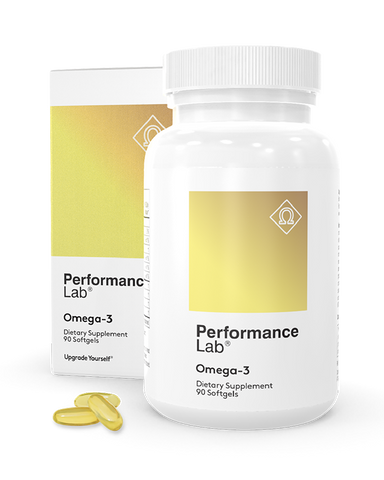
Algae represents a sustainable alternative source of EPA and DHA and is found in Performance Lab Omega-3.
Our Omega 3 supplies EPA and DHA directly from algae, the original source, in a controlled and sustainably sourced format. Meaning there is no need to rely on ALA conversion first.
It's clean, third-party certified, allergen-free, and more environmentally friendly and sustainable. Our vegan capsules ensure Performance Lab Omega 3 is 100% vegan friendly.

Frequently Asked Questions
What is the main difference between plant-based omega-3 and fish oil?
Fish oil provides EPA and DHA directly from fish, while plant-based omega-3s usually provide ALA. Algae-based omega-3 is the exception, delivering EPA and DHA directly without the need for conversion.
Can the body convert plant-based omega-3 (ALA) into EPA and DHA?
Yes, but the conversion rate is relatively limited in humans, which means ALA alone may not provide optimal levels of EPA and DHA.
Why do people choose algae-based omega-3 supplements?
Algae-based omega-3s provide direct EPA and DHA from a plant-based source, making them suitable for vegan diets and a sustainable alternative to fish-derived oils.
Is fish oil still a good source of omega-3?
Fish oil remains a widely used source of EPA and DHA, but quality can vary depending on sourcing, purification, and freshness.
References
- Horrocks, L. A., and Y. K. Yeo. “Health Benefits of Docosahexaenoic Acid (DHA).” Pharmacological Research, vol. 40, no. 3, Sept. 1999, pp. 211–225.
- Adarme-Vega, T. C., D. K. Lim, M. Timmins, F. Vernen, Y. Li, and P. M. Schenk. “Microalgal Biofactories: A Promising Approach Towards Sustainable Omega-3 Fatty Acid Production.” Microbial Cell Factories, vol. 11, 2012, p. 96.
- Swanson, D., R. Block, and S. A. Mousa. “Omega-3 Fatty Acids EPA and DHA: Health Benefits Throughout Life.” Advances in Nutrition, vol. 3, no. 1, 2012, pp. 1–7.
- Gerster, H. “Can Adults Adequately Convert Alpha-Linolenic Acid (18:3n-3) to Eicosapentaenoic Acid (20:5n-3) and Docosahexaenoic Acid (22:6n-3)?” International Journal for Vitamin and Nutrition Research, vol. 68, no. 3, 1998, pp. 159–173.
- “Omega-3 Fatty Acids.” Office of Dietary Supplements, National Institutes of Health, https://ods.od.nih.gov/factsheets/Omega3FattyAcids-HealthProfessional/.
- “Essential Fatty Acids.” Linus Pauling Institute, Oregon State University, https://lpi.oregonstate.edu/mic/other-nutrients/essential-fatty-acids.
- Burdge, G. C., and S. A. Wootton. “Conversion of α-Linolenic Acid to Eicosapentaenoic, Docosapentaenoic and Docosahexaenoic Acids in Young Women.” British Journal of Nutrition, vol. 88, no. 4, 2002, pp. 411–420.
- Chang, C. Y., D. S. Ke, and J. Y. Chen. “Essential Fatty Acids and Human Brain.” Acta Neurologica Taiwanica, vol. 18, no. 4, 2009, pp. 231–241.
- Liao, Y., B. Xie, H. Zhang, et al. “Efficacy of Omega-3 PUFAs in Depression: A Meta-Analysis.” Translational Psychiatry, vol. 9, 2019, p. 190. https://doi.org/10.1038/s41398-019-0515-5.
- Conquer, J. A., and B. J. Holub. “Supplementation with an Algae Source of Docosahexaenoic Acid Increases (n-3) Fatty Acid Status and Alters Selected Risk Factors for Heart Disease in Vegetarian Subjects.” The Journal of Nutrition, vol. 126, no. 12, 1996, pp. 3032–3039.
- “Omega-3 Supplements: What You Need to Know.” National Center for Complementary and Integrative Health, NIH, https://www.nccih.nih.gov/health/omega3-supplements-what-you-need-to-know.
- Oppedisano, F., et al. “The Anti-Inflammatory and Antioxidant Properties of n-3 PUFAs: Their Role in Cardiovascular Protection.” Biomedicines, vol. 8, no. 9, 2020, p. 306. https://doi.org/10.3390/biomedicines8090306.
- Krupa, K. N., K. Fritz, and M. Parmar. “Omega-3 Fatty Acids.” StatPearls, StatPearls Publishing, 2026. https://www.ncbi.nlm.nih.gov/sites/books/NBK564314/.
- Senapati, S., M. Gragg, I. S. Samuels, V. M. Parmar, A. Maeda, and P. S. Park. “Effect of Dietary Docosahexaenoic Acid on Rhodopsin Content and Packing in Photoreceptor Cell Membranes.” Biochimica et Biophysica Acta (BBA) - Biomembranes, vol. 1860, no. 6, 2018, pp. 1403–1413.
- European Food Safety Authority (EFSA) Panel on Biological Hazards. “Scientific Opinion on Fish Oil for Human Consumption: Food Hygiene, Including Rancidity.” EFSA Journal.
- Albert, B. B., D. Cameron-Smith, P. L. Hofman, and W. S. Cutfield. “Oxidation of Marine Omega-3 Supplements and Human Health.” BioMed Research International, 2013, p. 464921. https://doi.org/10.1155/2013/464921.
- EFSA Panel on Contaminants in the Food Chain (CONTAM) et al. “Assessment of a Decontamination Process for Dioxins and Dioxin-like PCBs in Fish Oil by Physical Filtration with Activated Carbon.” EFSA Journal, vol. 15, no. 7, 2017, e04961. https://doi.org/10.2903/j.efsa.2017.4961.