

Omega-3 supplements are a hot topic in the nutrition world.
They’re involved in everything from supporting inflammation balance and athletic recovery, to supporting cognitive function and long-term health.
One of the most talked-about omega-3 supplements is fish oil, but it’s not the only one.
There are some great sources of plant-based omega-3s that are suitable for a vegan diet or anyone following a plant-based eating pattern. And bonus: they're are also rich in other essential nutrients, often a concern when excluding animal products or dairy foods from your diet.
Helping you keep to a healthy diet.
Key Takeaways
- Omega 3 fatty acids support heart health, brain function, inflammation balance, and long term wellbeing.
- Plant foods like flaxseeds, chia seeds, walnuts, algae, and certain oils provide vegetarian sources of omega 3s.
- Most plant sources supply ALA, which the body must convert into EPA and DHA, and this conversion is limited for many people.
- Combining a plant rich diet with an algae based omega 3 supplement is an effective way for vegetarians and vegans to reach optimal EPA and DHA levels.

What Is An Omega-3?

Omega-3s are a group of essential fatty acids that are a type of polyunsaturated fats (not to be confused with saturated fats), making them a good source of essential nutrients, including certain vitamins important for health and development.
They are fats that cannot be produced within the body and therefore must be obtained through diet or a supplement.
To be specific, there are three types of omega-3 fatty acids. These are: eicosapentaenoic acid (EPA), docosahexaenoic acid (DHA), and alpha-linolenic acid (ALA).
The first two are commonly sourced from fish tissue, while the third is sourced from plants. (10)
The Problem With Conventional Omega-3 (Fish Oil) Supplements
We’ve mentioned it before, but there’s quite a substantial body of research discussing some of the limitations and concerns associated with conventional fish oil supplements.
While oily fish and fatty fish like salmon, sardines, and mackerel are common sources of omega-3s, fish consumption and fish oil supplements can also raise questions around quality, oxidation, and sustainability.
Here are some of the main concerns:
-
Contamination: Fish and fish oil products can contain environmental contaminants such as heavy metals, pesticides, PCBs, and other pollutants depending on sourcing, water quality, and manufacturing standards. While high-quality fish oils are purified and tested to meet safety regulations, product quality can vary significantly between brands.
-
Oxidation: Essential fatty acids are delicate fats that are highly susceptible to oxidation when exposed to heat, light, and air during processing or storage. Oxidised oils may develop unpleasant flavours and reduced product quality if not properly manufactured and stored.
-
Sourcing/sustainability: Global demand for seafood and fish oil has raised ongoing concerns around overfishing, marine ecosystem disruption, and bycatch within parts of the commercial fishing industry. Choosing sustainably sourced products and certified fisheries may help reduce environmental impact.
-
Odour: For people who dislike seafood, fish oil supplements can sometimes have a strong taste or smell. Lower-quality or oxidised products may also contribute to the “fishy burps” commonly associated with fish oil supplements. (1, 11-13)
Health Benefits of Omega 3

Getting enough omega-3s daily, particularly EPA and DHA, is important for overall health and wellbeing. They’re involved in:
-
Cell membrane structure
-
Nervous system function
-
Immune function
-
Supporting a healthy inflammatory response
-
Brain health
-
Cognitive function
-
Eye health
-
Pregnancy and fetal development
-
Heart health
-
Cardiovascular health
-
Healthy ageing
-
Overall wellbeing (14-17)
Omega-3 fatty acids support cardiovascular health and healthy triglyceride levels and may help support healthy blood pressure already within the normal range.
Omega-3s help regulate inflammation by reducing pro-inflammatory signaling molecules, which which may help support a healthy inflammatory response. Omega-3 fatty acids are essential for maintaining heart, brain, kidney, eye, and skin health.
Research suggests that omega-3 fatty acids play an important role in brain development, functioning, and aging, with low omega-3 intake associated with poorer cognitive and mental wellbeing outcomes in some studies. (18)
Omega 6 vs Omega 3
Modern diets are often much higher in omega 6 fatty acids than omega 3, largely due to increased consumption of fried foods, processed food, and refined vegetable oils such as sunflower oil and soybean oil.
While omega 6 fats are still essential for the body and play important roles in normal health, excessively high levels combined with low omega 3 intake may contribute to inflammation and other risk factors associated with chronic diseases.
For those following a plant based diet, maintaining a healthier balance between omega 3 and omega 6 fats by prioritising whole plant foods, leafy greens, seeds, nuts, and minimally processed foods can help support brain health, heart health, and overall wellbeing. (19)
The Role of ALA
When people talk about omega-3s, they’re not generally referring to ALA, they’re talking about EPA and DHA. But even so, ALA still plays a role in the body.
ALA can be used as an energy source, and small amounts may also contribute to other biological functions. To be used for something other than fuel, it has to be first converted to EPA and DHA, which is not a very efficient process (more on this below).
But without conversion, ALA is used as an energy source just as any other fat would be, or stored.
Some rodent studies have also suggested that ALA could be beneficial for improving cardiovascular disease risk factors, as it helps to lower LDL. (2, 20).
Whether this translates to humans, however, is unknown.
The Best 7 Plant-Based Sources of Omega-3s

1. Chia Seeds
Of all the known food sources, chia seeds are the powerhouse of essential fatty acids, with about 65% coming from omega-3 and 19% coming from omega-6. (3).
Chia seeds are an excellent plant-based source of ALA omega-3s, provide about 5 grams of protein, and contain high levels of fiber per serving. Per ounce, chia seeds contain over 5.0g of omega-3s. (5.)
2. Hemp Seeds
Hemp seeds and hemp seed oil are a source of both omega-3 (ALA) and omega-6 (LA) fatty acids, typically in a ratio of around 3:1 omega-6 to omega-3. This represents a more balanced fatty acid profile compared to many common vegetable oils, which are often much higher in omega-6 fats relative to omega-3. (4).
Per tablespoon, hemp seeds contain about 2.6g of ALA. (5).
3. Walnuts
On an ounce per ounce basis, walnuts contain more omega-3s than salmon, however, that is ALA. Walnuts are a type of nut rich in omega-3s and can be enjoyed as a snack or added to trail mix for a convenient source of ALA.
Per cup, walnuts contain around 3.4g of ALA. (5). But it’s not just omega-3s that make walnuts beneficial. They’re also a concentrated source of copper and manganese.
4. Flaxseeds
Flax is known as a great source of fiber, but it’s also an excellent source of omega-3 fatty acids. A tablespoon of flaxseeds provides about 2.4 grams of ALA omega-3s.
Pure flaxseed oil is your best bet for ALA, with approximately 7.3g of ALA per tablespoon. (5).
While flaxseeds are another great option, they often pass through the digestive tract undigested unless consumed ground. Using ground flaxseed is recommended for better absorption and nutrient availability.
5. Edamame
Edamame might not seem like it’s rich in omega-3s, but per cup, it contains about 0.55g of ALA. (5).
Not to mention, it’s also a great source of complete protein (contains all nine essential amino acids), fiber, folate, and vitamin K.
6. Purslane
Purslane is probably something you’ve never heard of before, but is a small edible succulent that grows around the world due to its ability to grow in poor soil conditions.
Commonly thought of as a weed, it’s surprisingly high in omega-3s, both ALA and trace amounts of EPA.
It contains up to five times more omega-3 than spinach, with approximately 4mg per gram of fresh weight.
And interestingly enough, it also contains small amounts of EPA - 1mg per 100 grams of fresh purslane. (6).
It’s also an excellent source of alpha-tocopherol (vitamin E), ascorbic acid (vitamin C), beta-carotene, and glutathione (antioxidant). (7).
7. Algae Oil for DHA and EPA
Algae and other seaweeds are arguably one of the best sources of omega-3 fatty acids on a plant-based diet, and even if you eat fish, it provides a direct and more sustainable source compared to fish oils.
While people always turn towards fish for EPA and DHA, fish don’t actually produce it - it accumulates in their tissues from their diet.
Algae, on the other hand, is a direct producer of both DHA and EPA. It is one of the only plant-based sources that naturally provides preformed DHA and EPA without requiring conversion from ALA.
One study found that people taking 600 mg daily of DHA from algae oil boosted blood levels the same amount as people taking an equal amount of DHA from fish oil, suggesting that the omega-3s in algae oil are just as effective as those from fish (8, 21).
Beyond Seeds: Other Foods and Plant-Based Omega-3 Sources
While flaxseed, walnuts, and chia seeds are some of the best known plant sources of omega 3, you’ll also find small amounts in green leafy vegetables, whole grains, soybean oil, and other plant foods commonly included in a balanced plant based diet. Although these foods generally contain lower levels of omega 3 fats, they can still contribute toward adequate intake when eaten regularly as part of a nutrient-rich diet.
The Problem With Plant-based Omega-3 Supplements
 One of the major significant concerns with plant-based omega-3 supplements not derived from algae is that they’re not overly effective if you’re taking them for EPA and DHA content.
That’s because in order for ALA to be utilized in the body for more than energy, it has to be converted to EPA and DHA, and this conversion process is not efficient.
It has a typical conversion rate of around 5-10% to EPA and below 5% DHA. (9).
-
One 2002 study of young women saw a higher ALA to EPA conversion of 21% and DHA of 9% but this has not been replicated in subsequent studies. (22, 23)
Because the conversion rate of ALA to EPA and DHA is so low, consuming lots of omega-3 rich foods is great for getting several other nutrients.
Still, you may want to take an EPA/DHA supplement to ensure you’re getting adequate amounts of usable omega-3 (EPA and DHA).
Performance Lab Omega 3
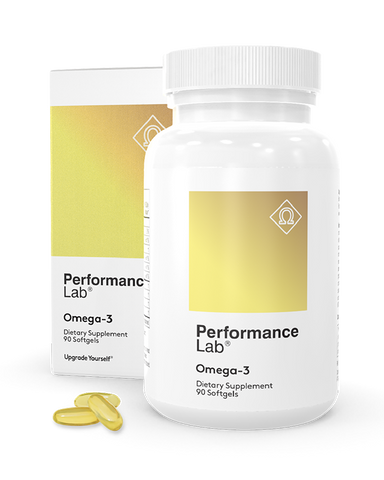
Like we mentioned above, the conversion rate of ALA to EPA and DHA is minimal, which means that besides eating omega-3 rich foods, you may also want to take an omega-3 supplement like Performance Lab Omega 3.
Performance Lab Omega 3 is designed to provide a clean, vegan-friendly source of EPA and DHA.
It supplies high-potency EPA and DHA, without some of the common concerns associated with traditional fish oil supplements.
It’s also ultraclean, tested for heavy metals, PCBs, and other contaminants; is environmentally friendly and sustainable, and completely traceable from start to finish.
What more could you want from a supplement?
FAQs
Can vegetarians get enough omega 3?
Yes, but many plant based foods mainly provide ALA rather than direct DHA and EPA. Vegetarians and vegans who do not eat fish may also benefit from an algae oil supplement for direct EPA and DHA support.
What is the best vegan source of omega 3?
Algae oil is considered one of the best vegan sources of omega 3 because it provides preformed DHA and EPA directly, without relying on the body to convert ALA. It offers similar omega 3 benefits to fish oil in a plant based format.
Why is ALA conversion important?
Most plant sources of omega 3 contain ALA, which the body must convert into DHA and EPA before it can be fully used for brain health, heart health, and cell membrane function. However, the conversion rate is relatively low, which is why algae oil supplements are often recommended alongside omega 3 rich foods.
What are omega-3 fortified foods?
Omega-3 fortified foods are everyday products that have had omega-3 fatty acids added during production to help increase intake. These are often foods like certain dairy products or plant based milks, yoghurts, eggs (in some cases), spreads, and breakfast cereals that are enriched with ALA, and sometimes EPA and DHA depending on the source.
References
- Adarme-Vega, T. C., Lim, D. K., Timmins, M., Vernen, F., Li, Y., and Schenk, P. M. “Microalgal Biofactories: A Promising Approach towards Sustainable Omega-3 Fatty Acid Production.” Microbial Cell Factories, vol. 11, 2012, p. 96.
- Blondeau, N., Lipsky, R. H., Bourourou, M., Duncan, M. W., Gorelick, P. B., and Marini, A. M. “Alpha-Linolenic Acid: An Omega-3 Fatty Acid with Neuroprotective Properties-Ready for Use in the Stroke Clinic?” BioMed Research International, 2015.
- Ullah, R., Nadeem, M., Khalique, A., et al. “Nutritional and Therapeutic Perspectives of Chia (Salvia hispanica L.): A Review.” Journal of Food Science and Technology, vol. 53, no. 4, 2016, pp. 1750-1758.
- Leizer, C., Ribnicky, D., Pouley, A., Dushenkov, S., and Raskin, I. “The Composition of Hemp Seed Oil and Its Potential as an Important Source of Nutrition.” Journal of Nutraceuticals, Functional & Medical Foods, vol. 2, no. 4, 2005, pp. 35-53.
- Office of Dietary Supplements, National Institutes of Health. “ALA Content of Selected Foods.” https://ods.od.nih.gov/pubs/usdandb/ALA-Content.pdf.
- Uddin, M. K., Juraimi, A. S., Hossain, M. S., Nahar, M. A., Ali, M. E., and Rahman, M. M. “Purslane Weed (Portulaca oleracea): A Prospective Plant Source of Nutrition, Omega-3 Fatty Acid, and Antioxidant Attributes.” Scientific World Journal, 2014.
- Simopoulos, A. P., Norman, H. A., Gillaspy, J. E., and Duke, J. A. “Common Purslane: A Source of Omega-3 Fatty Acids and Antioxidants.” Journal of the American College of Nutrition, vol. 11, no. 4, 1992, pp. 374-382.
- Ryan, L., and Symington, A. M. “Algal-Oil Supplements Are a Viable Alternative to Fish-Oil Supplements in Terms of Docosahexaenoic Acid (22:6n-3; DHA).” Journal of Functional Foods, vol. 19, 2015, pp. 852-858.
- Gerster, H. “Can Adults Adequately Convert Alpha-Linolenic Acid (18:3n-3) to Eicosapentaenoic Acid (20:5n-3) and Docosahexaenoic Acid (22:6n-3)?” International Journal for Vitamin and Nutrition Research, vol. 68, no. 3, 1998, pp. 159-173.
- Linus Pauling Institute, Micronutrient Information Center, Oregon State University. “Essential Fatty Acids.” https://lpi.oregonstate.edu/mic/other-nutrients/essential-fatty-acids.
- EFSA Panel on Biological Hazards (BIOHAZ). “Scientific Opinion on Fish Oil for Human Consumption: Food Hygiene, Including Rancidity.” European Food Safety Authority.
- Albert, B. B., Cameron-Smith, D., Hofman, P. L., and Cutfield, W. S. “Oxidation of Marine Omega-3 Supplements and Human Health.” BioMed Research International, vol. 2013, 2013, p. 464921. https://doi.org/10.1155/2013/464921.
- EFSA Panel on Contaminants in the Food Chain (CONTAM), Knutsen, H. K., Alexander, J., Barregård, L., Bignami, M., Brüschweiler, B., Ceccatelli, S., Cottrill, B., Dinovi, M., Edler, L., Grasl-Kraupp, B., Hoogenboom, L. R., Nebbia, C. S., Oswald, I. P., Petersen, A., Rose, M., Roudot, A. C., Schwerdtle, T., Vleminckx, C., Vollmer, G., et al. “Assessment of a Decontamination Process for Dioxins and Dioxin-like PCBs in Fish Oil by Physical Filtration with Activated Carbon.” EFSA Journal, vol. 15, no. 7, 2017, e04961. https://doi.org/10.2903/j.efsa.2017.4961.
- Chang, C. Y., Ke, D. S., and Chen, J. Y. “Essential Fatty Acids and Human Brain.” Acta Neurologica Taiwanica, vol. 18, no. 4, 2009, pp. 231-241.
- Office of Dietary Supplements, National Institutes of Health. “Omega-3 Fatty Acids.” https://ods.od.nih.gov/factsheets/Omega3FattyAcids-HealthProfessional/.
- Oppedisano, F., Macrì, R., Gliozzi, M., Musolino, V., Carresi, C., Maiuolo, J., Bosco, F., Nucera, S., Zito, M. C., Guarnieri, L., Scarano, F., Nicita, C., Coppoletta, A. R., Ruga, S., Scicchitano, M., Mollace, R., Palma, E., and Mollace, V. “The Anti-Inflammatory and Antioxidant Properties of n-3 PUFAs: Their Role in Cardiovascular Protection.” Biomedicines, vol. 8, no. 9, 2020, p. 306. https://doi.org/10.3390/biomedicines8090306.
- Krupa, K. N., Fritz, K., and Parmar, M. “Omega-3 Fatty Acids.” StatPearls. StatPearls Publishing, 2026. https://www.ncbi.nlm.nih.gov/sites/books/NBK564314/.
- Del Moral, A. Martí, and Fortique, F. “Omega-3 Fatty Acids and Cognitive Decline: A Systematic Review.” Nutrición Hospitalaria, vol. 36, no. 4, 2019, pp. 939-949. https://doi.org/10.20960/nh.02496.
- Simopoulos, A. P. “The Importance of the Ratio of Omega-6/Omega-3 Essential Fatty Acids.” Biomedicine & Pharmacotherapy, vol. 56, no. 8, 2002, pp. 365-379. https://doi.org/10.1016/S0753-3322(02)00253-6.
- National Center for Complementary and Integrative Health, National Institutes of Health. “Omega-3 Supplements: What You Need To Know.” https://www.nccih.nih.gov/health/omega3-supplements-what-you-need-to-know.
- Office of Dietary Supplements, National Institutes of Health. “Omega 3 Fact Sheet.” https://ods.od.nih.gov/factsheets/Omega3FattyAcids-HealthProfessional/#h3.
- Linus Pauling Institute, Micronutrient Information Center, Oregon State University. “Essential Fatty Acids.” https://lpi.oregonstate.edu/mic/other-nutrients/essential-fatty-acids.
- Burdge, G. C., and Wootton, S. A. “Conversion of α-Linolenic Acid to Eicosapentaenoic, Docosapentaenoic and Docosahexaenoic Acids in Young Women.” British Journal of Nutrition, vol. 88, no. 4, 2002, pp. 411-420. https://doi.org/10.1079/BJN2002689.