

Exercise hurts. But, thankfully, the more you exercise, the easier it gets.
That is until joint stiffness and discomfort sets in.
Then exercise not only hurts but it starts to hurt pretty bad. So much so that much of your exercise momentum quickly begins to dwindle—as you find it painful to do otherwise simple tasks, such as squatting, kneeling, gripping a bar, or even opening a door (I’m looking at you, elbow tendonitis).
Of course, with severe joint pain, taking a temporary break from exercise and professional therapy may be necessary to reduce joint pain.
But you don’t have to let it get to that point.
When the joints begin to get noticeably stiff and painful, many people turn to dietary and lifestyle changes, a part of which may include joint-soothing supplements and botanicals.
Key Takeaways
- Glucosamine and turmeric may support joint health via different mechanisms—glucosamine is often linked to cartilage/structural support, while turmeric (curcumin) is best known for its anti-inflammatory and antioxidant action, though they both share some anti-inflammatory effects.
- Rather than choosing one or the other, they often complement each other: structure + inflammation aid = more holistic joint support.
- When evaluating joint supplements, check for safe and effective dosages, transparent product labels (not hidden “proprietary blends”), third-party testing, and bioavailability (especially with turmeric). Your experience may vary; glucosamine and turmeric are not suitable for everyone.
- Joint health is multifactorial -- exercise, load management, nutrition, recovery and good supplementation all play a role together.
- If choosing just one, match it to your main complaint: e.g., pain/inflammation focus → consider trying turmeric first; cartilage wear / cushioning focus → glucosamine and chondroitin. Then consider alternating to see the difference, or combining if safe and appropriate.
Two highly popular dietary supplements for joint health are Glucosamine, an amino sugar naturally concentrated in joint tissues, and Turmeric, a "superfood" spice, rich with antioxidant, anti-inflammatory curcuminoids.
But if you had to choose between the two, which is better for supporting joint health: glucosamine or turmeric?
More importantly, do you have to decide between taking one or the other of these joint health supplements? If you have a health condition or may be sensitive to one of these supplements, then the answer could be yes with the approval of your doctor.
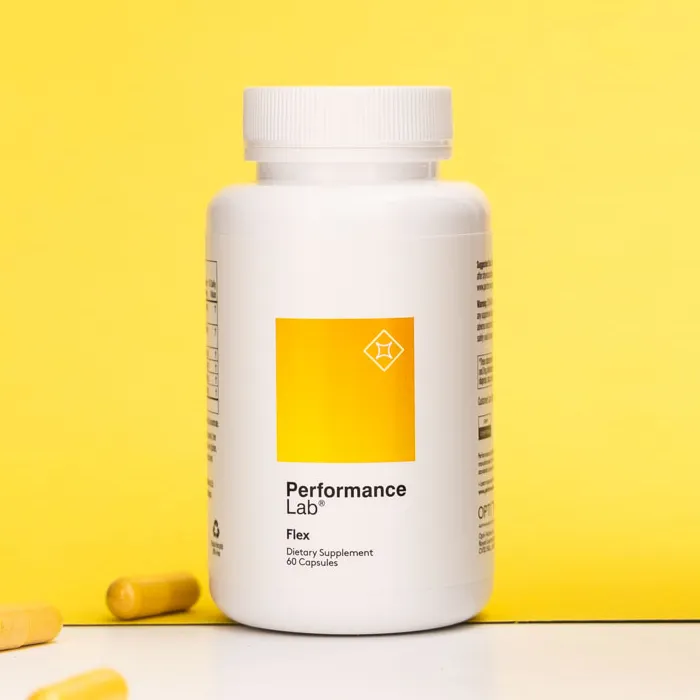
Provided you're healthy and generally tolerate these supplements well, with Performance Lab® Flex, our all-in-one joint support formula, the answer is no. You can enjoy the potential benefits of both glucosamine and turmeric—and then some—without any issue.
Even so, it’s important to distinguish between the two in order to:
-
understand how both glucosamine and turmeric impact joint health
-
better understand how these ingredients may work together to synergistically contribute to joint wellness.
In this article, we cover the joint biomechanisms of both glucosamine supplements and turmeric, as well as the best types of glucosamine and turmeric to look for in a joint support stack.
Glucosamine vs. Turmeric: Which is Better for Joint Health?

If glucosamine and turmeric possessed the same bioactive constituents targeting the same bio-pathways, there’d be a genuine case for one being better than the other.
But these popular joint supplement ingredients differ, both structurally and in their impact on joint function.
Here’s a brief description of each Glucosamine and Turmeric.
Glucosamine
Glucosamine is an amino sugar naturally found in the connective tissues that cushion the joints, including cartilage, ligaments, tendons, and synovial fluid(1).
Typically derived from shellfish, glucosamine hydrochloride is used to combat collagen deterioration and protect synovial fluid, keeping joints moving smoothly and comfortably. It comes in the forms of tablets, capsules, powders, and liquids.
Glucosamine Sulfate, Glucosamine HCl, and Other Forms of Glucosamine
Glucosamine supplements come in different forms. The most popular one is hydrochloride, but some experts suggest that glucosamine sulfate might be more absorbable and the more effective form of glucosamine for joints. (20) There is also N-acetyl glucosamine, which has less clinical evidence for its use in joint care.
Glucosamine is commonly sourced from shellfish. However, there are plant-based alternatives, Performance Lab® Flex uses corn-sourced glucosamine as a vegan alternative and for those who have an allergic reaction to shellfish.
Generally speaking, glucosamine is considered safe; it may sometimes cause stomach upset, nausea, heartburn, or gastrointestinal issues. There are very rare reports of glucosamine worsening asthma symptoms, and some concerns that it could raise eye pressure, which could be problematic for people with glaucoma.
While rare, there is a possibility that glucosamine can interact with the blood thinner/anticoagulant warfarin, so make sure to talk to your doctor if you're on any medications before taking it.
Turmeric
Turmeric is one of the most studied herbs for health and wellness. It's also popular in the world of natural medicine (2). This is the spice that gives curry that rich, inviting golden yellow color. Turmeric’s yellow plant pigments are called curcuminoids, with the key bioactive curcuminoid being curcumin.
Turmeric is commonly consumed as a flavoring agent or anti-inflammatory supplement to support joint health, cognitive function, metabolic performance, and more.
Of the two, glucosamine seems more focused on improving joint health, whereas turmeric is a more multi-purpose “superfood.” Both are generally safe for daily supplementation, with negative side effects not very common but possible in some people, especially with high dosages. Both turmeric and glucosamine affect joint health and flexibility in their own ways.
Let’s take a look at the specific benefits of each, starting with:
Glucosamine Benefits

Though different in its bioactivities, compared to turmeric’s multiple health benefits, glucosamine comes with a number of possible joint-related benefits, including its potential therapeutic effects in people with degenerative joint disease. (18)
It's important to mention that glucosamine is not an approved prescription drug in most countries; it's a dietary supplement in the United States. It's not meant to be used for arthritis care or treating any disease. That said, in many European countries, it is actually used as a prescription drug for treating osteoarthritis pain and related symptoms.
But what does the scientific evidence say? Although there have been a number of clinical studies on glucosamine, study results are mixed. Some show promising effects, while others didn't find significant differences compared to a placebo in terms of discomfort, joint functions, or joint structure (determined as joint space narrowing).
Based on the current evidence, it seems like glucosamine might be suitable for certain groups of people more than for others. The only way to know how it's going to work for you is by trying it, provided you have the approval of your doctor or pharmacist.
With that in mind, let's have a look at some potential glucosamine benefits that studies have explored:
Chondrocyte Support
Chondrocytes, the only cells found in cartilage, are responsible for maintaining its flexible yet firm structure(3).
Healthy chondrocyte activity is crucial to preventing cartilage breakdown that contributes to degenerative conditions.
- Glucosamine supports chondrocyte proliferation via the Wnt/β-catenin signaling pathway, making it essential for maintaining cartilage health(4).
Proteoglycan Production
Proteoglycans, found in all connective tissues and the extracellular matrix (ECM), are crucial for cartilage structure(5).
Chondrocytes produce proteoglycans using glucosamine as a precursor.
- Supplementing with glucosamine products is suggested to support both chondrocyte proliferation and proteoglycan production, along with aiding in cartilage repair and regeneration(6). However, the body of evidence strongly supporting these effects is small -- these effects are possible but not proven.
Synovial Fluid Protection

While cartilage cushions joints, synovial fluid (synovia) lubricates them, reducing friction and keeping movement smooth.
As a viscous, non-Newtonian fluid with egg white-like consistency, synovia helps ease the bone-on-bone friction that occurs within the joint, keeping movement smooth and resilient to injury.(7)
Some joint pain can be attributed to joint inflammation of the synovia, making joint movement feel tender and painful.
Interestingly, glucosamine has been shown to have some anti-inflammatory effects of its own, including a reduction in Interleukin-1 (IL-1) and C-reactive protein (CRP). (22)
Combined with chondroitin sulfate, glucosamine has been shown in research to help mitigate synovial fluid inflammation to provide “efficient pain relief in similar level with tramadol, a narcotic analgesic.”(8)
Although this particular study reports impressive findings, glucosamine is not approved by the Food and Drug Administration (FDA) for the treatment of any condition nor is it a replacement for medications in the U.S.
The Combined Benefits of Glucosamine and Chondroitin Sulfate
Glucosamine is often paired with chondroitin for enhanced joint protection. While glucosamine supports chondrocyte activity and promotes cartilage metabolism, chondroitin helps cartilage retain water due to its strong negative charge, acting like a sponge to keep cartilage hydrated and resilient.
Together, these compounds synergize to promote cartilage recovery and hydration.
- The famous GAIT study found that a sub-group of people with moderate-to-severe knee pain taking glucosamine+chondroitin experienced a "statistically significant pain relief compared to a placebo". (21)
Read more about the benefits of glucosamine here.
Turmeric Benefits

Whereas glucosamine structurally supports connective tissue integrity within the joint, turmeric may offer greater protection against joint-diminishing oxidative stress, inflammation, and enzymes. The body of evidence, although larger than most supplements, is mixed or low quality, but it's growing. (19)
So far, researchers have suggested that turmeric works by modulating:
Oxidative Stress (Free Radicals)
Free radicals (oxidative stress), the reactive chemical species associated with cellular damage, play a significant role in the pathogenesis of inflammatory joint issues—not to mention in other unwelcome consequences of stress and aging.
Within the joint, oxidative stress has been linked with inhibited proteoglycan synthesis and cartilage degradation(9).
- By potentially reducing oxidative stress in the joints (and other parts of the body), turmeric’s bioactive curcuminoids may promote health and performance while also possibly protecting against the long-term deleterious effects of free radical damage(10, 19).
COX-2 and MMP Enzymes
Cyclooxygenase-2 (COX-2) and matrix metalloproteinase (MMP) are two enzymes associated with joint tissue degradation(11-13).
Involved in the immune response, COX-2 is upregulated in inflamed joint tissues, where the enzyme’s proinflammatory effects may detrimentally impact joint health, whereas MMP weakens connective tissues by degrading extracellular matrix proteins.
- By modulating COX-2 and MMP activity, turmeric may have a positive influence on joint tissues (and many other bodily tissues) against the damaging effects of excess inflammation and connective tissue degradation.
This is part of the reason why turmeric is popular among individuals suffering from knee osteoarthritis. Many claim it helps them reduce pain, swelling, inflammation, and stiffness associated with the condition.
However, despite being a topic of many studies, the question of how effective turmeric is for joint wellness is still up for debate, and it's not approved for medical use in the U.S.
Advanced Glycation End-Products (AGEs)

Known as glycotoxins, advanced glycation end-products (AGEs) are a diverse group of highly oxidant compounds that contribute to oxidative stress and inflammation linked to cardiovascular issues, metabolic disorder, joint degradation, and more(14).
AGEs are formed when proteins or fats combine with sugar in the bloodstream through a process called glycation, and they are highly concentrated in foods that are cooked at high temperatures, especially with dry heat methods like frying, grilling, roasting, or baking.
Highly concentrated in the modern diet, AGEs seem to stiffen connective tissues, resulting in impaired flexibility and increased joint pain.
- By reducing the effect of advanced glycation end-products, turmeric’s curcumin may positively affect joint connective tissues, as well as for the cardiometabolic system and brain health(15).
Do Glucosamine and Turmeric Work Well Together?
With turmeric, in particular, absorption is a key consideration. Turmeric has a notoriously poor oral bioavailability, which is why some researchers suggest stacking it with other ingredients or using absorption-enhancing technologies that won't detract from its potency.
Fortunately, glucosamine doesn’t appear to interfere with turmeric’s absorption.
In fact, the two may work well together to support joint health.
While glucosamine promotes cartilage function and joint cushioning, turmeric provides anti-inflammatory benefits, making them a common combination in joint support supplements.
Also, with turmeric’s low oral bioavailability in mind, it’s often recommended to stack turmeric with a nutrient absorption enhancer, such as black pepper extract (piperine).
That said, high-quality brands such as CurcuWIN®, which is used in Performance Lab® Flex, do not require the addition of piperine for optimal absorption.
CurcuWIN® turmeric is 46x more absorbable than standard curcumin forms available on the market. (16)
Optimal Dosages of Turmeric and Glucosamine Supplements For Your Health and Joint Pain

A common tactic in supplements is the use of proprietary blends, where multiple ingredients are grouped under a single dosage, making it unclear how much of each is included.
Because proprietary blends obscure individual ingredient dosages, it’s best to avoid them.
Instead, look for a joint support formula that clearly lists effective dosages for glucosamine and turmeric, such as the following:
- Glucosamine Dosage: A typical dose of glucosamine seems to fall in the range of 1,500 mg per day, which may take 6-8 weeks to produce noticeable results for some people. While some research suggests improvements with doses as high as 3,000mg, higher amounts may also increase insulin resistance. It's not clear what is the lowest effective dosage of glucosamine. Our Performance Lab® Flex uses a daily dose of 500mg. Ideal if you want to start low and slow. You can double the serving if necessary, which would increase the dosage of glucosamine to 1,000 mg per day.
- Turmeric Dosage: Turmeric is considered suitable for most healthy people. Studies have used various doses, ranging from 250-6000 mg + of curcumin or turmeric blends. (17) High doses might increase the risk of side effects in some people. A highly bioavailable turmeric extract like CurcuWIN® at 250mg daily (found in Performance Lab® Flex) is a beginner-friendly choice for general joint support.
Of course, quality and potency matter when it comes to the efficacy of glucosamine and turmeric.
The forms we use in Flex are plant-based glucosamine sulfate 2KCl and CurcuWIN®, a premium turmeric extract standardized to 20% curcuminoids.
What you combine with these ingredients might also affect their safety and efficacy.
With this in mind, the all-in-one joint support stack we recommend, including glucosamine sulfate 2KCl, CurcuWIN®, and other clinically studied ingredients, is Performance Lab® Flex.
Let’s check it out.
Performance Lab® Flex

Formulated for active joint demands, Performance Lab® Flex is as much a joint support formula for young, active athletes and exercisers as it is one for elderly joint care.
Call it the “ultramodern joint stack,”
Designed to promote joint comfort while supporting function and structural health without relying on synthetics or shellfish-sourced ingredients.
Everything in Performance Lab® Flex is intended to meet the strictest quality and purity standards for supplements.
From the ingredients to the capsules, Flex’s formula is designed to be easy to digest and gently support high-intensity daily activity for all ages and dietary lifestyles.
Key Features
CurcuWIN® Turmeric, 250mg AprèsFlex® Boswellia Serrata, 100mg Glucosamine Sulfate 2KCL, 500mg Phytodroitin™ (Vegan Alternative to Chondroitin), 100mg OptiMSM® Methylsulfonylmethane, 100mg
Performance Lab® Flex’s ultramodern design supplies convenient joint care and protection with a stack of nature’s most studied joint-supporting botanicals and compounds.
Final Word on the Glucosamine vs Turmeric Debate
Which is better: glucosamine or turmeric? The answer could very well be both. And while neither is a cure, they are supportive tools in your joint health toolkit.
Glucosamine and turmeric each support joint health through different pathways, making them a combination worth considering, especially alongside other supplements like Boswellia serrata, chondroitin, and MSM.
While taking just one of these can enhance specific aspects of joint health (and turmeric even benefits brain health), a single ingredient may not always address all joint concerns comprehensively.
That's why Performance Lab® Flex offers an advanced joint support solution, suitable for all active lifestyles, whether young or old, professional or recreational.
If your joint health is starting to decline, Flex may promote better function. If you’re already feeling good, Flex complements a joint-friendly lifestyle to support you in staying that way. That said, your experience may vary, as with any supplement!
References
- Williams C, Ampat G. Glucosamine Sulfate. . In: StatPearls . Treasure Island (FL): StatPearls Publishing; 2020 Jan-.
- Younis HM, Mohamed AA. A Review on Curcumin: Pharmacological Promises and Biomedical Activities. Arch Pharm (Weinheim). 2025 Nov;358(11):e70129. doi: 10.1002/ardp.70129. PMID: 41182017.
- Hall AC. The Role of Chondrocyte Morphology and Volume in Controlling Phenotype—Implications for Osteoarthritis, Cartilage Repair, and Cartilage Engineering. Curr Rheumatol Rep. 2019; 21(8): 38.
- Ma Y et al. Glucosamine promotes chondrocyte proliferation via the Wnt/β-catenin signaling pathway. Int J Mol Med. 2018 Jul; 42(1): 61-70.
- Iozzo RV, Schaefer L. Proteoglycan form and function: A comprehensive nomenclature of proteoglycans. Matrix Biol. 2015 Mar; 42: 11-55.
- Bassleer C et al. Stimulation of proteoglycan production by glucosamine sulfate in chondrocytes isolated from human osteoarthritic articular cartilage in vitro. Osteoarthritis Cartilage. 1998 Nov; 6(6): 427-34.
- Hui AY et al. A Systems Biology Approach to Synovial Joint Lubrication in Health, Injury, and Disease. Wiley Interdiscip Rev Sys Biol Med. 2012 Jan-Feb; 4(1): 15-37.
- Damlar İ et al. Effects of glucosamine-chondroitin combination on synovial fluid IL-1β, IL-6, TNF-α and PGE2 levels in internal derangements of temporomandibular joint. Med Oral Patol Oral Cir Bucal. 2015 May; 20(3): e278-e283.
- Hadjigogos K. The role of free radicals in the pathogenesis of rheumatoid arthritis. Panminerva Med. 2003 Mar; 45(1): 7-13.
- Suryanarayana P et al. Effect of turmeric and curcumin on oxidative stress and antioxidant enzymes in streptozotocin-induced diabetic rat. Med Sci Monit. 2007 Dec; 13(12): BR286-92.
- Martel-Pelletier J et al. Cyclooxygenase-2 and prostaglandins in articular tissues. Semin Arthritis Rheum. 2003 Dec; 33(3): 155-67.
- Tchetverikov I et al. MMP protein and activity levels in synovial fluid from patients with joint injury, inflammatory arthritis, and osteoarthritis. Ann Rheum Dis. 2005 May; 64(5): 694-698.
- Desai SJ et al. Mechanisms of phytonutrient modulation of Cyclooxygenase-2 (COX-2) and inflammation related to cancer. Nutr Cancer. 2018 Apr; 70(3): 350-375.
- Uribarri J et al. Advanced Glycation End Products in Foods and a Practical Guide to Their Reduction in the Diet. J Am Diet Assoc. 2010 Jun; 110(6): 911-16.
- Tang Y, Chen A. Curcumin eliminates the effect of advanced glycation end-products (AGEs) on the divergent regulation of gene expression of receptors of AGEs by interrupting leptin signaling. Lab Invest. 2014 May; 94(5): 503-516.
- Sakul AA, Balcikanli Z, Ozsoy NA, Orhan C, Sahin N, Tuzcu M, Juturu V, Kilic E, Sahin K. A highly bioavailable curcumin formulation ameliorates inflammation cytokines and neurotrophic factors in mice with traumatic brain injury. Chem Biol Drug Des. 2024 Jan;103(1):e14439. doi: 10.1111/cbdd.14439. PMID: 38230778.
- Kunnumakkara AB, Hegde M, Parama D, et al. Role of Turmeric and Curcumin in Prevention and Treatment of Chronic Diseases: Lessons Learned from Clinical Trials. ACS Pharmacol Transl Sci. 2023;6(4):447-518. Published 2023 Mar 6. doi:10.1021/acsptsci.2c00012
- Baden KER, Hoeksema SL, Gibson N, Gadi DN, Craig E, Draime JA, Tubb SM, Chen AMH. The Safety and Efficacy of Glucosamine and/or Chondroitin in Humans: A Systematic Review. Nutrients. 2025 Jun 24;17(13):2093. doi: 10.3390/nu17132093. PMID: 40647198; PMCID: PMC12250884.
- Xu Q, Lian H, Zhou R, Gu Z, Wu J, Wu Y, Li Z. Curcumin and multiple health outcomes: critical umbrella review of intervention meta-analyses. Front Pharmacol. 2025 Jun 5;16:1601204. doi: 10.3389/fphar.2025.1601204. PMID: 40538540; PMCID: PMC12176752.
- Examine.com. What is the difference between the various forms of glucosamine? Examine. https://examine.com/faq/what-is-the-difference-between-the-various-forms-of-glucosamine/.
- National Center for Complementary and Alternative Medicine. The NIH Glucosamine/Chondroitin Arthritis Intervention Trial (GAIT). J Pain Palliat Care Pharmacother. 2008;22(1):39-43. PMID: 19062354.
- Baden KER, Hoeksema SL, Gibson N, Gadi DN, Craig E, Draime JA, Tubb SM, Chen AMH. The Safety and Efficacy of Glucosamine and/or Chondroitin in Humans: A Systematic Review. Nutrients. 2025;17(13):2093. doi:10.3390/nu17132093.