

Do your joints feel like they've aged 10 or 20 years overnight? If so, it's not imagination, and you're not alone.
This one-stop guide explores top evidenced supplements for joint comfort, as well as the causes of menopausal joint pain - and more.
Key Takeaways
- Our top 3 picks for beginners: omega-3, curcumin, and Boswellia serrata.
- Omega-3 may help with inflammation and ease joint discomfort.
- Curcumin plays a role in anti-inflammatory support and relieving achy joints, as well as potentially helping with fatigue and low energy.
- Boswellia shows very promising and potent results for reducing stiffness and promoting healthy bones.
- Supplements are not quick-fixes, but provide relief as part of a broader lifestyle strategy including diet, strength training, and sleep.
Why You Get Menopause Joint Pain

Hot flashes and night sweats could be the most commonly talked about symptoms of menopause. But joint pain (medically called arthralgia) affects up to 71% of women during the transition. (1)
As Dr. Mary Claire Haver, a leading menopause expert says, this symptom might be as common as the classic symptoms you'd expect. (2)
Studies show that in many cases, the root issue of menopause joint pain isn't wear and tear, but it's biological. This explains why many women go for an MRI to check for arthritis and find out their results are clear. (4)
So, what is causing menopausal joint pain?
Joint Discomfort & Hormones
More often than not, joint pain during menopause is due to declining hormone levels. Estrogen is the hero hormone when it comes to controlling inflammation and joint lubrication. Plus, it protects cartilage that cushions your joints.
As Dr. Heather Hirsch, MD, MS, NCMP said: “Joint aches and pains are actually a very common symptom of menopause due to the loss of estrogen. Estrogen helps keep our joints lubricated, and when it declines, joint pain can seem to appear out of nowhere.” (3)
Lower estrogen also impacts pain perception, making you more sensitive. It can also lead to muscle loss, weight gain, increased belly fat, and an elevated risk of osteoporosis, further stressing joints.
Another hormone that is less talked about but could also play a role in joint discomfort is progesterone. It has mild anti-inflammatory and neuromodulatory effects. Lower levels can potentially affect pain tolerance, making your aches more noticeable.
You May Also Like: What Vitamins Should a 50-Year-Old Woman Take?
Gut-Joint Axis
The ancient idea of Hippocrates that "all disease begins in the gut" may very well be an oversimplification. But, modern science increasingly supports the link between digestive health and systemic well-being - including your hormones and joints.
A 2024 scientific review states that when our intestinal barrier gets compromised, toxins, undigested particles, and inflammatory compounds can enter our bloodstream, causing an immune system response. This reaction can reach your joints, leading to pain and stiffness. (5)
Some of the supplements in this guide may help with joint comfort indirectly by supporting a healthy intestinal barrier.
Physical Inactivity
Another factor that can contribute to joint pain is lack of physical activity.
While it can feel counterintuitive to move when aching, supporting the muscle surrounding the joint with regular activity is vital for long-term health, as inactivity can worsen the problem over time.
The question you may have is, "will this pain go away?" Here's the answer: it can lessen as hormones balance or with the help of a health professional. But it takes time to find what works for you.
Top Natural Supplements for Menopause Joint Discomfort
We'll start this list with supplements that have the most clinical evidence for their positive role in general joint function and comfort.
However, bear in mind that the following supplements are not guaranteed to be suitable for everyone. They are by no means a treatment for health conditions.
It can be easy to get lost in the sea of marketing hype around supplements. The reality is, they may only provide slight benefits for most people. They need to be paired with a healthy diet, exercise, and lifestyle in order to give you the best chance of helping.

1. Omega-3 Fatty Acids – general joint health

Omega-3s are among the most studied supplements. Multiple clinical trials show that these fatty acids can ease achy joints - by decreasing inflammation reactions in your body.
You'll see many variations of omega-3 oil supplements on the market. One popular option for joint health is Green Lipped Mussel extract. Found on the coastline of New Zealand, it contains a rare omega-3 named ETA, which targets different inflammatory pathways than your classic fish oil.
If you prefer a vegan-friendly alternative, algae-based omega-3 supplements are your best friend - like our Performance Lab® Omega-3 supplement.
Love this product! Easy to swallow capsule with no aftertaste.Sarah A

No matter which omega-3 variation you choose, the basic rules apply: always look for reputable, third-party tested options. If going with fish oil, make sure it's molecularly distilled and in the natural triglyceride form (not the processed ethyl-ester form).
Optimal dosage for joint support varies, but studies successfully used 1,000-3,000 mg of EPA + DHA daily.
Omega-3s are generally a safe supplement with a minimal side effect risk in healthy people who take it in recommended doses.
You may also like: Omega-3 for Women - 5 Reasons Females Need Omega-3 Fatty Acids
2. Turmeric / Curcumin (+ Piperine) – anti-inflammatory

Turmeric is one of the healthiest spices in the world, thanks in no small part to curcumin, its active molecule. Curcumin not only gives turmeric its golden color, but it also has anti-inflammatory and joint-soothing properties.
A 2019 study of people with knee pain due to osteoarthritis looked into the effects of curcumin on their condition. The authors of the study found that curcumin relieved their pain and was less likely to cause negative side effects compared to another group which took diclofenac, a pain medication. (6)
And while 13% of the study participants had negative side effects from turmeric, most studies, including a 2025 umbrella meta-analysis, suggest that turmeric is generally safe for healthy people. (7)
To supplement with a standard curcumin supplement with 95% curcuminoids, aim for a dose of 500 mg, 1-3 times per day. Make sure it's combined with piperine (black pepper extract) for optimal absorption.
Patented curcumin formulas might use different methods to aid absorption. As a result, they may work in a bit lower amounts, too. (29) The minimum effective dose is not clear as of yet.
It typically takes up to 8 weeks to start working, although your results can vary.
3. Vitamin D + K2 – bone health, indirect joint benefit

Vitamin D (specifically, D3) is incredibly important for bone strength and inflammation management. Up to 50% menopausal women might be deficient in this sunshine nutrient. If you're already getting enough, though, it may not make much of a difference.
For this reason, it's important to test your blood levels of vitamin D. You can get vitamin D from the food, sun, fatty fish, or fortified foods. But many people don't get enough direct sunlight nor do they consume enough vitamin D-rich foods, so they end up with insufficient blood levels.
Vitamin D studies have used supplements in doses of 400IU-5,000IU+. Generally, 1,000-2,000IU daily is considered safe for joint support.
One of the key roles of vitamin D is increasing calcium absorption. Pairing it with vitamin K2 helps direct that calcium into bones, exactly where it should go. Adding magnesium on top helps activate vitamin D.
4. MSM & Boswellia (Indian Frankincense) – stiffness relief

MSM
MSM is an organic sulfur molecule that is believed to play a role in joint mobility and comfort.
Limited and (still) inconclusive evidence shows MSM has antioxidant and anti-inflammatory properties. This includes promoting glutathione, the most important antioxidant in the body.
Boswellia
On the other hand, Boswellia is an aromatic tree resin from India, also called Indian Frankincense. It contains boswellic acids - the main one is called AKBA. These compounds show promise at encouraging mobile joints and bone density. (9)
One of the ways Boswellia works is by potentially easing stiffness. It does this by reducing 5-lipoxygenase (5-LOX), an enzyme that produces inflammatory leukotrienes.
A 2014 Cochrane Review found that 100mg AKBA-enriched Boswellia extract reduced joint pain by 17 points on a 100-point scale. (10)
Another 2020 meta-analysis concluded that Boswellia and its extract may have beneficial effects on joint discomfort when taken for at least 4 weeks. (11)
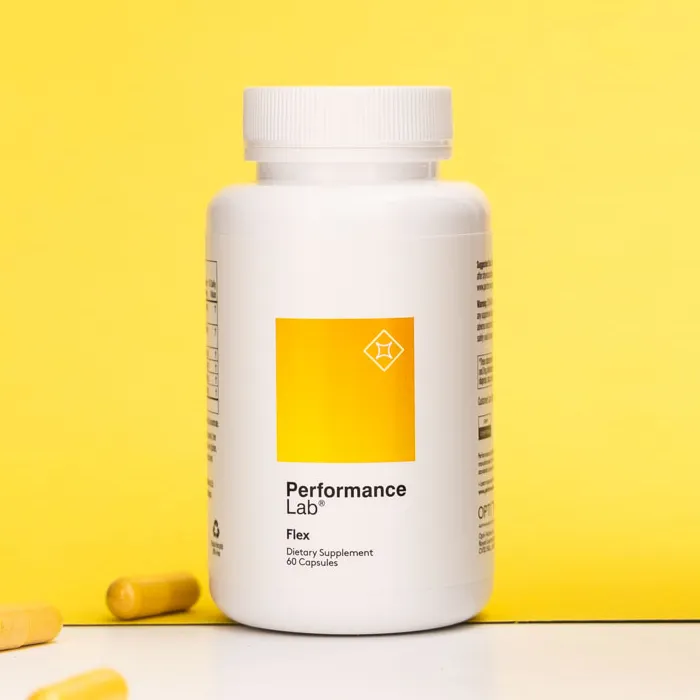
Optimal dose? 100-250 mg per day if taking a clinically studied AKBA-enriched extract like AprèsFlex — found in Performance Lab® Flex. Or 600-1500 mg split in two or three doses per day if taking a standard Boswellia Serrata supplement.
Side effects with Boswellia are rare. Just like with many supplements, if you're sensitive, there is a small risk of stomach upset or nausea.
5. Collagen Peptides – cartilage support

Collagen is your body's key structural protein. It helps your joints and bones stay strong and resilient. Some studies show that collagen may support normal movement, comfort, and mobility.
For joints, you'll want to take type-II collagen. Recommended doses are 10 g per day for collagen peptides (hydrolyzed) or 40 mg of raw unprocessed collagen.
It may take 4-12 weeks to work according to research. (12) But this can vary based on your individual response.
6. Ginger – complementary anti-inflammation

Ginger is a spice related to turmeric. It holds promise for supporting joint function due to its anti-inflammatory properties. The main compounds in ginger attributed to its health benefits are gingerols and shogaols.
A 2025 randomized, double-blind, placebo-controlled trial involving men and women with joint pain tested the effects of 125mg of ginger extract vs a placebo on their condition. They found that the group who took ginger had lower inflammatory markers and reported less joint pain.
The study authors concluded: "Ginger supplementation (125 mg/d, providing 12.5 mg/d of gingerols) appears to have some favorable effects on perceptions of pain, functional capacity, and inflammatory markers in men and women experiencing mild to moderate muscle and joint pain." (8)
Other similar studies have used 250-500 mg of ginger extract with 10% gingerols, or sometimes 1,000 mg of ginger powder daily. Look for options that use "super-critical extraction" for best absorption.
Ginger might take 4-8 weeks of consistently daily use to work, but as with any supplement, it's not guaranteed to be suitable for everyone. It might need to be taken together with other ingredients like turmeric for stronger anti-inflammatory support.
A word of caution about ginger: it may aggravate heartburn at high doses. Like turmeric, it's best avoided if you take blood thinners.
7. Glucosamine & Chondroitin – mixed evidence but widely used

Glucosamine and chondroitin are the two most popular joint supplements on the market. In the U.S., you can buy them over the counter, while in the U.K., it's regulated.
Both glucosamine and chondroitin are natural components of your joint cartilage. They provide the shock-absorbing, lubricant, and pressure-resistant qualities to your joints. However, when it comes to supplementing them for joint pain, evidence is mixed.
Although there has been a lot of clinical research on glucosamine and chondroitin, it's not clear how well they work. The reason we have them on this list is due to their sheer popularity among users, excellent safety, affordability, and wide availability.
As for dosage, it's 1,500 mg of glucosamine daily (choose glucosamine sulfate over hydrochloride). For chondroitin, it's 1,200 mg per day. Joints take time to heal, and like with most joint supplements, glucosamine and chondroitin can take up to 12+ weeks to kick into high gear.
8. Tart Cherry Extract - joint & muscle discomfort

Tart cherry extract is one of those joint supplements that often goes under the radar. Naturally rich in antioxidants, tart cherries are popular among athletes due to their anti-inflammatory and recovery-promoting effects.
It's these effects that also make tart cherries a solid option for menopausal women looking after their joints.
While tart cherries' specialty is relieving muscle soreness, they can also aid joint health and mobility. Due to their natural melatonin content, tart cherries may promote better sleep, which can help your body and joints recover.
The studied dosage for tart cherries is 8-16 oz of juice, 1 tablespoon of concentrate (these equal to about 100-180 whole tart cherries), or simply take a tart cherry capsule to provide daily joint support. Just be mindful of excessive sugar if drinking juice.
According to a 2019 placebo-controlled trial, it might take 4 weeks of regular tart cherry juice consumption to ease inflammation. (13)
Tart cherries are safe, with gastrointestinal distress noticed at very high doses. Start with doses lower than what studies use if you're sensitive.
9. French Maritime Pine Bark Extract - Joint Mobility, Hot Flashes, Brain Fog

The bark of French Maritime Pine is rich in joint-supportive compounds called proanthocyanidins. These are known to aid brain function but also joint health, hot flashes, and oxidative stress levels. (29, 30)
Although research is limited (which is why it's down on our list), pine bark extract has the potential to help protect your joints. One of the ways it does this is by inhibiting cartilage-damaging enzymes. (30)
The safe studied dosage range is 50-450mg, for up to 1 year. The effects of pine bark extract appear to be cumulative and take 4-8 weeks to "kick in".
It's generally safe as a supplement, but as with any other supplement, always consult your doctor if you have a medical condition or take medications.
10. Resveratrol - Hormonal and Antioxidant Support

Resveratrol is an antioxidant from grapes and red wine. It acts as a phytoestrogen - meaning it mimics estrogen's weak effects in your body. Studies show this can help ease menopause symptoms, including joint discomfort.
A 24-month randomized trial on postmenopausal women found that resveratrol can "reduce chronic pain in age-related osteoarthritis and improve menopause-related quality of life". The authors also noted that these benefits lasted for at least 12 months. (14)
Another 2025 meta-analysis of 10 randomized controlled trials found that resveratrol may "improve pain and bone metabolism (CTX) in postmenopausal women". (15)
This meta-analysis also mentioned that the optimal dosage for resveratrol is not clear. Studies have successfully used it in doses ranging anywhere from 8.1 milligrams to 3,000 milligrams. (16) Supplements typically use it in doses of around 150 mg per serving.
One clinical trial found 1g to benefit estrogen metabolism. (17) The highest safe dose appears to be up to 5 grams per day. (18)
Higher than this elevates the risk of side effects, which are gastrointestinal-related and not common.
Make sure to follow the instructions on the label of your resveratrol supplement of choice and always start with the lowest dose first.
11. Hormone-balancing options - Black Cohosh, Red Clover
The following herbs may not directly affect joints, but they have potential hormone-supporting effects. This could positively affect overall wellness and joint comfort. You could say these are our honorable mentions.
A. BLACK COHOSH (Cimicifuga racemosa)
Black cohosh is a flowering plant popular in the USA for supporting quality of life during menopause.
Mixed evidence shows black cohosh may play a role in easing hot flashes and other symptoms related to estrogen fluctuations.
Part of the way it works is by affecting your brain's serotonin pathways. This may help boost mood and comfort naturally. (20)
Common dosages are (19):
20-40 mg daily for isopropanolic extract
64-128mg daily for aqueous-ethanolic extract taken in divided doses
40-80 daily as a standard recommendation for general black cohosh supplements
Black cohosh is likely safe when taken in recommended doses for healthy women. However, there are some rare reports of liver toxicity. (20) If you're on medications or have a liver condition, it's best to ask your doctor for permission before trying it on your own.
B. RED CLOVER (Trifolium pratense)
Red clover is a legume with pinkish-red flowers, related to beans and peas. It contains natural phytoestrogens like isoflavones (formononetin, biochanin A, daidzein, genistein) that bind to your estrogen receptors. Limited evidence shows this may help with estrogen-related inflammation.
Standard dosage for red clover is 40-80 mg isoflavones daily. According to studies, it's generally safe to use for 1 year or possibly longer, but it's best avoided by women who are on HRT, take anticoagulants, or have serious health conditions.
Which Supplements Go Well Together for Menopause Joint Comfort
The evidence on supplement synergies is still very early and limited, but some combinations have been shown to potentially work better together.
See for yourself:
|
Combination |
How it Works |
|
Vitamin D3 + K2 |
D3 aids calcium absorption while K2 directs it to bones. |
|
Turmeric + Piperine |
Black pepper (piperine) boosts curcumin absorption. |
|
Omega-3 + Vitamin D |
Healthy fats improve the absorption of fat-soluble Vitamin D. |
|
Glucosamine + Chondroitin |
May work together to benefit cartilage in your joints. |
|
Vitamin D + Magnesium |
Your body needs magnesium to activate Vitamin D. |
|
Turmeric + Omega-3 |
May complement each other's anti-inflammatory effects. |
What to Look For When Buying
When choosing the right menopause supplement for you, keep in mind the following guidelines.
Watch out for these warning signs:
-
Proprietary blends that hide ingredient doses
-
No third-party testing (it doesn't always mean the supplement is automatically bad, but it leaves you questioning the true efficacy and content of the pills)
-
Unrealistic claims for supplements (fixes arthritis, cures pain permanently)
On the other hand, if you see a supplement with these features, it's usually a good sign:
-
NSF, USP, or Informed-Choice certified
-
Clear mg amounts per serving
-
Bioavailable forms (curcumin with piperine or a patented curcumin form, chelated minerals)
-
Expiration dates
-
If you're from the UK or NZ: Look for THR or TGA approval on supplements
Lifestyle Support to Enhance Relief

Taking care of the following key pillars is the foundation for comfortable joints and a healthy life during menopause.
Supplements will make the most sense only after you've addressed these first:
-
Diet: Focus on anti-inflammatory foods like those found in the Mediterranean diet. Try to minimize processed foods, particularly those high in simple sugars.
-
Hydration: Your synovial fluid is mostly water and some hyaluronic acid. Dehydration can worsen pain.
-
Regular exercise & joint mobility support: Experts recommend physical activity as one of the best ways to counteract joint discomfort and stiffness as we get older. This even applies to people with arthritis (exercise doesn't make it worse, but it can actually help!). Strength training can be particularly helpful for your muscle strength and bone integrity.
-
Sleep & stress management: Uninterrupted deep sleep is crucial for your joints, hormones, and body recovery. Reducing stress also reduces the bad effects of excessive cortisol and other stress hormones.
Anything Else to Consider?

If the pain lingers or worsens over time, despite trying natural remedies and lifestyle modifications, it's time to call your doctor for tests.
In some cases, your doctor might recommend hormone replacement therapy (HRT), a treatment to relieve menopause symptoms. It works by replacing declining estrogen and progesterone, which helps with hot flashes and mood swings, though it could initially come with potential side effects until your body adjusts.
Managing menopause joint pain usually comes down to staying physically active to support your joint lubrication, eating anti-inflammatory foods, staying hydrated, and taking supportive supplements like omega-3s and curcumin + black pepper.
The best-studied supplements for joint pain that could potentially help during menopause include omega-3s, turmeric (curcumin), and vitamin D if deficient, though your results can vary.
Hormone imbalance can indeed cause joint aches and stiffness due to increased inflammation and reduced joint lubrication.
Yes, the hormonal changes during menopause can trigger inflammatory reactions and stiffness in fingers and other small joints.
Further Reading: Best Multivitamin for Women Over 70
Final Thoughts
You may feel overwhelmed with the number of supplements and potential combinations on this list. The good news is, you don't need to take all 11 featured in this guide.
Start with what we call the "core stack" consisting of magnesium, vitamin D, and omega-3s. Add collagen later if your budget and other factors allow.
In fact, if you want to make it super simple, why not start with just one supplement at the time.
In one of her videos, Dr. Heather Hirsch recommends to start simple and give it 8 to 12 weeks to see if a supplement is suitable for you. (3)
First step you can take today: ask your doctor to test your vitamin D blood levels. Check your current vitamin supplements (if you're already taking any) - does it have enough vitamin D?
If not, and your blood test shows insufficiency or deficiency, talk with your doctor about the possible next step - supplementation. We recommend taking a high-quality supplement that combines vitamin D3 with K2 for optimal absorption and efficacy, such as our Performance Lab® D3+K2.
References
- Wright, V. J., Schwartzman, J. D., Itinoche, R., & Wittstein, J. (2024). The musculoskeletal syndrome of menopause. Climacteric, 27(5), 466–472. https://doi.org/10.1080/13697137.2024.2380363
- Haver, M. C. (2023, August 17). Musculoskeletal pain as a symptom of perimenopause and menopause [Video]. YouTube. https://www.youtube.com/watch?v=ayeaQ-4iiww
- Hirsch, H. (2022, November 28). How to treat joint aches and pains that are caused by menopause [Video]. YouTube. https://www.youtube.com/watch?v=Hz_s1aF-5so
- Lu, C. B., Liu, P. F., Zhou, Y. S., Meng, F. C., Qiao, T. Y., Yang, X. J., Li, X. Y., Xue, Q., Xu, H., Liu, Y., Han, Y., & Zhang, Y. (2020). Musculoskeletal Pain during the Menopausal Transition: A Systematic Review and Meta-Analysis. Neural plasticity, 2020, 8842110. https://doi.org/10.1155/2020/8842110
- Qi, P., Chen, X., Tian, J., Zhong, K., Qi, Z., Li, M., & Xie, X. (2024). The gut homeostasis-immune system axis: novel insights into rheumatoid arthritis pathogenesis and treatment. Frontiers in immunology, 15, 1482214. https://pmc.ncbi.nlm.nih.gov/articles/PMC11464316/
- Shep, D., Khanwelkar, C., Gade, P., & Karad, S. (2019). Safety and efficacy of curcumin versus diclofenac in knee osteoarthritis: a randomized open-label parallel-arm study. Trials, 20(1), 214. https://pubmed.ncbi.nlm.nih.gov/30975196/
- Xu, Q., Lian, H., Zhou, R., Gu, Z., Wu, J., Wu, Y., & Li, Z. (2025). Curcumin and multiple health outcomes: critical umbrella review of intervention meta-analyses. Frontiers in pharmacology, 16, 1601204. https://pmc.ncbi.nlm.nih.gov/articles/PMC12176752/
- Broeckel, J., Estes, L., Leonard, M., Dickerson, B. L., Gonzalez, D. E., Purpura, M., Jäger, R., Sowinski, R. J., Rasmussen, C. J., & Kreider, R. B. (2025). Effects of Ginger Supplementation on Markers of Inflammation and Functional Capacity in Individuals with Mild to Moderate Joint Pain. Nutrients, 17(14), 2365. https://doi.org/10.3390/nu17142365
- Al-Dhubiab, B. E., Patel, S. S., Morsy, M. A., Duvva, H., Nair, A. B., Deb, P. K., & Shah, J. (2020). The Beneficial Effect of Boswellic Acid on Bone Metabolism and Possible Mechanisms of Action in Experimental Osteoporosis. Nutrients, 12(10), 3186. https://doi.org/10.3390/nu12103186
- Cameron, M., & Chrubasik, S. (2014). Oral herbal therapies for treating osteoarthritis. Cochrane Database of Systematic Reviews, (5), Article CD002947. https://doi.org/10.1002/14651858.CD002947.pub2
- Yu, G., Xiang, W., Zhang, T., Zeng, L., Yang, K., & Li, J. (2020). Effectiveness of Boswellia and Boswellia extract for osteoarthritis patients: a systematic review and meta-analysis. BMC complementary medicine and therapies, 20(1), 225. https://pubmed.ncbi.nlm.nih.gov/32680575/
- Luo, C., Su, W., Song, Y., & Srivastava, S. (2022). Efficacy and safety of native type II collagen in modulating knee osteoarthritis symptoms: a randomised, double-blind, placebo-controlled trial. Journal of experimental orthopaedics, 9(1), 123. https://doi.org/10.1186/s40634-022-00559-8
- Martin, K. R., & Coles, K. M. (2019). Consumption of 100% Tart Cherry Juice Reduces Serum Urate in Overweight and Obese Adults. Current developments in nutrition, 3(5), nzz011. https://doi.org/10.1093/cdn/nzz011
- Thaung Zaw, J. J., Howe, P. R. C., & Wong, R. H. X. (2020). Long-term resveratrol supplementation improves pain perception, menopausal symptoms, and overall well-being in postmenopausal women: findings from a 24-month randomized, controlled, crossover trial. Menopause (New York, N.Y.), 28(1), 40–49. https://doi.org/10.1097/GME.0000000000001643
- Wu, W., Meng, T., Jin, F., Li, J., Huang, J., Guo, Z., Yu, M., & Zhou, Y. (2025). Effects of resveratrol on postmenopausal women: a systematic review and meta-analysis. Frontiers in pharmacology, 16, 1588284. https://pmc.ncbi.nlm.nih.gov/articles/PMC12325339/
- Examine.com. (n.d.). Resveratrol benefits, dosage, and side effects. Retrieved December 20, 2025, from https://examine.com/supplements/resveratrol/
- Chow, H. H., Garland, L. L., Heckman-Stoddard, B. M., Hsu, C. H., Butler, V. D., Cordova, C. A., Chew, W. M., & Cornelison, T. L. (2014). A pilot clinical study of resveratrol in postmenopausal women with high body mass index: effects on systemic sex steroid hormones. Journal of translational medicine, 12, 223. https://pmc.ncbi.nlm.nih.gov/articles/PMC4243716/
- Ramírez-Garza, S. L., Laveriano-Santos, E. P., Marhuenda-Muñoz, M., Storniolo, C. E., Tresserra-Rimbau, A., Vallverdú-Queralt, A., & Lamuela-Raventós, R. M. (2018). Health Effects of Resveratrol: Results from Human Intervention Trials. Nutrients, 10(12), 1892. https://doi.org/10.3390/nu10121892
- Examine.com. (n.d.). Black cohosh benefits, dosage, and side effects. Retrieved December 20, 2025, from https://examine.com/supplements/black-cohosh/?show_conditions=true
- Bolgova, O., Shypilova, I., & Mavrych, V. (2025). Natural strategies to optimize estrogen levels in aging women: mini review. Frontiers in aging, 6, 1706117.
- Xie, L., Wang, X., Chu, J., He, X., Bao, J., Xi, Y., Wei, X., & Zhou, Q. (2025). Effects of omega-3 fatty acids on chronic pain: a systematic review and meta-analysis. Frontiers in medicine, 12, 1654661. https://pmc.ncbi.nlm.nih.gov/articles/PMC12627051/
- Purzand, B., Rokhgireh, S., Shabani Zanjani, M., Eshraghi, N., Mohamadianamiri, M., Esmailzadeh, A., Alkatout, I., Gitas, G., & Allahqoli, L. (2020). The comparison of the effect of soybean and fish oil on supplementation on menopausal symptoms in postmenopausal women: A randomized, double-blind, placebo-controlled trial. Complementary therapies in clinical practice, 41, 101239. https://doi.org/10.1016/j.ctcp.2020.101239
- Shawl, M., Geetha, T., Burnett, D., & Babu, J. R. (2024). Omega-3 supplementation and its effects on osteoarthritis. Nutrients, 16(11), 1650. https://doi.org/10.3390/nu16111650
- Shabani, F., Mashayekh-Amiri, S., Mousavi, Z., Shaseb, E., & Mirghafourvand, M. (2025). Effect of curcumin on fatigue and musculoskeletal health in postmenopausal women: a double-blind randomised controlled trial. BMJ open, 15(9), e096399. https://doi.org/10.1136/bmjopen-2024-096399
- Al-Dhubiab, B. E., Patel, S. S., Morsy, M. A., Duvva, H., Nair, A. B., Deb, P. K., & Shah, J. (2020). The Beneficial Effect of Boswellic Acid on Bone Metabolism and Possible Mechanisms of Action in Experimental Osteoporosis. Nutrients, 12(10), 3186. https://doi.org/10.3390/nu12103186
- Liu, X., Machado, G. C., Eyles, J. P., Ravi, V., & Hunter, D. J. (2018). Dietary supplements for treating osteoarthritis: a systematic review and meta-analysis. British journal of sports medicine, 52(3), 167–175. https://doi.org/10.1136/bjsports-2016-097333
- Weichmann, F., & Rohdewald, P. (2024). Pycnogenol® French maritime pine bark extract in randomized, double-blind, placebo-controlled human clinical studies. Frontiers in nutrition, 11, 1389374. https://pmc.ncbi.nlm.nih.gov/articles/PMC11096518/
- Baden, K. E. R., Hoeksema, S. L., Gibson, N., Gadi, D. N., Craig, E., Draime, J. A., Tubb, S. M., & Chen, A. M. H. (2025). The Safety and Efficacy of Glucosamine and/or Chondroitin in Humans: A Systematic Review. Nutrients, 17(13), 2093. https://doi.org/10.3390/nu17132093
- Examine.com. (n.d.). Curcumin benefits, dosage, and side effects. Retrieved December 20, 2025, from https://examine.com/supplements/curcumin/