

If you’ve ever looked through the ingredients in energy drinks, vitamin B12 is in most, if not all of them. The front of the drink probably claims to boost energy and concentration, relating directly to the fact that it contains vitamin B12. Though, most of this is a marketing scam, because B12 doesn’t really increase energy on its own.
Vitamin B12 is contained in a lot of energy drinks because of the perception that it provides energy, boosts your mood, helps you concentrate, and improves your memory.
Some drinks even include upwards of 10,000% of your daily value for vitamin B12. However this may not be true for everyone. As with most things in nutrition and health, the effect that a vitamin or dietary supplement has on you is very individualized, and vitamin B12 is no exception to this.
But why is there such a strong belief that B12 gives you energy, and why is it put into every energy drink on the market? Keep reading to find out!
Key Takeaways
- Vitamin B12 doesn’t “give” you energy on its own; it helps convert the carbs, fats, and proteins you eat into usable cellular energy (ATP). (5)
- Most get enough B12 from food, but some are still low or deficient, which can lead to fatigue, weakness, brain fog, and other health issues. (6, 7)
- If you’re not deficient, mega-dosed B12 in energy drinks won’t give you an extra boost — your body simply excretes the excess, and it's not super healthy, either.
- When B12 levels are low, restoring them through diet and supplementation can improve energy, but it usually takes consistent intake over several weeks.
- Using a high-quality multivitamin to cover B12 and other B-vitamin gaps is a smarter long-term strategy than chasing energy-drink spikes.

What is Vitamin B12?
Vitamin B12, also known as cobalamin, is part of the B-complex vitamins; 8 vitamins that are essential for your overall health and bodily function.
Our bodies can’t make any of the B-complex vitamins naturally, so we have to get them from what we eat. Sources include meat, fish, poultry, eggs, dairy products like milk, yogurt, cheese, and fortified foods like cereal. (1)
Most people get the amount of B12 they need through their daily diet alone, but those that are deficient can get injections or oral doses to raise their levels.
Despite this, the number of people who are B12-deficient seems to be growing.
A 2026 retrospective population study of 84 million B12 measurements showed a 32 % increase in B12 deficiency-linked hospitalizations from 2016 to 2023. (7)
Signs You Might Need a B12 Test
Some people are at a higher risk for B12 deficiency, including those who:
- Have celiac disease, Crohn's disease, HIV
- Regularly take antacids,
- Are vegetarians or vegans,
- Consume excessive alcohol
- Have immune dysfunction
- Are older adults
- Have gastrointestinal disorders
Symptoms of B12 deficiency include shakiness, muscle weakness, muscle spasms, fatigue, low blood pressure, and incontinence. (2)
Research has shown that almost two-fifths of American adults have a B12 deficiency, whether they know it or not. (2) B vitamins also like to stick together, so if one is deficient, then it's likely the other ones are also deficient.
Did you know?
B12’s main function is involved in red blood cell formation, cell metabolism, nerve function, and the production of DNA. (3) It also can act as a coenzyme in the conversion of proteins and fats into energy.
This is why it's often added to energy drinks, to give you a burst of energy, in extremely high amounts. Though, this is a misconception. Let's explore further!
B12 for Energy: Does it Work?

The key point in this argument is that B12 helps you convert the food you eat into energy, not that it provides you energy by itself.
Vitamins can’t produce energy on their own, they can only act as a catalyst to other enzymes and substances that help create fuel from the food that you eat.
- Carbohydrates and food containing glucose can give you direct energy on their own.
- Vitamins like B12 help release the energy from these macronutrients.
Your body takes this energy-containing food and breaks it down into ATP. ATP is the form of energy that all the cells in your body use to power themselves to keep operating. Vitamins like B12 help this process happen and allow the ATP to be released.
Think of B12 as a group of sticks, it helps create the fire alongside matches. If there are no matches to light the sticks, the sticks cannot make fire spontaneously on their own. B12 is not a stimulant like caffeine, so it can’t suddenly cause you to feel like you have more energy.
There is a caveat here though!
If you have a vitamin B12 deficiency and you consume B12, either through a supplement or natural food, you will feel like you have more energy as your levels of B12 start to regulate again. One reason why this happens is because vitamin B12 is important for making red blood cells, which carry oxygen and help against fatigue.
However, this can take a couple of weeks of consistent intake of B12. If you are drinking an energy drink, that immediate boost in energy you feel is from caffeine and sugar, amino acids, or creatine, not B12.
All these things are known to help increase energy because they are stimulants that cause an increase in energy.
If you aren’t deficient in vitamin B12 and you drink an energy drink or take a supplement packed with B12, you will most likely urinate half or most of it out after your body takes the B12 that it needs, as it is a water-soluble vitamin and will not be stored.
But you won’t feel any extra increase in energy levels. This means that out of your energy drink that contains 10,000% of your daily value of B12, you will likely be excreting the majority of it.
B12 in Energy Drinks
A 2022 study analyzing 75 top-selling energy products reveals more interesting facts about energy drinks and vitamins like B12.
They've found that 67% contain B12, averaging over 5,000% of your daily value per serving. Some energy drinks contain 10,000% of the daily value for vitamin B12, and there are some that exceed 41,000%! (4)
As we've gone over, your body absorbs what it needs (maybe 2-3 micrograms) and your kidneys process and flush the rest. As for other common nutrients in energy drinks, these include caffeine, taurine, B6, B3, and B5 (pantothenic acid).
Obviously, not all energy drinks contain extreme amounts of stimulants and B-vitamins. Many are within reasonable dosage ranges.
Beyond B Vitamins: What’s Hiding in Your Sugar Free Can?

Depending on whether you're in the U.S. or Europe, popular brands like Red Bull contain the B vitamins in varying amounts. The key lesson is reading the labels and opting for products with gentler doses, if you do choose to go that route.
You'll see many customers review these beverages for their favorite flavor and taste profile. Some brands market themselves as zero sugar or sugar free options, some go as far as saying "gluten free and dairy free" (naturally!), while others lean into sweetness from sugar or natural flavors.
The reduction in sugar can mean a big difference for someone with diabetes or obesity, or anyone who plans their nutritional intake more carefully. Even then, if you need more B12, energy drinks are among the last options to consider.
Supporting B12, The Healthier Way
Thankfully, there are healthier ways to support your natural vitamin B12 intake. The best way is through a nutrient-dense diet.
If you're a vegan or simply want to support optimal nutritional intake, a clean and lightly-dosed multivitamin like Performance Lab® Nutrigenesis® Multi is your friend.
Performance Lab® NutriGenesis Multi
The world's most advanced multivitamin formula.
Shop Now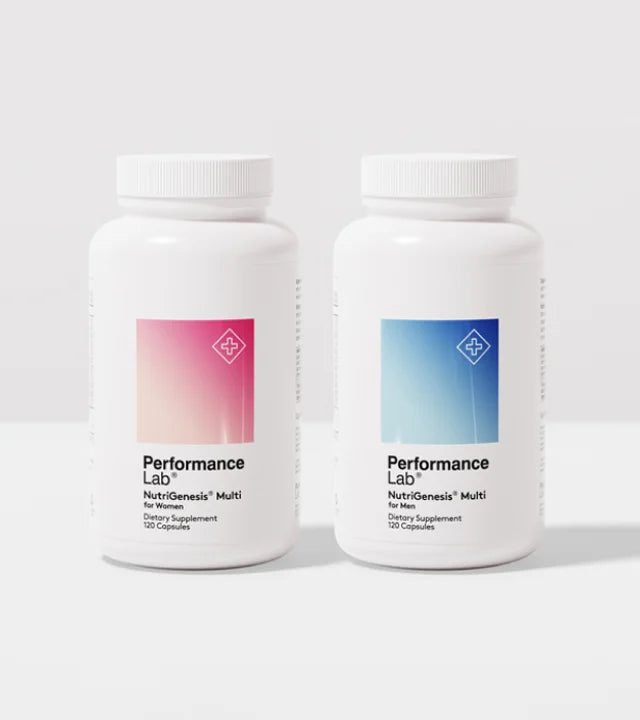
Conclusion
So, to summarize, B12 only provides you with energy by assisting in the breakdown of the food that directly provides you with energy.
If you are already deficient in B12, then you may feel a jump in energy upon consumption as your levels begin to return to baseline, but otherwise, it won’t give you any energy on its own.
Energy drinks give you energy from the caffeine and, often sugar, contained in them, but probably not as much from the B12.
If you are concerned about any possible nutrient deficiencies, you should consult your doctor. Otherwise, supporting your overall health by bridging any potential nutrient gaps with the use of a multivitamin would also be beneficial!
Performance Lab® NutriGenesis® Multi helps you maintain your overall health and wellbeing by providing you with appropriate levels of 17 essential vitamins and minerals, including vitamin B12, to help your energy metabolism, heart health, nervous system, and cognitive function.
Shop Performance Lab® NutriGenesis Multi (Men)
Shop Performance Lab® NutriGenesis Multi (Women)
References
- Watanabe F. Vitamin B12 Sources and Bioavailability. Experimental Biology and Medicine. 2007;232(10):1266-1274. doi:10.3181/0703-MR-67
- O’Leary, Fiona, and Samir Samman. “Vitamin B12 in Health and Disease.” Nutrients. 2010;2(3):299-316.
- D Smith, M Warren, H Refsum. Vitamin B12. Advances in Food and Nutrition Research. 2018;83:215-279
- Jagim AR, Harty PS, Barakat AR, et al. Prevalence and Amounts of Common Ingredients Found in Energy Drinks and Shots. Nutrients. 2022;14(2):314. Published 2022 Jan 13. doi:10.3390/nu14020314
- O'Leary F, Samman S. Vitamin B12 in health and disease. Nutrients. 2010;2(3):299-316. doi:10.3390/nu2030299
- Patel H, McGuirk R. Vitamin B12 Deficiency: Common Questions and Answers. Am Fam Physician. 2025;112(3):294-300.
- de Carvalho LP, Akamine N, Di Pietro MS, França CN, Oliveira R, Lopes RD. Vitamin B12 deficiency and its impact on healthcare: a population-level analysis and call for action. Front Nutr. 2026;12:1701661. Published 2026 Jan 5. doi:10.3389/fnut.2025.1701661