
When it comes to choosing high quality dietary supplements, where do you start? It's not always obvious what actually separates a well-made product from a poorly made one.
After all, you can’t usually tell by touch, smell, or sight whether a supplement has been properly manufactured or tested. That means consumers are often relying on a mix of regulatory standards, quality systems, and independent verification to make informed decisions.
You want a supplement manufacturer who cares about clean labels, effective ingredients and quality control, but that can sometimes be hard to identify when you're faced with a hard marketing sell.
This article breaks down the three main layers of quality control used for dietary supplement manufacturing in the United States, so you can understand what terms like cGMP and GMP certification actually mean in practice, and how they relate to product testing and safety.
This article will give you the power to see through a supplement's promotional literature to the facts behind it.
Let's dig in and find out all about GMP and quality control...
Key Takeaways
- cGMP compliance is the legal manufacturing baseline for dietary supplements in the United States, covering areas such as sanitation, documentation, process controls, and quality systems.
- GMP certification goes beyond minimum regulatory requirements through independent third-party audits from organizations such as NSF, USP, or NPA.
- Additional third-party product testing helps verify supplement purity, ingredient accuracy, and contamination screening for things like heavy metals, microbes, and pesticides.
- Understanding the difference between cGMP compliance, GMP certification, and product testing makes it easier to identify supplement brands with stronger quality control standards.
The 3 Main Layers of Supplement Quality Control

It's important to realize that in the competitive supplement market, not all claims about supplement quality mean the same thing.
Some refer to the legal minimum standards manufacturers must follow, while others involve additional independent audits or product testing that go beyond basic regulatory requirements. It's useful to be able to tell the difference.
In the United States, there are generally three main layers of quality control that help determine how supplements are manufactured and verified. They are:
-
cGMP compliance – the FDA’s mandatory manufacturing standards for dietary supplements, covering areas such as sanitation, documentation, process controls, and quality systems.
-
Third-party GMP certification – voluntary independent audits that assess whether manufacturing facilities are operating in line with recognised GMP quality standards.
-
Third-party product testing – additional laboratory testing of finished products for contaminants, ingredient accuracy, purity, and overall product quality.
We're proud to say that Performance Lab utilizes all three.
Understanding how these layers work together makes it much easier to evaluate supplement quality claims and identify manufacturers that go beyond the regulatory baseline. Let's examine them one by one.
Tier One: What Does cGMP Mean?

Let's start with the acronym: cGMP stands for Current Good Manufacturing Practices.
In simple terms, cGMP refers to a set of minimum regulatory requirements (set down by the Food and Drug Administration in the United States) that govern how dietary supplements are manufactured, processed, packaged, and stored.
These standards are designed to ensure that products are consistently produced under controlled conditions and meet basic quality expectations such as correct identity, purity, strength, and composition. (1)
After all, without such standards one batch of capsules from the same manufacturer could vary widely from the next.
TO NOTE
cGMP is the term most commonly used in the United States under FDA regulations, while the UK and EU generally use the broader term 'GMP' for similar manufacturing standards. The World Health Organization also publishes GMP guidelines, which are often used internationally as a baseline reference.
For clarity purposes, this article focuses on U.S. regulations and standards.
What cGMP Regulations Cover in Manufacturing
cGMP standards regulate the entire production process, including:
-
Manufacturing methods and a process control system
-
Facility cleanliness and sanitation
-
Equipment maintenance and calibration
-
Ingredient sourcing and verification
-
Documentation and batch production record keeping, including extensive record-keeping for traceability, recalls, and audits through detailed batch records
-
Packaging and labelling accuracy
These controls are designed to reduce risks such as contamination, incorrect dosages, or inconsistent product quality; such controls also help companies and brand owners trace ingredients to their source and respond quickly to safety issues or product recalls. (1)
Are Supplement Companies Required to Follow cGMP?
Yes. All dietary supplement manufacturers in the United States are required to comply with FDA cGMP regulations.
This is the minimum legal baseline companies must follow to ensure products are manufactured, packaged, and stored under controlled, hygienic, and consistent conditions. This is implemented by manufacturers and verified through periodic FDA inspections. (3)
Companies are responsible for maintaining oversight and ensuring that quality systems remain in place across the entire production chain, from raw materials to the final product. This includes ensuring that any third-party contract manufacturers, packagers, or distributors they work with also meet the same standards.
As I said, all manufacturers are legally required to comply with FDA cGMP regulations. The technical term for this is being cGMP compliant.
Note that any claims to be cGMP compliant do not have to be pre-approved before a product goes on sale.
Limitations of cGMP in Dietary Supplements
cGMP (current Good Manufacturing Practices) is a strong regulatory framework, but it is important to understand what it does and does not do.
In the U.S., dietary supplements do not go through FDA pre-approval before they are sold. Instead, manufacturers are responsible for ensuring compliance with cGMP requirements from the outset. The FDA steps in through inspections or enforcement and corrective actions if issues are found after products reach the market.
Rather than signing off on individual products, cGMP focuses on how supplements are made with FDA regulations (under 21 CFR Part 111) setting out requirements for manufacturing and more.
In practice, this system is built around process control and representative sampling, not testing every single tablet or capsule in a batch. (6) What that means is that, for example, a small representative sample from a very large batch (sometimes around 100 tablets, depending on the testing plan) may be tested.
That’s why consistent standards in equipment maintenance, facility conditions, staff training, and manufacturing processes are critical to help ensure batch-wide quality and consistency.
That approach works well for large-scale production, but it also means cGMP is primarily a system of controls rather than a product-by-product certification.
This is where additional third-party certifications and independent testing become important, adding extra layers of verification that look not only at how supplements are made, but also at the quality and purity of the finished product itself. (2)
Being cGMP compliant is different from being GMP certified – the latter is tier two: a voluntary step that confirms independent third-party auditors have inspected facilities to verify GMP-based quality systems. (2)
Tier Two: What Are GMP Certified Supplements?

Being GMP certified is the second layer of quality control for supplement manufacturers.
It refers to voluntary third-party GMP audit programs that verify whether a manufacturing facility meets recognized GMP-based quality systems.
Now this can be slightly confusing because some supplement companies use ‘GMP’ and ‘cGMP’ interchangeably in marketing, but they are not technically identical terms.
As we already know, cGMP is the more technically accurate regulatory term in the United States, referring specifically to written procedures for supplements under the FDA.
Being GMP certified is the next layer, a step beyond basic legal requirements. (1) It's a voluntary certification process carried out by independent third-party auditors such as NSF International, USP (United States Pharmacopeia), and the Natural Products Association (NPA).
These auditors assess whether manufacturing facilities meet established GMP (cGMP) standards.
About GMP Certification
It's important to note that GMP certification is NOT a single regulatory system issued by a government body. Instead, it refers to voluntary third-party audit programmes, such as those mentioned above.
What is a GMP Certified Facility?
When a supplement is described as coming from a facility that is GMP certified, this usually means it has been audited under a third-party GMP certification program such as NSF, USP, or NPA.
The assessments typically confirm that a company is following GMP guidelines or GMP regulations on issues such as:
Quality control, documentation, equipment maintenance, staff training, overall production practices, documented proof of compliance for raw materials, equipment maintenance, labeling requirements, complaint handling, and staff hygiene/ sanitary operations.
Following the audit, a certification decision is made. If a manufacturing facility is certified, this provides external verification rather than relying solely on the company’s own compliance processes.
To maintain certification as a GMP facility, the facility must also pass regular audits and ongoing surveillance.
Note that the term ‘GMP certified’ can vary slightly depending on the certifying body and region, which is why it is often used somewhat broadly in the supplement industry.
Why GMP Certified Supplements Matter for Trust

Being GMP certified is not a legal requirement for dietary supplements, so if a supplement manufacturer has this, it's a sign that they value product quality and safety.
Certification signals independent auditing and stronger quality assurance (although, granted, it focuses on manufacturing systems rather than product effectiveness).
Studies show that consumers are often concerned about supplement product safety, so being GMP certified can help to build trust.
Building Consumer Trust
According to a 2021 survey by NSF, one of the auditing companies mentioned above, 95% of consumers were worried about the safety and quality of OTC drugs, dietary supplements and personal care products.
-
Of those, 62% said independent certification from a ‘health and safety organization’ would improve trust
-
While 61% said evidence that they had been made in a facility inspected for GMP would also help. (5)
Not all supplements are made to the same independently verified standard and non-GMP options may have fewer verified quality controls, which can increase the risk of contamination, inaccurate labeling, or formulation errors. (4)
Tier Three: Additional Third-Party Lab Testing for Dietary Supplements

Now we come to the third layer of quality assurance, again voluntary - additional lab testing of the finished product or raw materials.
While GMP certification above uses rigorous audits, batch testing and process validation to reduce the risk of contamination, especially when compared with non-certified manufacturers, this takes it a step further.
Independent laboratories test samples to check for things like:
-
heavy metals
-
microbes, including bacteria
-
pesticides
-
ingredient accuracy
-
contamination or adulteration, including toxins
This is about what is in the product or dietary ingredient, not how the facility operates.
This extra product testing adds protection if something goes wrong with raw materials or supply chains.
Performance Lab products are manufactured in cGMP-compliant facilities and supported by third-party GMP audit programs and independent product testing to help ensure consistent quality, safety, and purity.
Performance Lab products are also Clean Label Project Certified, meaning they are independently tested for contaminants such as heavy metals, pesticides, and other environmental toxins to verify product purity and safety. (7)
Performance Lab Quality Standards
All Performance Lab products are manufactured in facilities that operate under strict quality systems, including:
-
Manufactured in FDA-registered facilities (a regulatory requirement for dietary supplement manufacturers in the United States)
-
cGMP-compliant manufacturing systems (Current Good Manufacturing Practices under FDA regulations)
-
Certified under the Natural Products Association (NPA) GMP audit program
-
UL audited manufacturing and safety systems (independent third-party certification body)
-
ISO-certified quality management systems (international standards for operational quality systems)
-
Ingredient and contaminant control aligned with USP quality guidelines for heavy metals
-
Clean Label Project certified products, independently tested for contaminants such as heavy metals, pesticides, and other environmental residues
Find out more about Performance Lab's Quality control here: https://www.performancelab.com/pages/quality
Performance Lab® NutriGenesis Multi
The world's most advanced multivitamin formula.
Shop Now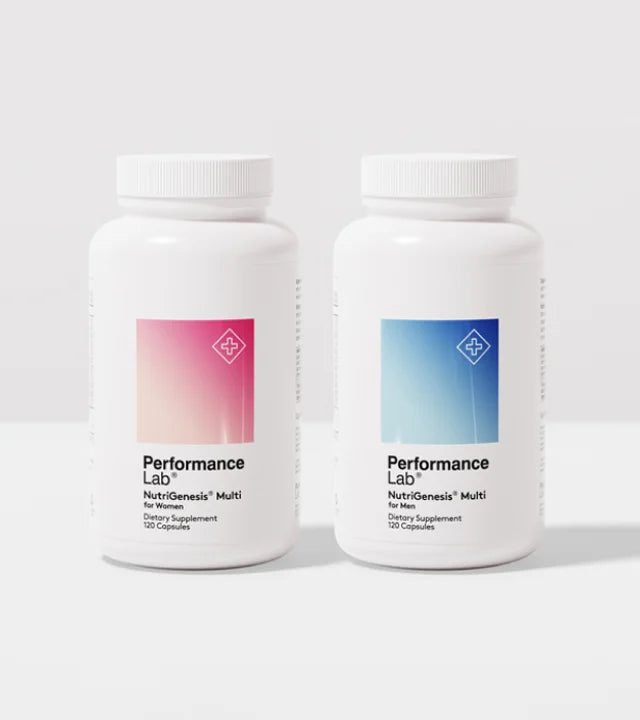
Performance Lab Clean Label Standards
Performance Lab products are formulated to be:
-
Non-GMO
-
Free from artificial preservatives and artificial colorings
-
Allergen-free (including soy, gluten, dairy, nuts, shellfish, and eggs)
-
Vegan-friendly, with certification from the Vegetarian Society.
Buying Guide: Choosing High-Quality GMP Certified Supplements

If you're keen to find GMP certified supplements like Performance Lab, here's what to look for...
-
Prioritize brands with clear certifier information. Look for the certifier name – check for recognised bodies like NSF, USP, or NPA rather than vague ‘GMP certified’ statements, which can sometimes amount to misleading claims, and ask the brand to name the certifying body.
-
Verify their GMP credentials if possible. There is no official FDA list of GMP certified supplements but some third-party certifiers such as NSF and USP provide public verification tools for checking GMP-certified facilities or products. (8)
-
Request audit information from the brand. If verification is unclear, ask the manufacturer directly for its certification status and supporting documentation, including the certifying body, audit scope, and most recent inspection date.
-
Request a COA (Certificate of Analysis). A COA provides independent laboratory results for a specific batch, including testing for contaminants and ingredient accuracy. This is separate from GMP certification but adds an additional layer of quality assurance.
Plus...
-
Look for a clean label. Check for allergens, preservatives, or any evidence that the brand has gone out of its way to create a clean label. All of Performance Lab’s products, for instance, are Clean Label Project certified supplements.
-
Check vegan credentials. If a brand claims to be vegan, check that its capsules are vegan too. Also look for any official verification. Performance Lab products are vegan certified by the Vegetarian Society.
-
Look for any voluntary verifications or certifications. Generally speaking, the more tests a product goes through, the more reputable the manufacturer.
FAQ: Common Questions About GMP Certified Supplements
How can I check if a supplement is really GMP certified?
You can verify GMP certification by checking whether the brand names a recognised certifying agency such as NSF International, USP, or NPA and whether the supplement manufacturer or manufacturing facility appears in the certifier’s official database (where available).
Reputable GMP certification processes are based on independent GMP audits, not self-declared claims. If a brand only says “GMP certified” without naming the certifier, it may simply refer to general GMP compliance (regulatory compliance) rather than verified certification.
Are GMP certified supplements safer than non-certified supplements?
GMP certified supplements are generally considered more reliable because they are produced under strict GMP standards, which include quality control, process controls, and structured quality assurance systems.
However, GMP certification focuses on supplement manufacturing processes, not medical effectiveness. For stronger assurance, consumers often look for a combination of GMP compliance, third party testing, and transparent quality standards across the supply chain.
What is the difference between NSF certified supplements and GMP certified supplements?
NSF certified supplements go through a specific third-party certification programme run by NSF International, which may include both GMP certification audits and additional product-level testing depending on the programme. In contrast, “GMP certified” is a broader term that refers to compliance with GMP guidelines and GMP requirements, often verified through audits but not always linked to a specific certification mark.
Do GMP certified supplements still need third party testing?
Yes. Even when supplements are made in a GMP certified facility, many manufacturers still use third party testing to analyse the final product for contaminants such as heavy metals, microbes, or pesticides. This is because GMP systems focus on manufacturing process control, while lab testing focuses on product safety, raw materials, and batch-level verification. Together, they provide a more complete picture of supplement safety and product quality.
Final Thoughts
Choosing the right dietary or nutritional supplement is an important decision, and hopefully this guide has made it easier to identify high-quality products and manufacturing standards.
In short, there are three key layers of supplement quality control, and Performance Lab is proud to go beyond baseline requirements in all three areas.
Our products are manufactured in cGMP-compliant facilities. These facilities are also NPA GMP certified, and we use additional third-party testing for purity and quality.
Because when it comes to supplements, how a product is made matters just as much as the quality ingredients that go into it.
Learn more about one of our most popular products, Performance Lab NutriGenesis Multi for Men or Women.
References
- U.S. Food & Drug Administration. “Current Good Manufacturing Practice (CGMP) Regulations.” FDA, https://www.fda.gov/drugs/pharmaceutical-quality-resources/current-good-manufacturing-practice-cgmp-regulations .
- U.S. Food & Drug Administration. “Dietary Supplements.” FDA, https://www.fda.gov/food/dietary-supplements .
- Al Azawei, A., K. Loughrey, K. Surim, M. E. Connolly, and B. D. Naughton. “The Management of Good Manufacturing Practice (GMP) Inspections: A Scoping Review of the Evidence.” Frontiers in Medicine, vol. 12, 2025, article 1687864, https://doi.org/10.3389/fmed.2025.1687864 .
- U.S. Food & Drug Administration. “Facts About the Current Good Manufacturing Practice (CGMP).” FDA, https://www.fda.gov/drugs/pharmaceutical-quality-resources/facts-about-current-good-manufacturing-practice-cgmp .
- NSF. “New Study: Most Americans Hold Retailers Responsible for Quality and Safety of Health and Wellness Products.” NSF, https://www.nsf.org/news/americans-hold-retailers-responsible-quality-safety-products .
- National Archives. “Current Good Manufacturing Practice in Manufacturing, Packaging, Labeling, or Holding Operations for Dietary Supplements.” Code of Federal Regulations, https://www.ecfr.gov/current/title-21/chapter-I/subchapter-B/part-111 .
- Clean Label Project. “Clean Label Project.” https://cleanlabelproject.org/ .
- NSF. “Certified Products and Systems: Dietary Supplements.” NSF, https://listings.nsf.org/certified-products-systems?category=Nutrition%20and%20Wellness%20Products%20and%20Services&subCategory=Dietary%20Supplements .