
Three quarters of the American public take supplements on a regular basis and there are thousands of products on the market today. (1)
As well as deciding the best type of product for you (multivitamin, standalone vitamins, minerals, nutrient stacks) you may also be wondering which is better: Synthetic or non-synthetic vitamins?
Should you opt for a natural or artificial vitamin supplement?
Vitamins are defined by their chemical structure, not their source. However, how they are delivered, and the form they take, can influence how the body absorbs, transports, and uses them.
You'll find that most vitamins or dietary supplements are made artificially, but does that mean they're inferior?
Let's investigate...
Key Takeaways
- Synthetic and natural vitamins can be chemically identical, but how they are delivered and absorbed in the body can differ significantly.
- Whole food sources provide a complex matrix of nutrients, including cofactors and other beneficial compounds that can influence absorption and effectiveness.
- Some synthetic vitamins are efficiently absorbed and widely used in clinical settings, particularly for addressing nutrient deficiencies.
- The effectiveness of a supplement depends more on its form, structure, and delivery system than whether it is labelled “natural” or “synthetic.”
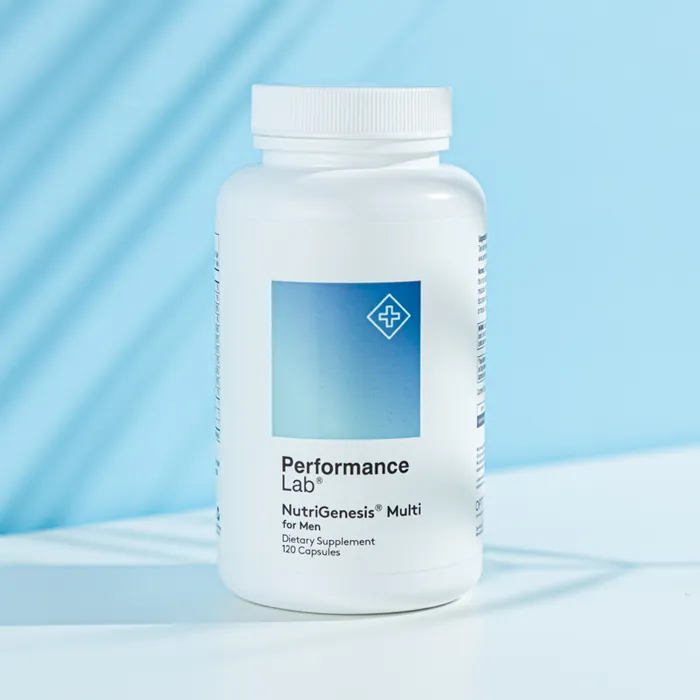
- Nature-identical nutrients such as those in Performance Lab NutriGenesis Multi for men or women aim to combine the precision of synthetic supplements with the biological context of whole food nutrition.
Natural and Synthetic Vitamins: What's the Difference?

There are some basic differences between natural and synthetic vitamins. In a nutshell:
-
Natural nutrients are usually obtained from whole food sources.
-
Synthetic nutrients are typically made artificially in a lab or during an industrial process, and are often isolated nutrients.
How to Find out if Your Supplement is Synthetic or Natural.
The easiest way to find out if your supplement is synthetic is to check your label.
-
Natural supplements are usually labeled as animal or plant-based, and/ or list natural food sources.
-
Supplements that use chemical names such as ascorbic acid (vitamin C) or only include individual nutrients are likely synthetic.
What Does Natural and Synthetic Nutrients Really Mean?
When people compare synthetic and natural vitamins, they often assume they are fundamentally different. In reality, vitamins are defined by their chemical structure, not their source.
Some synthetic forms do differ slightly from the natural version in structure or form, which can influence how they are absorbed, transported, or used - with a knock-on effect to any health benefits. Vitamin E is an example of this (see later for details).
In other cases, however, synthetic vitamins are chemically identical to those found in food.
A well-known example is vitamin C (ascorbic acid), where synthetic and food-derived forms share the same chemical structure. Many human studies show they are absorbed at similar levels when given in isolation. (2)
That said, research is nuanced and some trials have concluded that vitamin C delivered as part of a whole-food extract, such as citrus, can produce a higher or more sustained response in the body than synthetic vitamin C.
This is likely due to additional compounds within the whole food extract that can influence absorption and metabolism, rather than a difference in the vitamin C molecule itself. (3)
So let's talk about that...
Isolated vs Whole-Food Nutrients

Many synthetic vitamins are isolated forms of the nutrient. When we look at non-synthetic or natural forms of those same vitamins, however, we see the main difference between the two.
Whole food vitamins do not exist in isolation.
Whole foods are found in part of a complex nutritional environment (the 'whole food matrix') that includes:
-
phytonutrients
-
enzymes
-
minerals
-
fibre
-
antioxidants
-
and other bioactive compounds.
Food Matrix
Whole foods provide not only vitamins and minerals, but a broad spectrum of plant compounds that can influence how nutrients are metabolised and utilised. As discussed earlier with vitamin C, this surrounding food matrix can influence how nutrients behave in the body.
Key point: A nutrient in food is part of a system. A supplement often delivers that nutrient on its own.
Why This Matters for Absorption and Effectiveness
Because nutrients interact with their surrounding environment, removing them from that context can change how they function.
The natural food matrix can affect:
-
Digestion rate
-
How nutrients are released during digestion
-
How efficiently they are absorbed
-
How they are transported and utilised in the body. (4, 5)
For instance, factors like fat content, particle size, and surrounding compounds can directly influence how well fat-soluble vitamins (A, D, E, K) are absorbed.
In addition, some of the natural cofactors found in whole food supplements may also provide other beneficial nutrients, such as antioxidants. (6)
Think of it like this...
A single vitamin is like one musician in an orchestra. A synthetic supplement gives you that one musician playing their part correctly.
But whole foods are like the full orchestra, where multiple instruments play together in sync. The result is richer, more balanced, and often more effective because of how the parts interact.
So Which Is Best? Natural or Synthetic?

You're going to hate my answer to this but I have to say it - it depends.
Yes, vitamins derived from whole foods are more natural and therefore, in theory, may be easier for the body to absorb. Research shows that is the case with several vitamins.
However, in clinical contexts where deficiencies exist or dietary intake is limited, isolated nutrient supplementation remains a necessary and effective tool.
There is also research that states that some vitamins are just as easily absorbed in their synthetic state. Indeed, synthetic formulations are sometimes preferred due to stability, consistency, or predictable bioavailability. In many cases, especially for water-soluble vitamins, the body can absorb these efficiently.
Quality synthetic B12 forms, for example, tend to be well absorbed, effective at raising blood levels, and clinically equivalent in many contexts of supplementation.
Vitamin B12
Vitamin B12 in natural food sources is typically bound to proteins and must first be released during digestion before it can be absorbed. In fortified foods and supplements, vitamin B12 is already in a free form, meaning it does not require this initial separation step, giving it a simpler absorption pathway. (12)
However, absorption still depends on intrinsic factor (a compound made by the stomach) and the body’s normal uptake mechanisms, so overall bioavailability is influenced more by physiology than by whether the source is natural or synthetic.
It's important to note that absorption efficiency does not always determine biological superiority.
Some synthetic nutrients such as folic acid are more stable and more easily absorbed, for instance, but may still require conversion in the body before they can be used, and this process is not always equally efficient in all individuals. (Pregnant women should seek professional advice on the best supplements for them)
Either way, this does not mean isolated or synthetic vitamin supplements are ineffective. Or, that whole food versions of all vitamins are necessarily better either. (I said you would hate this answer!)
Some nutrients work just as well in isolated form
Others may benefit from being delivered alongside cofactors
The outcome depends on the specific vitamin and context
Whole Food Sources: Limitations

Whole-food-based supplements may provide naturally occurring cofactors, but they also come with inherent variability.
The nutrient composition of foods is influenced by factors such as soil quality, climate, farming practices, and seasonal conditions, meaning the same ingredient can differ in nutrient content between harvests or growing conditions.
This natural variation can make it more challenging to achieve consistent and standardised nutrient levels compared to isolated, manufactured forms. (7)
Synthetic Vitamins and Limitations

While some synthetic ingredients can have the same chemical structure as their natural counterparts, there are some cases when that isn't true. And the body clearly prefers the natural version.
STRUCTURAL DIFFERENCES: Vitamin E is one of the clearest examples where form matters.
Natural vitamin E typically provides a single biologically active form, whereas synthetic versions contain a mixture of forms that are metabolised and excreted differently. There is some evidence that the body prefers the natural form.
Clinical studies, for instance, show that synthetic vitamin E is more readily excreted (meaning it's not wanted) than the natural version. And that natural vitamin E is 1.36 more times biologically potent as its synthetic alternatives, possibly due to better absorption, metabolism, transfer to tissues or other. (8 -10)
FUNCTIONAL DIFFERENCES: Vitamin K provides another example of how form influences function.
Vitamin K1, commonly found in leafy greens and many supplements, is primarily used by the liver and cleared relatively quickly from circulation.
In contrast, certain forms of vitamin K2 (found in fermented foods and some animal products), particularly MK-7, remain in the bloodstream for longer and are more widely distributed throughout the body. (11)
The Limitation of Traditional Supplements
Where standard supplements can fall short is in how nutrients are delivered.
Most conventional multivitamins rely on:
-
isolated compounds
-
manufactured forms without accompanying cofactors
-
delivery formats that don’t reflect how nutrients exist in food
This creates a gap between:
-
whole food nutrition (complex, integrated)
-
standard supplements (isolated, simplified)
Bridging the Gap: Nature-Identical Nutrients
Nature identical nutrients help to bridge the gap between whole food nutrients from natural food sources and synthetic versions. These are supplements that aim to replicate not just the nutrient itself, but the environment it naturally occurs in.
Performance Lab has pioneered the way on this with its NutriGenesis manufacturing process. Nutrients are created in a lab, yes, but they are grown alongside their natural biological matrix and naturally occurring cofactors, as opposed to being 100% isolated synthetic compounds.
By mimicking the structure and context found in whole foods, you make the nutrients easier for the body to recognize and use them.
It also has the benefit of precise dosage of each batch.
Our popular Performance Lab NutriGenesis Multivitamin for men or women includes as many as 24 NutriGenesis cultured vitamins and minerals. It's ideal for topping up any diet gaps or nutrient deficiencies you may have.
Performance Lab® NutriGenesis Multi
The world's most advanced multivitamin formula.
Shop Now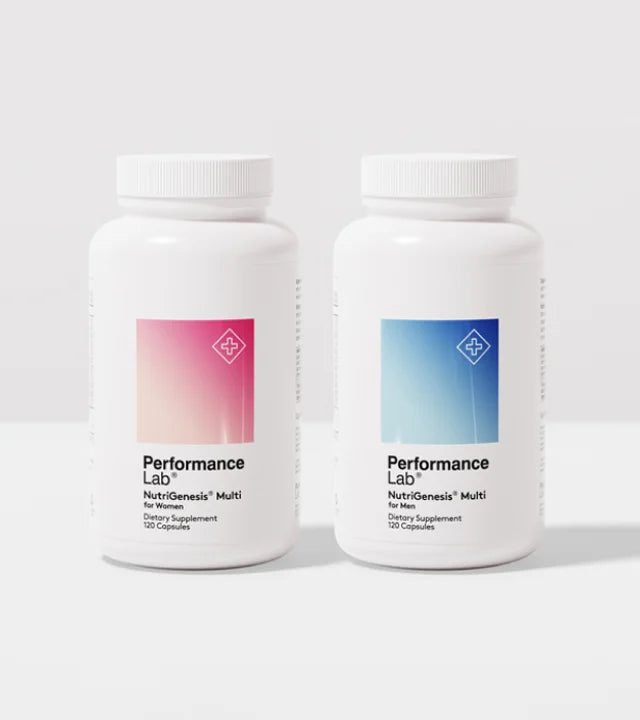
Frequently Asked Questions
1. Are synthetic vitamins the same as natural vitamins?
In many cases, synthetic vitamins and those found in natural sources are chemically identical, meaning they share the same molecular structure. For example, vitamin C in its synthetic form (ascorbic acid) is the same compound found in citrus fruits and other natural sources.
However, the way nutrients exist in food is different from how they appear in supplements. In whole food sources, vitamins and minerals are part of a broader matrix that includes other beneficial nutrients, enzymes, and plant compounds.
This means that while synthetic forms may provide the same essential vitamins, they are often isolated, whereas food-based vitamins are delivered alongside other essential nutrients in a more complex system.
2. Are organic vitamins or food-based vitamins better than synthetic ones?
Organic vitamins and food based vitamins are often preferred because they come from whole food sources and may include additional compounds beyond the core nutrient. These natural sources can provide other beneficial nutrients that contribute to overall health.
However, this does not automatically mean they provide different benefits or are always more effective. In many cases, synthetic vitamins are chemically identical to those found in food and can provide the same benefits when properly absorbed by the body.
The main difference often lies in context rather than effectiveness. A balanced diet rich in natural ingredients, including healthy fats, fruits, vegetables, and produce vitamin-containing foods, remains the foundation of optimal health, while supplements can help address nutritional deficiencies.
3. Can synthetic vitamins help with vitamin deficiencies?
Yes, synthetic vitamins are commonly used to address vitamin deficiencies and support individuals who may not be getting enough essential vitamins and minerals from their diet.
For example, vitamin D deficiency is common in populations with limited sun exposure, and vitamin B12 deficiency can occur in those with restricted dietary intake. In these cases, supplements or fortified foods can play an important role in preventing nutritional deficiencies.
Both water soluble vitamins and fat soluble vitamins can be supplemented effectively, depending on individual needs. In clinical settings, mineral supplements and vitamin supplements are often used to correct deficiencies and support normal immune system and metabolic function.
4. Do natural vitamins from food work better than supplements?
Natural sources of vitamins can offer advantages because they contain a full spectrum of essential nutrients, including amino acids, healthy fats, and other vital nutrients that work together in the body.
This food matrix can influence how the body absorbs and uses nutrients. However, synthetic counterparts are often designed to be chemically identical to those found in food and can provide the same benefits in isolation.
Ultimately, both natural and synthetic forms can contribute to a nutritious diet and overall health. The effectiveness depends on the specific nutrient, dosage, and whether there are any underlying health concerns affecting absorption.
5. What are common synthetic vitamins and are they safe?
Common synthetic vitamins include forms such as vitamin B12 (cyanocobalamin), vitamin D2, pantothenic acid, and dl alpha tocopherol (a synthetic form of vitamin E). These are widely used in fortified foods, supplements, and clinical nutrition.
Many fortified foods and supplements rely on synthetic form nutrients because they are stable, cost-effective, and allow precise dosing. For example, fortified foods are an important source of essential nutrients in populations at risk of vitamin deficiencies.
When used appropriately, these supplements are considered safe and can play an important role in preventing nutritional deficiencies, especially when dietary intake alone is insufficient.
Final Thoughts
Whole foods remain the gold standard for nutrition because they provide nutrients in their natural, complex environment.
However, generalising all synthetic nutrients as inferior or all natural whole-food nutrients as superior is not supported by the evidence. Outcomes depend on molecular form, dose, and biological context.
The effectiveness of a nutrient is determined by its specific form, structural characteristics, and delivery system, all of which influence bioavailability and biological activity.
Newer approaches, such as nature-identical nutrient systems, aim to bridge the gap between the two forms by combining precise, standardised dosing with a closer reflection of how nutrients exist in nature.
References
- The Council for Responsible Nutrition (CRN). “CRN Survey Shows Consistent Supplement Usage with Increase of Specialty Product Use Over Time.” https://crnusa.org/newsroom/crn-survey-shows-consistent-supplement-usage-increase-specialty-product-use-over-time
- Carr, A. C., and M. C. Vissers. “Synthetic or Food-Derived Vitamin C—Are They Equally Bioavailable?” Nutrients 5, no. 11 (2013): 4284–4304. https://doi.org/10.3390/nu5114284
- Vinson, J. A., and P. Bose. “Comparative Bioavailability to Humans of Ascorbic Acid Alone or in a Citrus Extract.” The American Journal of Clinical Nutrition 48, no. 3 (1988): 601–604.
- Aguilera, J. M. “The Food Matrix: Implications in Processing, Nutrition and Health.” Critical Reviews in Food Science and Nutrition 59, no. 22 (2019): 3612–3629. https://doi.org/10.1080/10408398.2018.1502743
- Forde, C. G., and D. Bolhuis. “Interrelations Between Food Form, Texture, and Matrix Influence Energy Intake and Metabolic Responses.” Current Nutrition Reports 11, no. 2 (2022): 124–132. https://doi.org/10.1007/s13668-022-00413-4
- Tan, Y., and D. J. McClements. “Improving the Bioavailability of Oil-Soluble Vitamins by Optimizing Food Matrix Effects: A Review.” Food Chemistry 348 (2021): 129148. https://doi.org/10.1016/j.foodchem.2021.129148
- Balaji, V., M. Chec, R. Brahmadevi, S. Holladay, and K. Czaja. “Micronutrient Differences in Conventionally and Organically Produced Foods.” Nutrients 18, no. 1 (2025): 84. https://doi.org/10.3390/nu18010084
- Traber, M. G. “Utilization of Vitamin E.” BioFactors 10, no. 2–3 (1999): 115–120. https://doi.org/10.1002/biof.5520100205
- Traber, M. G., A. Elsner, and R. Brigelius-Flohé. “Synthetic as Compared with Natural Vitamin E Is Preferentially Excreted as Alpha-CEHC in Human Urine: Studies Using Deuterated Alpha-Tocopheryl Acetates.” FEBS Letters 437, no. 1–2 (1998): 145–148. https://doi.org/10.1016/s0014-5793(98)01210-1
- Eggersdorfer, M., K. Schmidt, S. Péter, J. Richards, B. Winklhofer-Roob, A. Hahn, and U. Obermüller-Jevic. “Vitamin E: Not Only a Single Stereoisomer.” Free Radical Biology & Medicine 215 (2024): 106–111. https://doi.org/10.1016/j.freeradbiomed.2024.02.013
- Du, F., M. Yan, L. Duan, et al. “The Study of Bioavailability and Endogenous Circadian Rhythm of Menaquinone-7, a Form of Vitamin K2, in Healthy Subjects.” British Journal of Nutrition 130, no. 11 (2023): 1885–1897. https://doi.org/10.1017/S0007114523001034
- Office of Dietary Supplements, National Institutes of Health. “Vitamin B12 Fact Sheet for Health Professionals.” https://ods.od.nih.gov/factsheets/VitaminB12-HealthProfessional/