

Collagen and gelatin are like brothers.
They come from the same family but are not quite the same.
While their nutrient profiles are near-identical, they part ways in chemical structure. This affects absorption, convenience, and potentially their effectiveness.
So, which one is actually better?
We break down their key differences, best uses, and what science says about joint function, skin quality, and gut health to help you make an informed choice.
Key Takeaways
- Collagen is your body's main protein. It's essential for skin, joints, gut health, bones, and general nutrition.
- Both collagen and gelatin have almost identical amino acid profiles. This includes glycine, proline, and hydroxyproline. Limited research suggests they also share some health benefits.
- However, collagen peptides (the most common form in supplements) have more research overall. Gelatin is more popular as a culinary ingredient.
- Collagen peptides are easier to absorb due to the smaller molecular size. They dissolve in both hot and cold beverages (gelatin can only do so in hot temperatures). And they are simple to use consistently in studied dosages (10-15 grams per day).
- For joints and tendons, both gelatin and collagen can help by supplying collagen building blocks. Especially when taken at ~10–15 g daily and paired with exercise and vitamin C, 60 minutes before training (as per Dr. Keith Baar's protocol).
- We would use collagen peptides for convenient supplementation and gelatin for budget-friendly, food-based collagen support.
What Are Collagen and Gelatin? Simple Science

What is Collagen?
Collagen is the most abundant protein in the body, making up 30% of all its proteins. (7)
It has a triple-helix structure that gives stability and strength to your skin structure, bone, teeth, joints, tendons, ligaments, and fascia.
Your body makes collagen from amino acids and nutritional cofactors in food (like vitamin C).
Collagen levels are estimated to peak in the mid-20s to early-30s. As we age, collagen density declines. This is part of the reason for wrinkles and weaker joints. (8)
Many people take collagen supplements in their various forms (gelatin included) to support healthy collagen levels throughout life. And for specific health goals such as joint function, gut health, and more.
What is Gelatin?
Gelatin is a cooked form of collagen. It is the result of partially degrading collagen using heat. As collagen goes through heat, it loses its stable triple-helix structure and turns into a protein form with gelatinous texture.
Just like marine collagen or bovine sources, gelatin typically comes from animal connective tissues.
Due to its different structure, it becomes a gel when cooled. This makes it a versatile cooking ingredient.
What are Collagen Peptides (a.k.a Hydrolyzed Collagen)?
Collagen peptides, also known as collagen hydrolysate, are small molecules that were even more heat-processed than gelatin. This results in smaller chains of molecules for easier digestion.
To put it in another way, collagen is like a strong rope, whereas gelatin is that same rope but unravelled with more pliable threads due to heat or acid processing. Collagen peptides are unravelled even further and have the tiniest threads of them all.
When talking about collagen supplements, most people take collagen peptides (hydrolyzed collagen) for rapid absorption.
Raw, pure collagen has a role in specific health goals, such as joint comfort. But for the sake of brevity, we'll focus on peptides vs gelatin in this article.
Collagen vs Gelatin Powder — How They Work

Peptides are more versatile because they dissolve in both hot or cold water, which is ideal for drinks and smoothies.
Gelatin, on the other hand, is more common in cooking (making jelly or gummies, for thickening). It also tends to be more affordable.
In terms of their nutritional composition and health effects, they seem to be on par in some areas. In others, limited research suggests collagen peptides may have some potential advantages.
Collagen Peptides: More Than Just Building Blocks?
Both gelatin and collagen end up as the same amino acids in your body. But collagen peptides also appear to deliver specific peptide fragments that act as biological signals.
In other words, gelatin provides mostly amino acids, a.k.a raw materials. Collagen peptides deliver amino acids plus short peptides (like Pro-Hyp, Hyp-Gly) that may influence specific processes in your body, such as bone growth, skin repair, and cartilage health.
Research shows that:
“Hydrolyzed collagen may contain biologically active peptides that are able to reach joint tissues and exert chondroprotective effects.” (9)
One research analysis reported that hydrolyzed collagen peptides:
“… may function as signaling molecules that stimulate collagen production rather than serving solely as amino acid precursors.” (10)
If you're like us and like to geek out, you'll be interested to know that:
-
These short peptides are shown to interact with fibroblasts and chondrocytes in skin and joints
-
They may stimulate collagen synthesis pathways (not guaranteed, but possible according to early evidence)
Not to discredit the role of gelatin and its potential health benefits, though. It still gives your body the building blocks for making collagen and can be a solid nutritional supplement. However, whether it activates signaling like the peptides is not clear yet.
|
Category |
Gelatin |
Collagen |
|
Structure |
Collagen is broken down into smaller amino acids via heating. Forms a gel when cooled. |
Intact triple-helix structure. In the case of collagen peptides, it's broken down into peptides even smaller than in gelatin. |
|
Absorption |
Easily absorbed. |
Very easily absorbed for maximum bioavailability. |
|
Dissolves in |
Hot liquids only. |
Both hot and cold liquids. |
|
Supports |
joints, bones, skin, hair, nails, gut, general nutrition |
joints, bones, skin, hair, nails, gut, general nutrition (mayhave unique advantages due to the peptide fragments) |
|
Best for |
Culinary uses and affordable collagen supplementation. |
Versatile, convenient collagen supplementation. |
Health Benefits Compared: Evidence-Based Look
Joint & Tendon Health

Collagen and gelatin both support tendons and joints to a degree. They feed the key building blocks (glycine, proline) that make up these tissues.
Between the two, though, collagen peptides have more research overall.
A 2021 narrative review pointed out that peptides play a role in joint pain and healthy cartilage metabolism. Particularly when used consistently and alongside physical activity. (11)
Early evidence shows that gelatin may support joints, tendons, and other collagen-rich tissues, too. But how it fares against collagen peptides in reducing joint pain or improving mobility is not yet clear. In fact, both need more robust human trials to fully understand their scope of effects.
There are some suggestions that collagen supplements, including gelatin, may be particularly helpful for tendons and collagen production in specific contexts like physical exercise. A case in point:
The Keith Barr Protocol for Tendons
The Keith Barr Protocol is a method for supporting tendon health. It involves a combination of specific exercises and supplementation. This includes instructions to add collagen or gelatin (15 grams) with 50-100 mg of vitamin C, 30-60 minutes before tendon-loading exercises (e.g. isometrics like planks or wall sits). This has been found to enhance collagen sythesis and repair and potentially play a role in injury prevention and rehab.
As you could tell from the name, this protocol is accredited to Dr. Keith Baar, a renowned Molecular Exercise Physiologist and Professor at the University of California, Davis (UC Davis). His protocol is linked to a study he did in 2016, where 15g of vitamin C-enriched gelatin 60 minutes before exercise increased study participants' collagen synthesis. (6)
The Bottom Line
According to Dr. Keith Baar, there is not much difference between the two when it comes to supporting tendon health and influencing collagen production. (12)
Skin, Hair & Nails

Collagen peptides and gelatin both play a role in keeping healthy skin. They provide amino acids that may support collagen production and help tighten skin.
Board-certified dermatologist Dr. Andrea Suarez (Dr. Dray) says that peptides might reach our skin and signal our cells to make new collagen. While just a working theory that isn't proven, it only seems to apply to collagen peptides, not gelatin or bone broth. (13)
As far as hair and nail growth go, collagen peptides have a bit more research behind them. Neither has robust scientific backing, though.
Bone & Gut Health

For bone health and gut support, there isn't much difference between the two. Collagen and gelatin both play a supportive role. They contribute to bone metabolism, formation, and bone density.
In terms of gut health, they provide building blocks for a healthy intestinal lining and have been linked to anti-inflammatory properties in the gut. (14, 15)
With that said, peptides are easier to dose consistently at the high levels that may be needed (10-15 g per day).
The bottom line: choosing peptides or gelatin ultimately depends on your preferences, with gelatin being the more budget-friendly option. If the budget is not an issue and you want to capitalize on potential extra benefits, collagen peptides are worth considering.
How to Choose & Use: The Performance Lab Protocol
If we were choosing between collagen or gelatin, we would...
Choose Collagen Peptides For:
- Easy and consistent daily supplementation (10-15 grams)
- Flavorless, easy solubility in hot or cold liquids (coffee, smoothies, soups.)
- Maximum bioavailability and quick absorption
- Pre- and post-workout nutrition
- Hair, skin elasticity and hydration, joint, tendon goals
Studies with peptides found the best results at around 10 g per day, taken for 12-24 weeks. You may or may not notice the supplement working sooner, since results vary between people. Lower doses were less consistently effective. (1)
Choose Gelatin For:
- Culinary uses (homemade jellies, gummies, sauces, and others)
- Gut-supportive bone broths
- Recipes requiring gelling properties
- Pre- and post-workout nutrition
- Hair, skin hydration and elasticity, joint, tendon goals
- More affordable supplementation to boost protein content
How to Add Gelatin to Your Daily Routine: Practical Recipes
If you want to add gelatin to your health routine, it often takes a bit more work than simply mixing it in a glass of cold water. Use these easy recipes as your starting point.
|
Recipe |
Goal |
Prep |
|
1. Sports Tendon Jello |
Targeted Pre-Workout Support |
2 min (active) |
|
2. "Silky" Coffee |
General Support & Protein |
1 min |
|
3. Nightly Calming Gummies |
Targeted Sleep & Recovery |
5 min (active) |
1. High-Performance Tendon Jello This recipe is ideal for active individuals interested in the Keith Baar Protocol.
- How-to: Mix 15g gelatin + 50mg Vitamin C into hot water to form a thick liquid, but not yet gelled. Drink 60 mins before training.
2. Gut-Soothing "Silky" Coffee This gives a smooth and slightly creamy texture to hot liquids while delivering support to the digestive system.
- How-to: Mix 1 tbsp gelatin with a splash of cold water to "bloom" (1 min) and prevent clumping. Pour hot coffee over and stir until satisfied.
3. Nightly Calming Gummies. An easy way to dose gelatin and benefit from its high Glycine content, an amino acid linked to improved sleep quality.
- How-to: Heat 1 cup juice (don't boil). Whisk in 3 tbsp gelatin until they dissolve completely. Pour into a container and chill for 2 hours. Eat before bed.
The Big Question: Can You Take Both Gelatin and Collagen Peptides?
You could. However, there's not much research to show any extra advantages justifying the investment. But since they are relatively safe, you can still take them together if you prefer to do so, keeping in mind the recommended daily dosage of 10-15 g, or less if you want to start lightly.
It's good to remember: For optimal collagen production and absorption, you'll want to ensure sufficient intake of vitamin C, which is its most important co-factor. You also need zinc, copper, manganese, and vitamin B6, along with essential amino acids like lysine and proline. These are partner nutrients that ensure collagen's strength and stability.
To help cover these nutritional bases, Performance Lab® NutriGenesis Multi provides 24+ essential vitamins and minerals, lab-cultured with cofactors to support your daily wellness puzzle.
Performance Lab® NutriGenesis Multi
The world's most advanced multivitamin formula.
Shop Now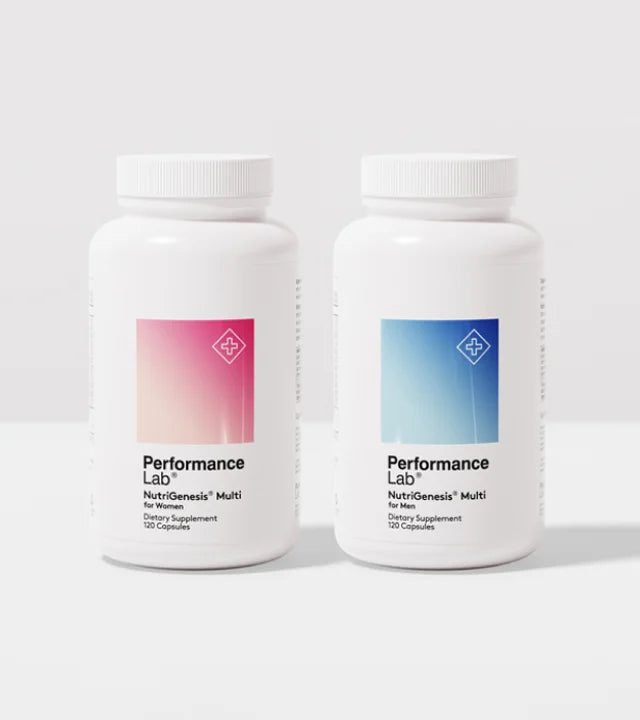
Anything Else to Consider?
Collagen and gelatin are safe for most healthy people. Like with any supplement, there is a degree of risk of side effects, which in this case, are occasional and minor GI issues.
Collagen Safety Notes
If you have food allergies like shellfish or bovine, or are a vegetarian, look for vegan collagen boosters like Horsetail or Amla fruit, though these are not the same as actual collagen.
That said, avoid collagen supplements in any form before talking to your doctor if you have kidney issues.
This is because the collagen metabolism leaves behind byproducts called oxalates. These are linked to an increased risk of kidney stones in susceptible people. (16)
This might not be a problem when consuming collagen food sources in normal amounts, but it's something to watch for when taking supplements. Especially when combined with vitamin C, which also raises oxalate levels. (17)
Another important point is the quality of your collagen or gelatin supplement. Since they are not regulated like medications, there is a risk of contamination with undisclosed substances. You can minimize this risk by choosing reputable, 3rd-party tested brands.
Not exactly. Jell-O uses gelatin, a broken-down form of collagen. Typical supplements use collagen peptides, which are broken down even further for maximum absorption. There's also raw collagen, the natural form, which is not broken down at all, but this is used for specific joint-support protocols and is less common for general skin and supplementation.
You can use gelatin instead of collagen as a more affordable alternative for protein intake, nutrition, gut health, and connective tissue support. However, some experts argue that collagen peptides are better absorbed and more helpful in supporting certain wellness goals due to their smaller molecular size.
Final Thoughts
If you feel confused about which to choose, ask yourself: "Am I looking for the biggest possible performance and wellness gains and a convenient way of dosing, or am I looking for a balance of affordability and value, and also enjoy eating healthy desserts?"
If the answer is the former, then collagen peptides are worth exploring. If it's the latter, start with gelatin, see how it works for you in different recipes, and go from there.
Any questions, feel free to ask in the comments!
References
- Khatri, M., Naughton, R. J., Clifford, T., Harper, L. D., & Corr, L. (2021). The effects of collagen peptide supplementation on body composition, collagen synthesis, and recovery from joint injury and exercise: a systematic review. Amino acids, 53(10), 1493–1506. https://pmc.ncbi.nlm.nih.gov/articles/PMC8521576/
- Pu, S. Y., Huang, Y. L., Pu, C. M., Kang, Y. N., Hoang, K. D., Chen, K. H., & Chen, C. (2023). Effects of Oral Collagen for Skin Anti-Aging: A Systematic Review and Meta-Analysis. Nutrients, 15(9), 2080. https://doi.org/10.3390/nu15092080
- Abrahams, M., O'Grady, R., & Prawitt, J. (2022). Effect of a Daily Collagen Peptide Supplement on Digestive Symptoms in Healthy Women: 2-Phase Mixed Methods Study. JMIR formative research, 6(5), e36339. https://doi.org/10.2196/36339
- Liu, D., Nikoo, M., Boran, G., Zhou, P., & Regenstein, J. M. (2015). Collagen and gelatin. Annual review of food science and technology, 6, 527–557. https://doi.org/10.1146/annurev-food-031414-111800
- Al Hajj, W., Salla, M., Krayem, M., Khaled, S., Hassan, H. F., & El Khatib, S. (2024). Hydrolyzed collagen: Exploring its applications in the food and beverage industries and assessing its impact on human health—A comprehensive review. Heliyon, 10(16), e36433. https://doi.org/10.1016/j.heliyon.2024.e36433
- Shaw, G., Lee-Barthel, A., Ross, M. L. R., Wang, B., & Baar, K. (2017). Vitamin C–enriched gelatin supplementation before intermittent activity augments collagen synthesis. The American Journal of Clinical Nutrition, 105(1), 136–143. https://doi.org/10.3945/ajcn.116.138594
- Cleveland Clinic. (2022, May 23). Collagen: What it is, types, function & benefits. Cleveland Clinic. https://my.clevelandclinic.org/health/articles/23089-collagen
- Reilly, D. M., & Lozano, J. (2021). Skin collagen through the lifestages: Importance for skin health and beauty. Plastic and Aesthetic Research, 8(2). https://doi.org/10.20517/2347-9264.2020.153
- Martínez-Puig, D., Costa-Larrión, E., Rubio-Rodríguez, N., & Gálvez-Martín, P. (2023). Collagen Supplementation for Joint Health: The Link between Composition and Scientific Knowledge. Nutrients, 15(6), 1332. https://doi.org/10.3390/nu15061332
- Examine. (2025, September 8). Does postworkout collagen supplementation increase connective tissue synthesis in muscle? Examine Research Feed. https://examine.com/research-feed/study/1a23j0/
- Khatri, M., Naughton, R. J., Clifford, T., Harper, L. D., & Corr, L. (2021). The effects of collagen peptide supplementation on body composition, collagen synthesis, and recovery from joint injury and exercise: a systematic review. Amino acids, 53(10), 1493–1506. https://pmc.ncbi.nlm.nih.gov/articles/PMC8521576/
- Baar, K. (2024). Maximizing Tissue Health: Strategies for Longevity & Performance [Video]. YouTube. https://youtu.be/hagexHKAFW0
- Suarez, A. [Dr. Dray]. (2024). The Truth About Collagen | 7 HUGE Myths About Taking Collagen [Video]. YouTube. https://www.youtube.com/watch?v=a7b25Z-6Vnw
- Abrahams, M., O'Grady, R., & Prawitt, J. (2022). Effect of a Daily Collagen Peptide Supplement on Digestive Symptoms in Healthy Women: 2-Phase Mixed Methods Study. JMIR formative research, 6(5), e36339. https://doi.org/10.2196/36339
- Xin, X.-Y., Zhou, J., Liu, G.-G., Zhang, M.-Y., Li, X.-Z., & Wang, Y. (2025). Anti-inflammatory activity of collagen peptide in vitro and its effect on improving ulcerative colitis. npj Science of Food, 9, Article 1. (No URL provided)
- Knight, J., Jiang, J., Assimos, D. G., & Holmes, R. P. (2006). Hydroxyproline ingestion and urinary oxalate and glycolate excretion. Kidney international, 70(11), 1929–1934. https://doi.org/10.1038/sj.ki.5001906
- Assimos D. G. (2004). Vitamin C supplementation and urinary oxalate excretion. Reviews in urology, 6(3), 167. (No URL provided)