

Drug companies make it clear that taking certain medications together isn't a good idea, but what about taking natural dietary supplements together—is there the potential for adverse reactions?
One supplement that's often recommended to be taken alone is iron—a metal that is known for its role in supporting red blood cell production and energy levels. However, when added to something like a multivitamin where other nutrients are present, is it safe to be consumed with others?
How to supplement can be just as important as what supplements to take because it can be the deciding factor for optimal absorption, a.k.a, how much your body actually gets.
So, we're breaking down the link between two essential nutrients—vitamin D and iron—and talking about if they're safe to take together.
Key Takeaways
- Vitamin D and iron address different needs—bone health and immune function vs. oxygen transport and energy production. (1, 7, 14, 15)
- They can be taken on the same days. (16) Stagger if you experience GI issues or take interacting meds.
- Vitamin C may enhance non-heme iron absorption, whereas calcium supplements and some foods can compete. (15, 17, 18)
- Use labs to guide dosing. Avoid too much and re-check levels periodically.
4 Health Benefits of Iron Supplements

Iron is a supplement that isn't generally one people gravitate towards (unless they're diagnosed as iron deficient), but that doesn't make it any less important. In fact, for vegans and vegetarians, supplementing iron should rank pretty high on their priority list, as iron is abundant in red meat.
As the most abundant metal in the human body, the average adult needs about 3-4g of iron that can be derived from one of two forms: heme iron and non-heme iron. (1)
Heme iron is present mostly in animal flesh—meat, poultry, fish—and is well absorbed, whereas non-heme iron accounts for most of the iron in plants and is less well absorbed.
More than 95% of functional iron in the body is found in the form of heme. (2) As such, heme iron becomes an essential component of the diet.
A high heme intake can have adverse effects on health, but heme deficiency can also pose major health risks. Roughly 80% of heme in the human body is present in red blood cells, while the other 15% and 5% are synthesized and present in the liver and distributed throughout other tissues, respectively. (1)
But what does iron do?
- Regulates circadian rhythm: Circadian rhythm is the internal body clock that governs many key behaviors and physiological processes in humans, including the sleep/wake cycle, feeding, body temperature, hormone secretion, and metabolism. (3) Studies suggest that heme, which is found in iron-containing enzymes, participates in a feedback loop that regulates the circadian clock.
- Improves muscle function: The majority of heme is found in hemoglobin (red blood cells) and myoglobin (muscle cells), forming a critical component that transports oxygen needed for muscles to contract. Without sufficient iron, muscles can lose tone and elasticity. Iron deficiency, independent of anemia, is known to cause functional impairments of skeletal muscle function. (4)
- Temperature regulation: Poor temperature regulation has been linked to iron-deficiency anemia, which may be due to effects on the rate of both heat production and heat loss (5); heat production may be due to poor thyroid function in iron deficiency, whereas the latter is generally the result of competing demands for tissue oxygenation vs. decreased blood flow to minimize heat loss to the environment.
- Neurotransmitter synthesis: You may not think iron regulates your mood, but it does. Iron levels influence the synthesis and signaling of key neurotransmitters like dopamine, noradrenalin, adrenaline, and 5-hydroxytryptamine, which are involved in emotion, attention, reward, movement, and more. (6)
There's no shortage of benefits to supplementing iron tablets—this list is far from inclusive—but can you take iron supplements with other vitamins?
Let's find out.
Interaction Between Vitamin D And Iron

Even in the world of natural supplements, vitamins and minerals aren't exempt from interactions. Consuming nutrients in excessive amounts, what we call mega-dosing, may result in negative interactions with other nutrients or even lead to health problems.
For example, taking large doses of zinc can interfere with how your body absorbs iron and copper.
But what about vitamin D and iron—is there an interaction?
Studies in clinical nutrition show a few links between the two nutrients (7-9):
- Vitamin D may affect circulating iron status by promoting erythropoiesis and suppressing hepcidin expression
- Low levels of pro-inflammatory cytokines and hepcidin increases iron bioavailability for erythropoiesis and hemoglobin synthesis by inhibiting iron sequestration in macrophages
- Low iron levels can impair intestinal absorption of fat-soluble vitamins, including vitamin D
While boosting your iron intake isn't likely to interfere with your vitamin D levels, loading up on vitamin D has the potential to interfere with iron uptake. While some studies indicate that vitamin D can decrease iron stores, others show no effect, even with mega-doses of vitamin D. (10)
Taken together, the research isn't conclusive enough to suggest you should avoid combining the two. It's not likely that moderate doses of both nutrients will interfere with other's absorption.
However, it may be ideal to obtain them from natural sources. Supplements and fortified foods are usually fine if your diet has gaps.
If you do choose supplements, take vitamin D with healthy fats for optimal absorption, because it's a fat-soluble nutrient. If you're at higher risk for deficiency, you might consider taking iron on an empty stomach or with orange juice for easy absorption.
You May Also Like: Best Vegan Vitamin D Supplement
Signs And Symptoms Of Low Iron And Low Vitamin D Levels

Symptoms Of Low Iron Levels
If you think you're low in iron, watch out for these signs and symptoms (12):
- Fatigue or lack of energy
- Shortness of breath
- Difficulty concentrating
- More frequent sickness
- Poor body temperature regulation
- Pale skin and weight loss
- Heart palpitations
- Headaches
- Ringing, hissing, or buzzing noises inside your head
- Sore tongue or difficulty swallowing
- Altered taste perception
- Hair loss
- Pica (cravings for non-food items)
- Spoon-shaped nails
- Restless leg syndrome
Symptoms Of Low Vitamin D Levels
If you have low vitamin D levels, be on the lookout for these signs and symptoms (13):
- Muscle weakness and bone pain
- Increased risk of falling, especially in older adults
- Joint and muscle aches and pains
- Autoimmunity
- Weakened immune system
- Fatigue
- Mood changes
Final Thoughts
While research shows a link between the two vitamins, there is little reason to avoid combinations of iron and vitamin D.
To improve calcium absorption and vitamin D uptake, consider taking vitamin D with food and combining it with vitamin K2 (K2 helps direct calcium into your bones). Conversely, to ensure you don't hinder iron, you might avoid taking iron at the exact same time as high-calcium foods.
Because they may support each other in maintaining sufficient levels, popping back a multi or another supplement that contains both iron and vitamin D may be beneficial to support overall health and performance. Needless to say, always consult your healthcare provider before starting a new regimen.
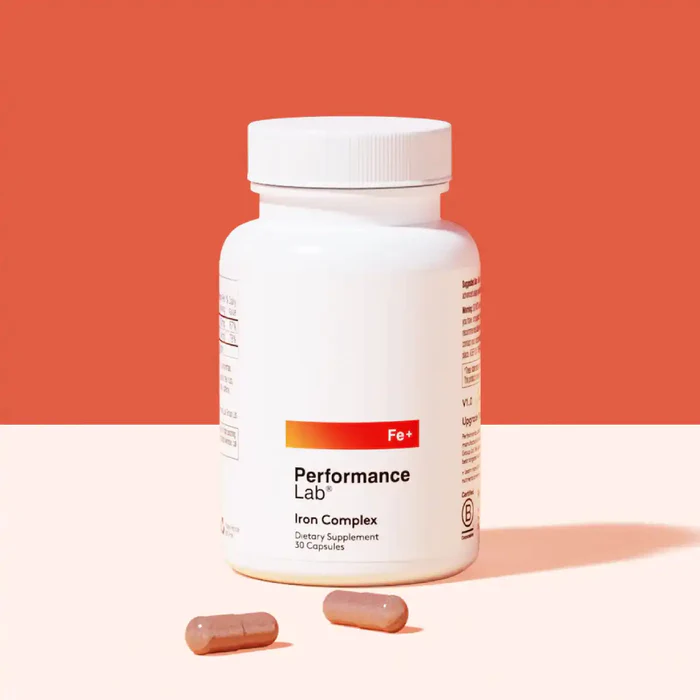
If you're seeking high-quality iron and vitamin D supplements, look no further than Performance Lab® Iron Complex with NutriGenesis® and Performance Lab® D3 K2.
References
- J Hooda, A Shah, L Zhang. Heme, an essential nutrient from dietary proteins, critically impacts diverse physiological and pathological processes. 2014;6(3):1080-1102.
- JF Briat, C Curie, F Gaymard. Iron utilization and metabolism in plants.Curr Opin Plant Biol. 2007;10(3):276-282.
- K Kaasik, CC Reciprocal regulation of haem biosynthesis and the circadian clock in mammals. Nature. 2004;430(6998):467-471.
- S Neidlein, R Wirth, M Iron deficiency, fatigue and muscle strength and function in older hospitalized patients. Eur J Clin Nutr. 2021;75(3):456-463.
- D Brigham, J Beard. Iron and thermoregulation: a review.Crit Rev Food Sci Nutr. 1996;36(8):747-763.
- D Hare, S Ayton, A Bush, P Lei . A delicate balance: Iron metabolism and diseases of the brain.Front Aging Neurosci. 2013;5:34.
- MF Holick. Vitamin D deficiency.N Engl J Med. 2007;357(3):266-281.
- EM Smith, V Tangpricha. Vitamin D and anemia: insights into an emerging association. Curr Opin Endocrinol Diabetes Obes. 2015;22(6):432-438.
- JJ Sim, PT Lac, IL Liu, et al. Vitamin D deficiency and anemia: a cross-sectional study. Ann Hematol. 2010;89(5):447-452.
- MS Masoud, MS Alokail, SM Yakout, et al. Vitamin D Supplementation Modestly Reduces Serum Iron Indices of Healthy Arab Adolescents. 2018;10(12):1870.
- J Malczewska-Lenczowska, D Sitkowski, O Surała, J Orysiak, B Szczepańska, K Witek. The Association between Iron and Vitamin D Status in Female Elite Athletes. 2018;10(2):167.
- ET Iron deficiency without anemia - a clinical challenge. Clin Case Rep. 2018;6(6):1082-1086 .
- MF Holick, TC Chen. Vitamin D deficiency: a worldwide problem with health consequences. Am J Clin Nutr. 2008;87(4):1080S-6S.
- WB Grant, SJ Wimalawansa, P Pludowski, RZ Cheng. Vitamin D: Evidence-Based Health Benefits and Recommendations for Population Guidelines. Nutrients. 2025;17(2):277.
- ZI Malik, MU Ghafoor, SHBU Shah, et al. Unlocking iron: nutritional origins, metabolic pathways, and systemic significance. Front Nutr. 2025;12:1637316.
- N Rasyid Ridha, B Fikri, Irwan, et al. Effectiveness of Combined Vitamin D and Iron Supplementation on Iron Status in Children with Iron Deficiency Anemia: A Randomized Controlled Trial. J Med Invest. 2025;72(3.4):337-342.
- MN Patel, N Patel, J Maheshvari. Efficacy of Plant-Based Iron and Vitamin C in Adults With Iron Deficiency Anemia: A Randomized, Double-Blind Clinical Study. Cureus. 2025;17(10):e95268.
- T Ems, K St Lucia, MR Huecker. Biochemistry, Iron Absorption. In: StatPearls [Internet]. Treasure Island (FL): StatPearls Publishing; 2025. https://www.ncbi.nlm.nih.gov/books/NBK448204