

Diet is a great place to start if you’re looking for optimal health and performance. But even if you’re eating a balanced diet, nutrient deficiencies aren’t off the table. Be it vitamin D, iron, or zinc, there are various essential nutrients that you could be falling short on.
Of the bunch, there’s one essential nutrient that seems to be MIA on many plant-based diets - omega-3s, especially EPA and DHA. Because they can’t be produced in the body, they must come from food.
But for anyone following a plant-based diet without including fish and seafood, how are you supposed to get your share?
Despite what you’ve been led to believe, omega-3s are found in more than just fish oil supplements.
While you’ll find omega-3s in nuts and seeds, there’s one place most vegans don’t think to look that offers a more potent and pure source of omega-3s: algae. We’re talking about the slimy green stuff you find coating rocks.
If you're looking for a fish oil substitute because you're vegan or vegetarian, algae oil is generally considered the closest alternative.
Like fish oil, algae oil provides the important omega-3 fatty acids EPA and DHA directly, whereas most plant foods such as flaxseed, chia seeds, and walnuts primarily provide ALA, which the body converts inefficiently. For people who don't eat fish, algae oil offers a fish-free way to obtain the same key omega-3s found in traditional fish oil supplements.
If we have your attention now, we’ll cover the basics of omega-3s and why this plant-based alternative to fish oil needs to be in your diet.
Key Takeaways
- EPA and DHA omega-3s are crucial for heart, brain, eye, and overall health, but are harder to get on a strictly plant-based diet.
- Most plant foods provide ALA, which the body converts to EPA and DHA very inefficiently, so relying on flax, chia, and walnuts alone often isn’t enough.
- Algae is the original marine source of EPA and DHA and offers a potent, fish-free, and vegan-friendly alternative to traditional fish oil.
- A high-quality algae oil supplement gives you concentrated, contaminant-tested omega-3s with no fishy aftertaste and better sustainability.
What Is the Best Alternative to Fish Oil?
| Alternative | EPA & DHA Source? | Suitable for Vegans? |
|---|---|---|
| Algae Oil | Yes | Yes |
| Flaxseed Oil | No (provides ALA) | Yes |
| Chia Seeds | No (provides ALA) | Yes |
| Hemp Seeds | No (provides ALA) | Yes |
| Walnuts | No (provides ALA) | Yes |
| Fish Oil | Yes | No |
What Do Omega-3 Fatty Acids Do?

Omega-3s are a type of polyunsaturated fatty acid. They contain more than one double bond -the “poly” refers to multiple- in their chemical structure, whereby the first double bond occurs at the third carbon, hence the name omega-3.
While the human body can synthesize specific nutrients, it cannot produce fats, meaning they must be consumed through diet; this is why omega-3s are considered essential fatty acids.
The three most common omega-3s you’ll come across are:
Alpha Linolenic Acid (ALA) - from Flaxseed Oil, Chia Seeds and More
A plant-based omega-3 found in nuts and seeds, leafy greens, and seed oils. ALA is a short-chain omega-3 that your body must convert into longer-chained EPA and DHA to synthesize. The conversion process is highly inefficient, with less than 10% of ALA being converted to the long-chain version your body requires, though conversion varies by person. (1)
ALA can come from plant based sources such as flaxseed oil, ground flaxseed, chia seeds, and hemp seeds, but these are not direct EPA or DHA sources.
Eicosapentaenoic Acid (EPA) - from Fatty Fish, Algae Oil and Krill Oil
A 20-carbon fatty acid found in cold-water fatty fish (salmon, sardines, mackerel, etc.), algae oil, and krill oil. Your body can produce EPA from ALA, but the conversion is minimal, meaning it must be obtained through diet.
Docosahexaenoic acid (DHA) - also found in Fish, Algae Oil and Krill Oil
A 22-carbon fatty acid also found in fish, algae oil, and krill oil. Your body can produce small amounts of DHA from ALA, but diet plays the most significant role in maintaining appropriate levels.
Studies: Vegans Have Low EPA and DHA Rates

Studies generally find that vegans and vegetarians have lower blood levels of EPA and DHA than fish eaters.
"Assuming an omega-3 index of <4% to be undesirable, 64% of the cohort (vegans) fell into this category. Thus, a substantial number of vegan subjects have low omega-3 status" - study. (5, 6)
For this reason, many experts consider algae-derived EPA and DHA supplements a practical option for people following plant-based diets.
Omega-3 fatty acids are essential because the body cannot synthesize them at sufficient levels, meaning they must come from diet or supplementation. But why do you need them?
Health Benefits of Omega-3 for Heart Health and More

Research shows that omega-3 fatty acids are potentially useful for:
-
Cardiovascular health (7-10)
-
Blood pressure (11)
-
Mood and mental health (12)
-
Regulating inflammation (13,14)
-
Bone and joint health (15, 16)
-
Eye health (17, 18)
-
Sleep (19, 20, 21)
-
Infant and child development (22)
-
Skin health. (23, 24)
Omega 3 vs Omega 6
Note - maintaining an omega-6 to omega-3 ratio closer to 4:1 rather than the roughly 20:1 currently seen in the Standard American Diet may offer additional health benefits such as helping to limit inflammation. (25, 26). Omega 6 comes from processed foods, meats, and more.
Problems With Conventional Fish Oil Supplements

Fish oils have always taken the top spot for omega-3 supplements, but with increasing awareness about the dangers associated with conventional fish oil supplements, there’s been a shift in thinking. But why are they questionable?
-
Poor sourcing
-
Contamination
-
Rancidity
-
Odor
There are concerns over sourcing and sustainability with fish oil supplements, as it’s thought to have a rippling effect on the health and bounty of oceans.
According to Author Paul Greenberg, fish oil supplements are derived from a critical layer of the ocean biosphere that’s small and essential for a healthy ocean ecosystem.
When you’re harvesting the middle layer of the ecosystem for omega-3 supplements, you’re taking out a significant link in the food chain that can destroy everything above it.
But while sustainability is a big issue with fish oil supplements, so is contamination. Studies find that many fish and fish oil products contain anthropogenic contaminants that accumulate in fish tissue before harvesting and can result in dangerous levels of heavy metals and toxins. (2, 27).
Another risk of consuming fish oil is the biomagnification of persistent organic pollutants (POPs), which enter the body and expose you to toxic compounds like polychlorinated biphenyls (PCBs) and organochlorine pesticides (OCs).
Algae Oil: The Vegan Fish Oil Alternative
While fish oil has been the go-to supplement for omega-3s, whether you’re a vegan or not, there’s another alternative: algae oil, a vegan omega 3. It's an excellent source of both EPA and DHA from a healthier and more sustainable source than fish.
Fish oil has always been a rich source of the important fatty acids EPA and DHA via the consumption of EPA and DHA-rich algae; algae contain a flax-like omega-3 typical of plants. When fish consume algae, EPA and DHA become concentrated in their tissues, which are then extracted to form fish oils.
But fish oil supplements aren’t a solution for people who don’t consume fish or people following a vegan diet (strict vegetarian diets too). Instead, researchers started looking at algae and its ability to synthesize DHA.
And because algae can easily be sustainably produced on farms, in controlled environments that reduce contamination risks such as heavy metals and microplastics, you eliminate many issues with fish oil supplements while reaping the same potent omega-3 benefits.
And there are studies to back up its efficacy. A 2008 study published in the Journal of the American Dietetic Association looked at the effects of algal oil capsules versus the oils from salmon and found that algal oil DHA capsules and cooked salmon appear to be bioequivalent. (3)
Another scientific review found that algal oil can serve as an effective alternative source of DHA to fish oil, finding that consumption of it led to significant increases in blood erythrocyte and plasma DHA levels. (4).
When comparing products, check the total milligrams of EPA and DHA per serving. Also look for third-party testing, since products with high EPA and clear DHA content are easier to evaluate.
Algae Oil vs Fish Oil: What's the Difference?
| Algae Oil | Fish Oil | |
|---|---|---|
| Source | Algae | Fish |
| EPA & DHA | Yes | Yes |
| Vegan-friendly | Yes | No |
| Sustainability | Fish-free source | Marine source |
| Contaminant risk | Controlled production | Requires purification |
More: Learn more about fish oil versus omega 3
Final Thoughts
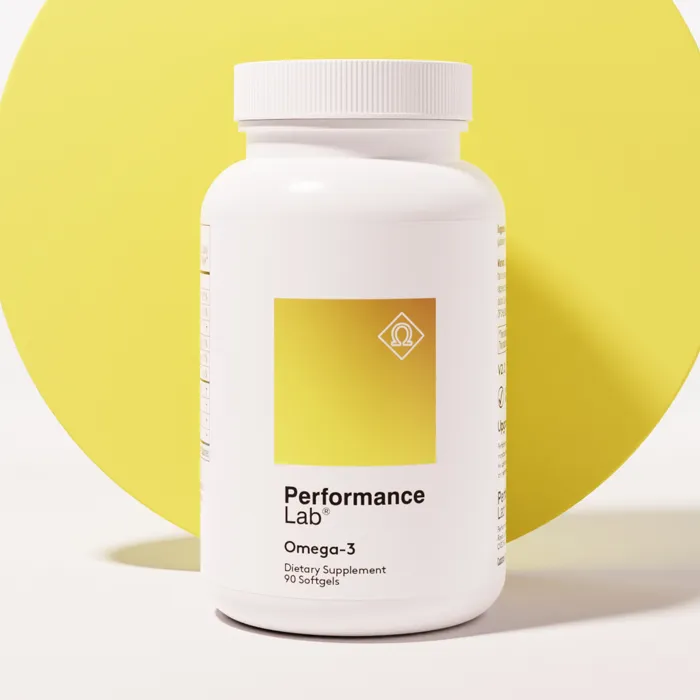
Regardless of your dietary choices, algal oil is one of the best ways to maximize omega-3 intake without risking your health—and we think Performance Lab Omega-3 is the best you can get.

It’s a potent omega-3 supplement derived from non-GMO ocean algae produced in state-of-the-art indoor facilities using proprietary fermentation, and it stands out in the current market for algae-based omega-3 options.
Omega-3 is free of toxins and pollutants, fishy aftertaste, and rancidity risk.
It’s utterly sustainable without impacting the ocean ecosystem. Compared to most fish oil supplements, Performance Lab Omega-3 contains optimal DHA and EPA ratios for maximum health benefits.
Whether you’re looking to reduce inflammation, enhance athletic recovery, or support brain health to help protect brain function, a balanced diet still matters too, including foods rich in vitamin C, and Omega-3 is the way to go.
Love this product! Easy to swallow capsule with no aftertaste.Sarah A

References
- Gerster, H. “Can Adults Adequately Convert Alpha-Linolenic Acid (18:3n-3) to Eicosapentaenoic Acid (20:5n-3) and Docosahexaenoic Acid (22:6n-3)?” International Journal for Vitamin and Nutrition Research 68, no. 3 (1998): 159–173.
- Hong, M. Y., Lumibao, J., Mistry, P., Saleh, R., and Hoh, E. “Fish Oil Contaminated with Persistent Organic Pollutants Reduces Antioxidant Capacity and Induces Oxidative Stress without Affecting Its Capacity to Lower Lipid Concentrations and Systemic Inflammation in Rats.” Journal of Nutrition 145, no. 5 (2015): 939–944.
- Arterburn, L. M., Oken, H. A., Bailey Hall, E., Hamersley, J., Kuratko, C. N., and Hoffman, J. P. “Algal-Oil Capsules and Cooked Salmon: Nutritionally Equivalent Sources of Docosahexaenoic Acid.” Journal of the American Dietetic Association 108, no. 7 (2008): 1204–1209.
- Lane, K., Derbyshire, E., Li, W., and Brennan, C. “Bioavailability and Potential Uses of Vegetarian Sources of Omega-3 Fatty Acids: A Review of the Literature.” Critical Reviews in Food Science and Nutrition 54, no. 5 (2014): 572–579.
- Sarter, Barbara, Kristine S. Kelsey, Todd A. Schwartz, and William S. Harris. “Blood Docosahexaenoic Acid and Eicosapentaenoic Acid in Vegans: Associations with Age and Gender and Effects of an Algal-Derived Omega-3 Fatty Acid Supplement.” Clinical Nutrition 34, no. 2 (2015): 212–218. https://www.sciencedirect.com/science/article/pii/S0261561414000764.
- Sanders, Thomas A. B. “DHA Status of Vegetarians.” King’s College London. https://kclpure.kcl.ac.uk/portal/en/publications/dha-status-of-vegetarians/.
- U.S. Food and Drug Administration. “FDA Announces New Qualified Health Claims for EPA and DHA Omega-3 Consumption and the Risk of Hypertension and Coronary Heart Disease.” https://www.fda.gov/food/hfp-constituent-updates/fda-announces-new-qualified-health-claims-epa-and-dha-omega-3-consumption-and-risk-hypertension-and.
- Wu, J. H. Y., Lemaitre, R. N., et al. “Association of Plasma Phospholipid Long-Chain Omega-3 Fatty Acids with Incident Atrial Fibrillation in Older Adults: The Cardiovascular Health Study.” Circulation 125, no. 9 (2012). https://www.ahajournals.org/doi/full/10.1161/CIRCULATIONAHA.111.062653.
- Monahan, K. D., Feehan, R. P., Blaha, C., and McLaughlin, D. J. “Effect of Omega-3 Polyunsaturated Fatty Acid Supplementation on Central Arterial Stiffness and Arterial Wave Reflections in Young and Older Healthy Adults.” Physiological Reports 3, no. 6 (2015): e12438. https://www.ncbi.nlm.nih.gov/pmc/articles/PMC4510635/.
- Woodcock, B. E., Smith, E., Lambert, W. H., et al. “Beneficial Effect of Fish Oil on Blood Viscosity in Peripheral Vascular Disease.” British Medical Journal (Clinical Research Edition) 288, no. 6417 (1984): 592–594. https://europepmc.org/article/med/6320945.
- Morris, M. C., Sacks, F., and Rosner, B. “Does Fish Oil Lower Blood Pressure? A Meta-Analysis of Controlled Trials.” Circulation 88, no. 2 (1993): 523–533. https://pubmed.ncbi.nlm.nih.gov/8339414/.
- Liao, Y., Xie, B., Zhang, H., et al. “Efficacy of Omega-3 PUFAs in Depression: A Meta-Analysis.” Translational Psychiatry 9 (2019): 190. https://doi.org/10.1038/s41398-019-0515-5.
- Oppedisano, F., Macrì, R., Gliozzi, M., et al. “The Anti-Inflammatory and Antioxidant Properties of n-3 PUFAs: Their Role in Cardiovascular Protection.” Biomedicines 8, no. 9 (2020): 306. https://doi.org/10.3390/biomedicines8090306.
- Krupa, K. N., Fritz, K., and Parmar, M. “Omega-3 Fatty Acids.” StatPearls. StatPearls Publishing, 2026. https://www.ncbi.nlm.nih.gov/sites/books/NBK564314.
- Maroon, J. C., and Bost, J. W. “Omega-3 Fatty Acids (Fish Oil) as an Anti-Inflammatory: An Alternative to Nonsteroidal Anti-Inflammatory Drugs for Discogenic Pain.” Surgical Neurology 65, no. 4 (2006): 326–331. https://pubmed.ncbi.nlm.nih.gov/16531187/.
- Lavado-García, J., Roncero-Martin, R., Moran, J. M., et al. “Long-Chain Omega-3 Polyunsaturated Fatty Acid Dietary Intake Is Positively Associated with Bone Mineral Density in Normal and Osteopenic Spanish Women.” PLOS ONE 13, no. 1 (2018): e0190539. https://www.ncbi.nlm.nih.gov/pmc/articles/PMC5755813/.
- Wu, J., Cho, E., Giovannucci, E. L., et al. “Dietary Intakes of Eicosapentaenoic Acid and Docosahexaenoic Acid and Risk of Age-Related Macular Degeneration.” Ophthalmology 124, no. 5 (2017): 634–643. https://www.ncbi.nlm.nih.gov/pmc/articles/PMC5401792/.
- Liu, A., and Ji, J. “Omega-3 Essential Fatty Acids Therapy for Dry Eye Syndrome: A Meta-Analysis of Randomized Controlled Studies.” Medical Science Monitor 20 (2014): 1583–1589. https://www.ncbi.nlm.nih.gov/pmc/articles/PMC4165511/.
- Bernardes, Camila, et al. “The Impact of Omega-3 on Improving Sleep Quality: A Systematic Review of Current Clinical Research.” Principles and Practice of Clinical Research 9, no. 4 (2023). https://journal.ppcr.org/index.php/ppcrjournal/article/view/290.
- Hypersomnia Foundation. “Sleep Efficiency.” https://www.hypersomniafoundation.org/glossary/sleep-efficiency.
- Shimizu, K., Kuramochi, Y., and Hayamizu, K. “Effect of Omega-3 Fatty Acids on Sleep: A Systematic Review and Meta-Analysis of Randomized Controlled Trials.” Journal of Clinical Biochemistry and Nutrition 75, no. 3 (2024): 204–212. https://doi.org/10.3164/jcbn.24-36.
- Chang, C. Y., Ke, D. S., and Chen, J. Y. “Essential Fatty Acids and Human Brain.” Acta Neurologica Taiwanica 18, no. 4 (2009): 231–241.
- Pilkington, S. M., Watson, R. E., Nicolaou, A., and Rhodes, L. E. “Omega-3 Polyunsaturated Fatty Acids: Photoprotective Macronutrients.” Experimental Dermatology 20, no. 7 (2011): 537–543. https://doi.org/10.1111/j.1600-0625.2011.01294.x.
- Ziboh, V. A. “Omega 3 Polyunsaturated Fatty Acid Constituents of Fish Oil and the Management of Skin Inflammatory and Scaly Disorders.” World Review of Nutrition and Dietetics 66 (1991): 425–435. https://doi.org/10.1159/000419311.
- Simopoulos, A. P. “An Increase in the Omega-6/Omega-3 Fatty Acid Ratio Increases the Risk for Obesity.” Nutrients 8, no. 3 (2016): 128. https://www.ncbi.nlm.nih.gov/pmc/articles/PMC4808858/.
- DiNicolantonio, J. J., and O’Keefe, J. “The Importance of Maintaining a Low Omega-6/Omega-3 Ratio for Reducing the Risk of Autoimmune Diseases, Asthma, and Allergies.” Missouri Medicine 118, no. 5 (2021): 453–459.
- Rawn, D. F. K., Breakell, K., Verigin, V., Nicolidakis, H., Sit, D., and Feeley, M. “Persistent Organic Pollutants in Fish Oil Supplements on the Canadian Market: Polychlorinated Biphenyls and Organochlorine Insecticides.” Journal of Food Science 74 (2009): T14–T19. https://onlinelibrary.wiley.com/doi/full/10.1111/j.1750-3841.2008.01020.x.