
Few people realize that our gut health contributes to much more than just our digestion. Our gut is linked to our brain, our heart and many other bodily organs, playing a significant role in our overall health, wellness and immune system.
If your gut health is out of balance, you'll likely feel it everywhere.
A lack of prebiotic fiber in the modern ultra-processed diet - and its subsequent knock-on effect to probiotic bacteria - is one of the key reasons for a poor digestive system. Medication, stress and toxins also play a role.
Which is why you may be looking for ways to add more prebiotics and probiotics back into your diet. You'll see both pre and probiotics capsules sold in health shops and more.
But what is the difference between the two, and which one should you choose? Let's investigate...
Key Takeaways
- Prebiotic and probiotic capsules work together to support digestive health by nourishing beneficial gut bacteria and introducing live cultures into the microbiome.
- Prebiotics feed the good bacteria already in your gut, helping improve regularity, nutrient absorption, and immune function, while probiotics add supportive strains directly.
- A balanced gut microbiome influences overall wellness beyond digestion, including immune health and the gut-brain connection.
- Choosing the right capsules depends on your individual health goals, with prebiotics focused on long-term microbiome support and probiotics helpful when adding specific bacterial strains.

Introduction to Probiotics and Prebiotics
Before we delve further into this topic, let's make sure we understand what probiotics and prebiotics actually are. Both can deliver digestive health benefits, but they are very different aids.
Prebiotics
Prebiotics are found naturally in fiber-rich foods such as bananas, oats, apples, chicory root, onions, garlic, as well as legumes (peas, beans) and whole grains. They are also sold as supplements.
These non-digestible fibers help to feed the beneficial bacteria in your gut.
If it helps, think of prebiotics as fertilizer for the good bacteria in our GI tract.
Probiotics
Probiotics are the 'friendly' gut bacteria or yeasts we talked about above. They are live micro-organisms that live in your gut microbiome (more on that shortly) and confer several health benefits. You can find these live cultures in some fermented foods, added to other foods, or sold as supplements.
Both probiotics and prebiotics are essential for maintaining a healthy gut microbiome and digestive system, so let's discuss that next...
Understanding Gut Health

I mentioned gut microbiome above: what do I mean by that?
The gut microbiome is a microscopic world inside our intestines (part of the GI tract) that plays host to trillions - yes, trillions - of microorganisms such as bacteria, viruses, and fungi.
If that sounds a little off-putting to you, don't worry. It's actually super important. Maintaining a diverse gut microbiome can lead to significant health benefits.
What Influences the Bacteria in Our Gut Microbiome?

We receive our first microbes as babies, and add to it continually after that, thanks to our diet and environment.
But gut microbes can be damaged by environmental toxins, alcohol, smoking, medication, chronic stress, processed diets, a lack of fiber and more.
A lack of balance in the microbial composition of your gut can mean less resilience and the threat of harmful bacteria taking over. It may also damage your gut lining, allowing particles to escape into the bloodstream, triggering inflammation. This is known as 'leaky gut'.
An imbalance in gut microbes (dysbiosis) may also be connected to food allergies. (1)
An imbalance in our gut bacteria = weeds taking over the garden and smothering the plants you do want.
Excessive bad bacteria
An excess of bad bacteria has been associated with gastrointestinal issues, as well as irritable bowel syndrome, inflammatory bowel disease, obesity and more. (2)
Health Benefits of a Strong Gut Microbiome
A healthy gut microbiome helps us to break down food and strengthen nutrient absorption, influences our energy, synthesizes vitamins and helps create Short Chain Fatty Acids (SCFAs) that support digestive health and more. Additional benefits also include:
DID YOU KNOW?
-
70% of our immune cells are in the gut. A healthy diverse gut microbiome, therefore, helps to support the immune system.(3, 4)
-
The gut and the brain communicate through the gut-brain axis. The health of the gut, therefore, has been shown to influence mental state, emotional regulation and mood.(5)
-
The SCFAs mentioned above may help heart health, protecting against coronary artery disease, hypertension and more. (6)
Suddenly, good gut health seems more important, doesn't it?
Given all of the above, how can prebiotics and probiotic capsules help?
The Role of Prebiotic Supplements
As I mentioned, prebiotics are a specialized type of plant fiber found in vegetables and fruit with complex carbohydrates, such as fiber and starch. These carbohydrates cannot be absorbed by the body, so they end up in the colon when the gut microbes metabolize and ferment them.
The process of breaking down these prebiotics releases the beneficial Short Chain Fatty Acids.
STUDY
In a 2019 controlled study involving healthy adults, researchers found that taking a prebiotic fiber called fructo-oligosaccharides (FOS) - an ingredient in Performance Lab Prebiotic - helped increase the variety of bacteria living in the gut.
Specifically, it led to:
-
An increase in beneficial bacteria, particularly Bifidobacterium species
-
Increases in overall microbial diversity, measured using standard diversity indices
-
Growth of bacteria involved in producing short-chain fatty acids, which support gut and metabolic health
Importantly, when participants stopped taking FOS, microbiome diversity gradually returned toward baseline, suggesting the changes were directly linked to prebiotic intake. This study is notable because it demonstrates, in adults, that a prebiotic alone (without probiotics) can influence not just specific bacteria, but the overall diversity of the gut microbiome. (14)
Prebiotics provide the food for the helpful probiotics to grow, and you'll find that many prebiotic supplements are tailored to selectively stimulate certain types of beneficial bacteria, such as Bifidobacteria and Lactobacilli.
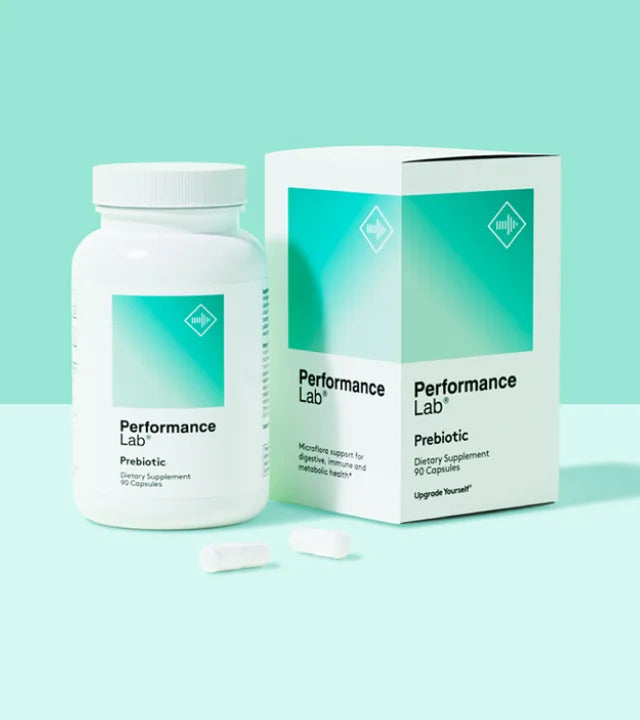
Performance Lab Prebiotic, for instance, helps to boost healthy Bifidobacterium probiotics in the gut.
About Performance Lab Prebiotic
Performance Lab Prebiotic offers 2g of Inulin-FOS fiber, naturally found in chicory root. Inulin-FOS provides an excellent source of food for Bifidobacteria - a bacteria with beneficial effects on the gut that is great to cultivate. (7, 8)
It offers advanced support for gut health, and has been shown to increase the distribution of Bifidobacteria in the gut from 20% to 71%.
I’ve improved my gut health exponentially. Can’t recommend them enough.Josh S
What Is Inulin-FOS? - 4 Surprising Benefits For Your Health
The Role of Probiotic Supplements

The role of probiotic supplements is a little different. Taking probiotics is intended to introduce more good bacteria directly to the gut, increasing their levels and strengthening digestive balance. It's a more direct approach.
You may find probiotics in fermented foods such as kefir, sauerkraut, yogurt and tempeh, but not all fermented foods contain probiotics. They may also be high in salt or sugar. Many probiotic capsules, in contrast, are allergen- and sugar-free.
Several clinical trials have concluded that probiotics can potentially help to tackle GI and other digestive disorders, albeit more research on humans is welcome. (9, 10)
Different probiotic products can be taken in various forms, including capsules, chewable tablets, and powders. Popular strains of bacteria in probiotics include Lactobacillus (with strains such as acidophilus) and Bifidobacterium.
Probiotic supplements can be found over the counter in grocery stores, drug stores, and health and wellness stores.
When taking probiotics, it’s essential to choose a product with live and active cultures to ensure maximum benefits. Which brings us to one of the biggest downsides of probiotics...
WARNING
One of the biggest challenges with probiotics is ensuring the cultures are alive and active.
The delicate nature of the live microorganisms means they risk damage and even death by light, cold and warmth, as well as manufacturing processes, storage, or poor delivery mechanisms. Some will not survive stomach acids.
Probiotic supplements are not regulated by the FDA, so manufacturers do not have to prove the quality or contents of their products. Likewise, U.S. labelling only requires manufacturers to list the total weight of microbes, with no distinction between live or dead microorganisms. (11)
It's difficult, therefore, to be sure that you're getting actual living bacteria in effective doses.
Choosing the Right Supplement for You
Whether you want to take a prebiotic or a probiotic supplement depends on your personal circumstances and goals.
Doctors no longer recommend taking probiotics after antibiotics to replenish bacteria killed by medication, as it may actually delay re-colonization. (12)
You may want to take probiotics, however, if you have a digestive upset like diarrhea - just make sure to seek advice from a healthcare provider first. Likewise, if you want to add more of a specific strain of beneficial bacteria to your system.
Your doctor may also recommend probiotics if you have symptoms of dysbiosis, unbalanced gut microorganisms.
Be aware that different types of probiotics or microbes can have different effects - be sure to research the type that is best for you.
Look for probiotic supplements with a CFU count on the label (Colony Forming Units, or viable cells) - manufacturers can voluntarily share this information to distinguish how many live cultures there are compared to the total weight of microbes.
In contrast, prebiotics are more suitable for long-term gut health and are a great choice if you want to support the growth of your existing microbes over time.
After all, your gut has trillions of microbes at any one time. Probiotic capsules, in contrast, can only offer billions - a mere drop in the ocean (and that's assuming most of them stay alive).
As such, feeding the microbes you already have may be a more comprehensive long-term plan and support a healthy digestive tract.
Researchers have also shown that prebiotics, such as inulin, may be effective in treating constipation. (13)
Who Should Be Careful of Prebiotics and Probiotics
Adults with medical conditions such as IBD, IBS or SIBO should speak to a healthcare professional for specific treatment advice before taking either prebiotics or probiotics. As should anyone with a compromised immune system.
Pregnant or breastfeeding women are not recommended to take prebiotic or probiotic supplements.
The best approach for most people will be to start slow and to try to incorporate both prebiotics (in fiber) and probiotics (in fermented foods such as yoghurt and cheese) - or supplements - together.
Note that probiotics can cause gastrointestinal discomfort such as bloating and flatulence in some individuals.
Final Thoughts
A balanced gut microbiome is essential for maintaining overall health, and probiotics and prebiotics can help support this balance.
A diverse diet is the best way to consume prebiotics and probiotics with knock-on effects to immune health, digestive health, and even mental health. A quality dietary supplement such as Performance Lab Prebiotic may also help.
Whichever product you choose, look for a proven manufacturer with a good safety record and a supplement with positive reviews.
References
- Bunyavanich, Supinda, and M. Cecilia Berin. “Food Allergy and the Microbiome: Current Understandings and Future Directions.” The Journal of Allergy and Clinical Immunology, vol. 144, no. 6, 2019, pp. 1468–1477. Elsevier.
- Zhang, Yu-Jie, et al. “Impacts of Gut Bacteria on Human Health and Diseases.” International Journal of Molecular Sciences, vol. 16, no. 4, 2015, pp. 7493–7519. MDPI.
- UCLA Health. “If You Want to Boost Immunity, Look to the Gut.” UCLA Health, https://www.uclahealth.org/news/article/want-to-boost-immunity-look-to-the-gut.
- Cleveland Clinic. “Gut Microbiome.” Cleveland Clinic, https://my.clevelandclinic.org/health/body/25201-gut-microbiome.
- Appleton, Jane. “The Gut-Brain Axis: Influence of Microbiota on Mood and Mental Health.” Integrative Medicine, vol. 17, no. 4, 2018, pp. 28–32.
- Zhang, Y., et al. “The Gut-Heart Axis: Unveiling the Roles of Gut Microbiota in Cardiovascular Diseases.” Frontiers in Cardiovascular Medicine, vol. 12, 2025.
- Kolida, S., and Glenn R. Gibson. “Prebiotic Capacity of Inulin-Type Fructans.” The Journal of Nutrition, vol. 137, no. 11 Suppl, 2007, pp. 2503S–2506S.
- Playne, Michael J., and Roger Crittenden. “Commercially Available Oligosaccharides.” Bulletin of the International Dairy Federation, no. 313, 1996, pp. 10–22.
- Rau, S., et al. “Prebiotics and Probiotics for Gastrointestinal Disorders.” Nutrients, vol. 16, no. 6, 2024, p. 778. MDPI.
- Latif, A., et al. “Probiotics: Mechanism of Action, Health Benefits and Their Application in Food Industries.” Frontiers in Microbiology, vol. 14, 2023, article 1216674.
- National Institutes of Health, Office of Dietary Supplements. “Probiotics: Fact Sheet for Health Professionals.” NIH, https://ods.od.nih.gov/factsheets/Probiotics-HealthProfessional/.
- Cedars-Sinai. “Should You Take Probiotics and Prebiotics?” Cedars-Sinai, https://www.cedars-sinai.org/stories-and-insights/expert-advice/should-you-take-probiotics-and-prebiotics.
- Rau, S., et al. “Prebiotics and Probiotics for Gastrointestinal Disorders.” Nutrients, vol. 16, no. 6, 2024, p. 778. MDPI.
- Tandon, D., et al. “A Prospective Randomized, Double-Blind, Placebo-Controlled, Dose-Response Relationship Study to Investigate Efficacy of Fructo-Oligosaccharides (FOS) on Human Gut Microflora.” Scientific Reports, vol. 9, no. 1, 2019, article 5473.