
Let me ask you a question: when I mention organic vitamins, do you automatically assume they're natural? Superior? I thought so.
Don't worry, you're not the only one. It's a common myth that organic must also mean natural - when in reality, natural vitamins and organic vitamins are not necessarily the same.
In fact, the terms themselves come from different classifications. The confusion comes not from how nutrition science defines them, but often how they are marketed.
We're not here to steer you away from either natural or organic dietary supplements, but understanding the difference will help you make more informed nutritional supplement choices and help you decide which is better for your specific needs.
Whether you're looking to support your immune system, skin health, energy levels, sleep quality, heart health, or overall wellbeing, choosing the right supplement starts with understanding what's actually on the label.
This article will break down what each term actually means and why they are often misunderstood.
Key Takeaways
- Organic vitamins refer to how ingredients are grown and processed, while natural vitamins describe the source of the nutrient, and the two terms are not interchangeable.
- Organic certification does not change the chemical structure or effectiveness of a vitamin, but it does regulate agricultural sourcing and production standards.
- Natural or food-based vitamins may include additional compounds from the food matrix, but this does not automatically make them more effective than synthetic forms.
- Ultimately, factors such as nutrient form, dosage, and formulation quality often matter more than whether a vitamin is labeled natural or organic.
Why People Confuse Natural and Organic Vitamins
The terms natural and organic are often used in health and supplement marketing, both associated with plants, food and wellness, and often used to make supplements sound 'clean' and 'better'.
They don't actually describe the same thing, however, though it doesn't help that there is no standard consumer definition of 'natural vitamins'.
Let's look at what we do know...
What 'Organic' Actually Means in Vitamins

For an ingredient or supplement to be labelled organic, it must meet strict rules set by recognized organic certification bodies (in the US, this is the USDA National Organic Program).
In simple terms, “organic” is not about the vitamin itself being “natural” or “synthetic”. It is about how the ingredients were grown, handled, and processed before they became part of a supplement.
Organic Doesn't Change the Nutrient
Organic certification affects sourcing and production standards. It doesn't automatically improve the biological activity of a nutrient. Organic certification can raise the price without necessarily making the nutrient itself more effective.
What Makes a Vitamin or Supplement 'Organic'

1. Approved agricultural origin - typically plants, crops, herbs, or animal-derived materials, eligible under organic certification rules
2. Organic farming standards - grown without most synthetic pesticides or fertilisers; no GMO; soil and environmental management standards must be followed; emphasis on biodiversity and sustainable farming practices
3. Certified processing and handling - processed using approved organic methods; rules to prevent contamination with non-organic materials; traceability required from farm to finished product; separation from non-organic ingredients during manufacturing. (1, 2)
Chemical Structure
Organic certification applies to the farming and production system behind ingredients, not to the vitamin molecule itself. It does not change the chemical structure of vitamins, nor does it determine whether a vitamin is extracted from food or produced in isolated form. Instead, it governs how the source materials are grown, processed, and handled before they become part of a supplement.
What about Synthetic Vitamins in Organic Supplements?
Organic certification does not mean “no synthetic ingredients under any circumstances.” Instead, it operates on a permitted-use system.
Some synthetically produced nutrients may be allowed in organic products, but only if they are:
-
explicitly approved under organic regulations
-
considered necessary for formulation or compliance in specific cases
-
used within strict limits defined by organic certification rules
In other words, organic standards do not classify ingredients simply as “natural vs synthetic.” They define a controlled framework where certain synthetic substances are restricted, and a smaller number may be permitted under regulation.
Organic Vitamins: Summary
Organic vitamins are made using ingredients that come from approved agricultural sources and are produced under strict farming and processing standards. While organic certification heavily restricts synthetic substances, it does not operate as a simple “natural versus synthetic” system, and some synthetically produced nutrients may be permitted under specific regulatory conditions.
What 'Natural Vitamins' Actually Mean

Next, let’s look at what we mean by natural vitamins. The first thing to know about this is that there isn’t any strict regulation (or even definition) surrounding natural vitamins.
The term is most often used in marketing rather than being a regulated category. Being described as a natural vitamin doesn’t specifically talk about manufacturing, processing or growing.
The word ‘natural’ usually refers to the source of the nutrient, such as naturally occuring sources of vitamins, food extracts or plant-derived compounds. Nutrients found in whole food sources, for instance.
Why Some Consumers Prefer Natural Vitamins
Some consumers prefer natural vitamins because the nutrients originate from food, plants, or other naturally occurring sources rather than being produced entirely through synthetic manufacturing processes.
Naturally sourced ingredients may also contain compounds that occur alongside vitamins in nature, such as phytonutrients, flavonoids, and other cofactors found in fruits, vegetables, and plants. This is known as the whole food matrix, which can include:
-
Enzymes
-
phytonutrients
-
fiber
-
minerals
-
antioxidants
-
and more.
Some researchers believe that naturally occurring compounds such as phytonutrients, flavonoids, and other cofactors may influence how nutrients are absorbed, transported, or utilized within the body. However, this does not automatically make natural vitamins more effective than synthetic forms. (3, 4, 5)
While this does not automatically make natural vitamins more effective, some people prefer the idea of obtaining nutrients from ingredients that more closely resemble their original food sources.
Others are drawn to naturally sourced supplements because they are often perceived as less processed and more aligned with a whole-food approach to nutrition
One Challenge with Naturally Sourced Vitamins: The nutrient content in food tends to differ depending on climate, farming practices, soil quality and weather conditions, which means the same ingredient can differ between harvests. (6)
That often makes it challenging to maintain standardized nutrient levels and consistent ingredients, which is why many supplement companies prefer to make synthetic forms.
A quick word about synthetic vitamins for comparison…
Synthetic vitamins are made in a lab or during a manufacturing process rather than being extracted from food sources. Manufacturers typically seek to replicate the same chemical structure that is found in naturally occurring nutrients.
For example, natural vitamin C may come from acerola cherry, rose hip, or camu camu, while synthetic versions are usually labeled as ascorbic acid or calcium ascorbate.
Another example is vitamin E: natural forms include multiple isomers, including alpha-, beta-, gamma-, and delta-tocopherols, while synthetic forms are often labeled dl-alpha-tocopherol or dl-alpha-tocopherol acetate.
Natural vitamin E has higher biological activity than synthetic vitamin E because of differences in its stereoisomer structure, which affects how the body retains and utilises it.
Synthetic vitamins are widely used because they’re cost effective, stable and enable consistent dosing, BUT they are also often isolated forms, missing the beneficial co-factors you’d find in whole food nutrients. (7, 8, 9)
Natural vs Organic Vitamins: Key Differences
Simple comparison table:
| Natural Vitamins | Organic Vitamins |
|---|---|
| Refers to nutrient source | Refers to farming and production methods |
| Not a regulated definition | Certified under USDA organic standards |
| Can come from plants, food, or biological sources | Applies to agricultural ingredients, not vitamin form |
| Often marketing-defined | Legally defined certification |
Myth vs Reality

Myth: Organic vitamins and natural vitamins are the same thing.
Reality: Organic describes how ingredients are grown and processed. Natural describes the source of the nutrient. A supplement may be natural but not organic, organic but not naturally sourced in the way consumers expect, or in some cases both.
Can a Vitamin Be Both Natural and Organic?
Yes, a vitamin can sometimes be both natural and organic. In some cases, ingredients may be both organically grown and naturally sourced.
But that's not really the point: the terms still describe different attributes.
One does not guarantee the other.
Organic status does not automatically define how a vitamin is sourced or formulated.
Why This Distinction Matters When Choosing a Multivitamin
Let me go back to the beginning of this article for a second. As we discussed, people often assume that 'organic' means better quality or a higher quality nutrient.
Other people may assume that a 'natural vitamin' is closer to food-based nutrition, and conclude that natural is best.
The fact is that neither is the full story. In reality, formulation, nutrient form and delivery system also matter.
An organic vitamin sounds great, but that doesn't automatically mean it's delivered in a format (capsule, tablet, liquid, liposomal, etc...) that makes it easy for the body to absorb. Or that the vitamin itself is in the best form for you.
Likewise, some organic supplements may contain substantial amounts of organic food blends that contribute relatively little to the listed vitamin and mineral content.
Organic tells you how ingredients were grown. It doesn't tell you everything about the nutrients themselves. The form of the vitamin or mineral often matters more than whether the carrier ingredients are organic.
By all means...
When to Choose Organic
Choose an organic supplement when...
-
You prioritise organic agricultural sourcing.
-
You want ingredients grown under certified organic standards.
-
You prefer products that minimise exposure to certain synthetic agricultural inputs.
But, look beyond the organic label when...
-
You're comparing nutrient forms (e.g., methylfolate vs folic acid).
-
You need specific dosages.
-
You're interested in nutrient cofactors and formulation quality.
-
You're choosing a supplement for a specific nutritional goal.
| If your priority is… | Consider… | Why |
|---|---|---|
| Organic farming standards | Organic supplements | Certified standards for agricultural sourcing and production |
| Minimising synthetic agricultural inputs | Organic supplements | Restricts many synthetic pesticides and fertilisers |
| Specific nutrient forms | Look beyond the organic label | Vitamin and mineral form often matters more than sourcing method |
| Targeted nutritional support | Look beyond the organic label | Dosage and formulation are usually more important than certification |
| Food-based ingredients | Whole-food or naturally sourced supplements | Some prefer nutrients derived from foods, plants, or food concentrates |
| Value for money | Compare formulas carefully | Organic certification can increase cost without changing the nutrient itself |
Let me give you an example as I know this topic can be a difficult one to get your head around.
Why the Source of a Vitamin Doesn’t Change the Nutrient Itself

Let's go back to our vitamin C example that I mentioned above.
Vitamin C is a single, defined molecule known as ascorbic acid. Whether it is derived from citrus fruits, extracted from organically grown plants, or produced through laboratory processes, purified vitamin C remains chemically identical.
This means the body responds to the vitamin C molecule itself in the same way, regardless of its source.
For example, an organic vitamin C capsule and a non-organic vitamin C capsule containing the same amount of purified ascorbic acid would not be expected to differ in absorption based on whether the ingredient is organic
Where differences may arise is not in the vitamin molecule, but in what accompanies it. Whole-food and natural vitamins or ingredients can contain additional compounds such as flavonoids, phytonutrients, and other cofactors that may influence how nutrients are absorbed, transported, or utilised within the body.
Summary
A vitamin's effectiveness is not determined solely by whether it is labelled natural or organic. Factors such as nutrient form, dosage, delivery system, and accompanying compounds may have a greater impact.
This is where subtle differences in product formulations can make a big difference.
About NutriGenesis Vitamins and Minerals
When it comes to choosing your vitamins or multivitamins, the choice doesn't have to be organic or natural, natural or synthetic: allow me to throw another quality option into the mix.
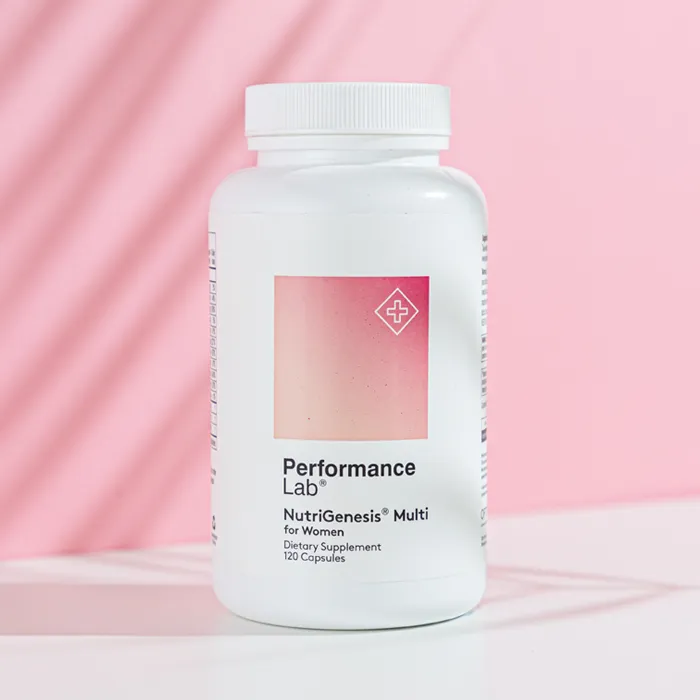
Performance Lab NutriGenesis nutrients are made using a pioneering manufacturing process that creates nutrients grown alongside antioxidants, enzymes, proteins, carbohydrates and more in a living food matrix. All the cofactors that you would find in nature, designed to more closely resemble the nutrient environment found in whole foods.
The benefit of these NutriGenesis nutrients? They are:
-
Designed to more closely resemble nutrients found in whole foods, including naturally occurring cofactors
-
Stably produced, allowing consistent dosing
-
Potentially gentler on the environment.
More: What is NutriGenesis®? Nature-identical nutrients explained
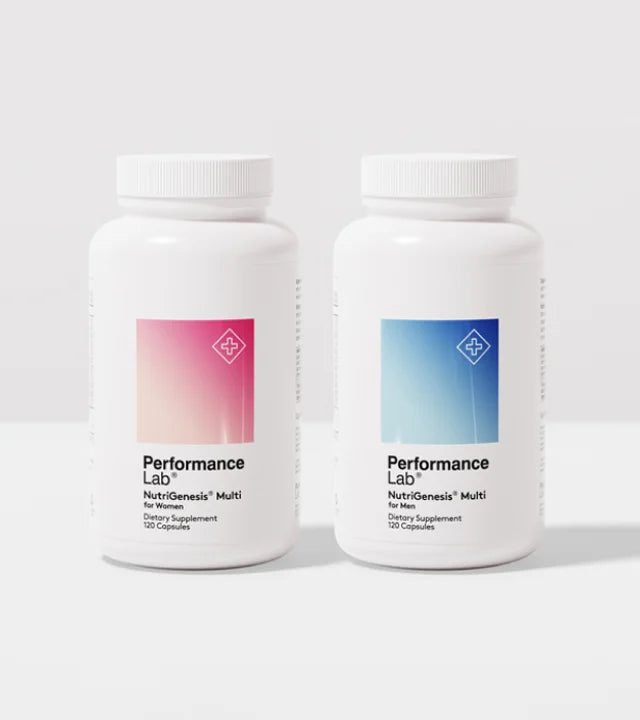
Our popular multivitamin, Performance Lab NutriGenesis Multi for men or women, is also Clean Label Project Certified, and is free from GMO, allergens, artificial colorings and preservatives.
The only multi I’ve used and noticed more energy and better overall wellbeing!Jerrold N
Common Vitamins and Their Natural Food Sources

Many vitamins and minerals can be obtained through a healthy diet that includes a variety of fruits, vegetables, whole grains, legumes, nuts, seeds, fish, dairy products, and lean meat.
-
For example, vitamin C, which contributes to normal immune function and immune support, is found in citrus fruits, bell peppers, broccoli, and other fruits and vegetables.
-
Vitamin A can be obtained from foods rich in beta carotene, including spinach, broccoli, and other green vegetables, while vitamin E is found in nuts, seeds, and wheat germ.
-
The eight B vitamins play an important role in energy production and overall health. Good food sources include whole grains, legumes, dairy products, yogurt, milk, fish, eggs, and meat.
-
Vitamin D is naturally present in relatively few foods, with fish and fortified dairy products among the most common sources, which is one reason vitamin D deficiency remains common in some populations. (10)
-
Many essential minerals are also obtained through food. Milk, yogurt, and other dairy products are excellent sources of calcium, while magnesium is present in nuts, seeds, legumes, whole grains, and leafy green vegetables.
-
Iron can be obtained from red meat, lean meat, fish, legumes, and spinach, although some people, including postmenopausal women and those with certain medical conditions, may require different amounts depending on their individual needs.
-
Iodine is commonly obtained through iodized salt and seafood.
While eating a balanced diet provides the foundation for optimal health, meeting daily needs for every vitamin and mineral is not always straightforward.
Factors such as age, lifestyle, food preferences, stress, athletic performance goals, restricted diets, and limited access to certain foods can make it more difficult to consistently achieve recommended amounts.
In these situations, dietary supplements, nutritional supplements, or a high-quality multivitamin may help fill nutritional gaps and support overall health. A probiotic may also help digestion.
What to Look for When Choosing Your Dietary Supplement
Now that you know all of the above, what else should you look for when choosing a quality vitamin supplement? Remember, formulation, sourcing and delivery can make a big difference to how effective a product is.
Here's what we'd recommend you look for:
Independent Third Party Testing, Validation or Certification

Products that are officially third party tested have been checked for contaminants, purity and dosage. Look for brands that are transparent about testing. All Performance Lab products are subject to third party testing.
More: What are GMP Certified Supplements and Why Are They Important?
Ingredient Forms and Bioavailability
It's worth the research to make sure the vitamin supplement or multivitamin you choose has useful forms for the body which are easy to absorb. As I said earlier, our Performance Lab NutriGenesis process creates natural vitamins with whole food cofactors, easily recognized and absorbed by the body.
More: What is NutriGenesis? Nature Identical Nutrients Explained
A Clean Label and Clean Ingredients
We'd always recommend you choose a supplement without any unnecessary additives, fillers or allergens. They're just not needed and not helpful. Any manufacturer who goes out of their way to avoid these shows commitment to quality.
The demand for clean-label supplements is growing as consumers become more health-conscious and seek products that align with their values regarding transparency and ingredient integrity. As a reminder, our Performance Lab products are Clean Label Project certified.
More: Clean Label - What You Need to Know
Transparency of Ingredients
It stands to reason that you should know what ingredients you're putting into your body, so we'd recommend you avoid supplements that hide behind proprietary blends.
A proprietary blend may (or may not) reveal the ingredients in their blend, but they don't provide individual dosages. That means you have no way of knowing if a substance is included in dangerously high amounts or - more likely - in amounts too low to be effective.
This is often used by companies who want to claim they have the latest buzz ingredient (but don't want to admit the dosage is too small to be useful). Choose products who list all ingredients and dosages on the label.
Sustainable Nutritional Supplements
We think it's important that any brand nowadays look for sustainable ways of doing business. Our NutriGenesis manufacturing process, for instance, includes responsibly sourced ingredients that aid sustainability. We also offer eco-conscious shipping and use recyclable packaging.
Positive Feedback from Real Customers
This is a biggie. Any manufacturer proud of its products will allow genuine feedback on its website. It's fairly easy to see what reviews are real (hint: all 5 stars all the time probably isn't!). As well as website reviews, search for independent reviews on the likes of TrustPilot or Amazon, if they sell there. (For your information, we do not sell on Amazon).
Safe Useful Amounts
If you're looking for a multivitamin, for instance, look for ones with near to 100% of your Daily Value of the ingredients, but avoid products with excessive amounts. You just need enough for your daily needs so stick to the recommended amounts. Some vitamins can become toxic in large amounts.
Safety Warnings
If you are pregnant, breastfeeding, have a medical condition, and/ or take medicine, please seek advice from a health professional before taking any supplements.
Delivery Format and Serving Size
Delivery format is important for many reasons. First, if you're looking for a vegan supplement, be sure to check the capsule form carefully. Some brands claim to be vegan but their capsules aren't. (Performance Lab products are 100% vegan, certified by the Vegetarian Society, if you're wondering). Likewise, certain capsule types may interfere with absorption, or have added sugar (gummies is an example of this).
Serving size is also important - you don't want to have to take six capsules a day.
Final Thoughts
Organic and natural vitamins are often discussed as though they are direct competitors, but they actually describe different characteristics of a supplement.
Organic certification relates to how agricultural ingredients are grown, sourced, and processed, while natural vitamins refer to where the nutrients themselves originate.
Neither classification automatically makes a supplement better, and one should not be used as a shortcut for judging overall quality.
In most cases, the key differences between supplements come down to formulation quality rather than whether a vitamin is labeled natural or organic.
Ultimately, choosing a vitamin involves looking beyond the label. Factors such as nutrient form, dosage, delivery system, bioavailability, and the presence of supporting cofactors can all play an important role in how a supplement performs.
Organic certification may be an important consideration for those who prioritise agricultural sourcing standards, but it is only one part of a much bigger picture.
The most effective supplements are typically those with well-designed formulations that provide the right nutrients in the right forms to meet individual needs.
References
- U.S. Department of Agriculture. “Organic 101: What the USDA Organic Label Means.” Accessed May 31, 2026. https://www.usda.gov/about-usda/news/blog/organic-101-what-usda-organic-label-means
- U.S. Department of Agriculture. “Labeling Organic Products.” Accessed May 31, 2026. https://www.ams.usda.gov/rules-regulations/organic/labeling
- Aguilera, J. M. “The Food Matrix: Implications in Processing, Nutrition and Health.” Critical Reviews in Food Science and Nutrition 59, no. 22 (2019): 3612–3629. https://doi.org/10.1080/10408398.2018.1502743
- Forde, C. G., and D. Bolhuis. “Interrelations Between Food Form, Texture, and Matrix Influence Energy Intake and Metabolic Responses.” Current Nutrition Reports 11, no. 2 (2022): 124–132. https://doi.org/10.1007/s13668-022-00413-4
- Tan, Y., and D. J. McClements. “Improving the Bioavailability of Oil-Soluble Vitamins by Optimizing Food Matrix Effects: A Review.” Food Chemistry 348 (2021): 129148. https://doi.org/10.1016/j.foodchem.2021.129148
- Balaji, V., M. Chec, R. Brahmadevi, S. Holladay, and K. Czaja. “Micronutrient Differences in Conventionally and Organically Produced Foods.” Nutrients 18, no. 1 (2025): 84. https://doi.org/10.3390/nu18010084
- Institute of Medicine (US) Panel on Dietary Antioxidants and Related Compounds. Dietary Reference Intakes for Vitamin C, Vitamin E, Selenium, and Carotenoids. Washington, DC: National Academies Press, 2000. https://www.ncbi.nlm.nih.gov/books/NBK225461/
- Linus Pauling Institute, Oregon State University. “Utilization of Vitamin E.” Accessed May 31, 2026. https://lpi.oregonstate.edu/publications/utilization-vitamin-e
- Encyclopaedia Britannica. “Natural vs. Synthetic Vitamins: Is There a Difference?” Accessed May 31, 2026. https://www.britannica.com/video/vitamins/-208020
- National Institutes of Health, Office of Dietary Supplements. “Vitamin D Fact Sheet for Health Professionals.” Accessed May 31, 2026. https://ods.od.nih.gov/factsheets/VitaminD-HealthProfessional/