
Do you know how to tell a quality dietary supplement from a not-so-great product? It's not obvious by sight alone. Or by touch or smell.
Testing supplements means looking past the label to the checks behind the product: cGMP compliance, voluntary GMP certification by independent auditors, and third-party testing for potency, ingredient accuracy, and contaminants. If that sounds too complicated, don't worry. I'm going to explain it.
That's what this article is here to help you do. If you're a health-conscious adult who wants clean, science-backed supplements you can trust - whether you're comparing multivitamins, fish oil supplements, sports supplements, individual vitamins, or other formulas - you'll see how supplement manufacturers in the United States are tested, regulated, and verified in practice.
Understanding the different levels of regulation and supplement testing will help you separate strong quality assurance from pure marketing hype, allowing you to choose supplements with more confidence.
You'll see the difference between brands that meet the legal minimum and those that go further with independent audits and product testing to verify purity, potency, and overall manufacturing quality.
So if you've heard about cGMP and third party certifications and wondered what they mean, allow me to explain them to you...
Key Takeaways
- Supplement quality goes beyond the label. Understanding cGMP compliance, GMP certification, and third-party testing helps you identify brands that prioritize safety and consistency.
- Independent testing can verify ingredient accuracy and screen for contaminants such as heavy metals, microbes, and pesticides, providing an extra layer of quality assurance.
- Research has shown that some supplements do not always match their labels, making third-party verification and transparent manufacturing practices especially valuable.
- Choosing supplements from manufacturers that invest in voluntary audits and independent certifications can help you buy with greater confidence.
Why We Need Additional Testing

First, why do we need additional testing of supplements? Independent testing is important because research has shown that some dietary supplements do not always match their labels.
For example, a 2023 JAMA analysis found that 88% of melatonin gummies tested contained significantly different amounts of melatonin than stated on the label.
- Actual melatonin content ranged from 74% to 347% of the labelled amount.
- One product contained no detectable melatonin at all.
- Another product contained undeclared CBD (cannabidiol, a compound found in the cannabis plant).
- Only three out of 25 brands tested fell within 10% of the quantity listed on the label. (1, 11)
Additional studies have also found greater variation in labelled ingredient content among dietary supplements compared with medicines, highlighting the value of rigorous quality control and third-party testing. (2, 3)
Regulating Dietary Supplements

There are essentially three levels of regulation and dietary supplement testing in the United States. They are...
Level 1: cGMP Compliance
Now, this isn't strict supplement testing but it's the most basic level of regulation that the dietary supplement industry in the United States must follow. Some companies will band this term about as though it includes the full testing of supplements, but that's actually not the case. Hence why I mention it here for you to recognize.
WHAT cGMP IS: cGMP stands for current Good Manufacturing Practices and is the mandatory manufacturing standards that all supplement manufacturers must follow, as set out by the Food and Drug Administration.
These standards cover a range of requirements that govern how supplements are made, processed, packaged and stored, and include rules on process control, cleanliness, equipment maintenance, ingredient sourcing, verification, record keeping and labeling accuracy, among other things. Manufacturers must ensure these standards are kept throughout the production chain.
These standards are designed to ensure supplements are made under controlled consistent conditions that reduce contamination risk, prevent inconsistent dosage and maintain quality control. Without such regulations, purity, strength and composition of individual batches of the same supplement can vary widely. And you can't be sure that the product matches what it says on the label. (4)
cGMP Compliant
Again, this is the MINIMUM LEGAL REQUIREMENT that supplement companies must follow. By doing so, they can say that they are cGMP compliant.
WHAT cGMP ISN'T: Here's why I say being cGMP isn't really about testing. It's a regulatory framework but it has limitations. For instance:
-
Dietary supplements do not require prior approval by the FDA before they go on sale.
-
Manufacturers are expected to comply with the cGMP rules, but the FDA only really gets involved with enforcement or inspections after the fact and usually only if issues are discovered once the product reaches the market.
-
Under cGMP rules, only small samples from very large batches are tested.
cGMP is therefore a system of controls rather than individual product certification.
Level 2: Third Party Certifications- Being GMP Certified

Now we come on to a second tier of checks that supplement manufacturers can request, known as being GMP certified. This is a voluntary step that allows independent audits of manufacturing facilities to check that they're in line with GMP quality standards.
Don't get the terms confused: Being GMP certified is an additional voluntary step to being cGMP compliant. (5)
WHAT GMP CERTIFICATION IS: This voluntary certification process is carried out by independent and recognized third party auditors such as USP (United States Pharmacopeia), NSF International, and the Natural Products Association (NPA). In essence, they independently assess whether your manufacturing facilities meet the cGMP standards. For the customer, this means you don't have to take the manufacturer's word alone.
About Performance Lab
Performance Lab products are certified via the Natural Products Association (NPA), which operates one of the longest-established third-party GMP certification programs for the dietary supplement industry. Its GMP standard incorporates FDA dietary supplement manufacturing requirements, with independent audits conducted by Underwriters Laboratories (UL). (6)
BENEFITS OF BEING GMP CERTIFIED: A GMP certified facility adds trust to the supplement choosing process. It confirms that the manufacturer is following Good Manufacturing Processes on quality control, production practices, compliance of raw ingredients, staff training, hygiene, complaint handling and more.
According to a representative survey commissioned by USP (one of the independent auditors), healthcare practitioners ranked product quality, the ingredient list, and quality assurance seals as the three most important factors when recommending dietary supplements. (7)
To maintain this external validation as a GMP facility, there must also be regular surveillance and audits. (8)
All Performance Lab manufacturing facilities are GMP certified.
WHAT GMP CERTIFICATION ISN'T: While being GMP certified is certainly a sign of trust and stronger quality assurance, it should be recognized that the audit doesn't examine individual product effectiveness.
Level 3: Third Party Product Testing of Dietary Supplements

Now we come onto individual product testing - additional laboratory testing of the raw materials used in a dietary supplement, or testing of the finished product . Not all manufacturers opt for individual product testing, but here at Performance Lab, we think it's important.
That's why our products are Clean Label Project certified. Clean Label Project certification means a product has undergone independent testing for contaminants such as heavy metals and other unwanted substances. It provides additional verification that a supplement meets higher standards for purity and ingredient quality. (9)
Laboratory Testing
GMP certification includes audits and batch testing, while independent laboratories offer more stringent testing, for things like:
-
Bacteria and microbes
-
Heavy metals
-
Accuracy of ingredients
-
Pesticides
-
Contamination
This testing stage is about the product itself and its ingredients, not the facility. It adds an extra layer of protection if anything goes wrong with the supply chains or raw materials.
Any manufacturer who seeks third-party laboratory testing of its products demonstrates that they are committed to quality and product safety.
Quality Standards at Performance Lab
Performance Lab products undergo multiple rounds of testing.
Performance Lab products are:
-
Made in FDA-registered facilities
-
cGMP compliant
-
GMP certified and audited by the Natural Products Association (NPA)
-
Audited and certified for manufacturing and safety systems by Underwriter Laboratories (UL)
-
ISO certified, meaning an independent organization has verified our management systems meet internationally recognized quality and consistency standards.
-
Independent testing for harmful heavy metals in line with USP safety guidelines.
-
Independently tested and certified for contaminants by the Clean Label Project.
Rather than relying on a single quality check, Performance Lab products undergo multiple layers of independent testing and certification to verify their purity, safety, and manufacturing quality before reaching customers.
Learn more about Performance Lab's Quality control here: https://www.performancelab.com/pages/quality
Best Multivitamin: Performance Lab® NutriGenesis Multi
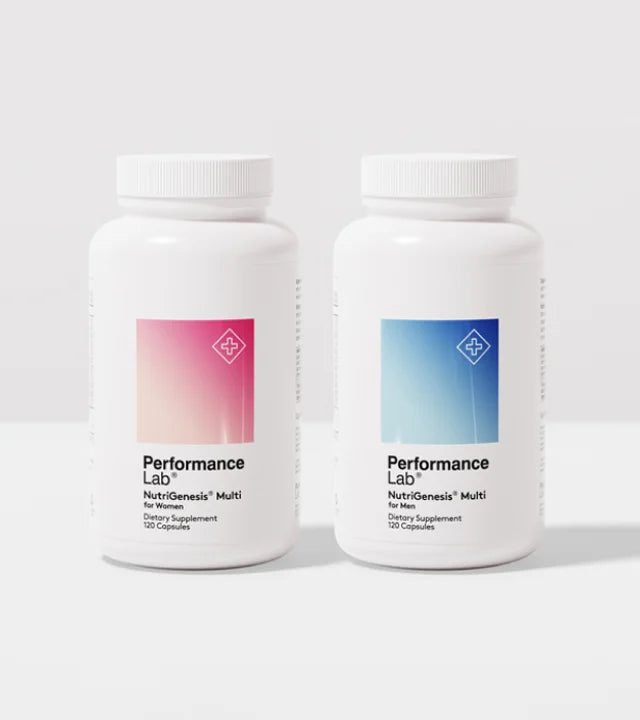
Performance Lab NutriGenesis Multivitamin for men or women follows all the testing mentioned above. In addition, it is non-GMO, non-irradiated, free from artificial coloring and preservatives, vegan-friendly (certified by the Vegetarian Society) and allergen-free. It contains 24 of the most useful vitamins and minerals you need today.
The only multi I’ve used and noticed more energy and better overall wellbeing!Jerrold N
What to Look for in a Quality Supplement

When it comes to choosing a quality supplement, here's what we think you should look for before you purchase:
-
Transparent labels: You have the right to know exactly what you consume when you take any kind of supplement, so look for products that list all ingredients and dosages. An effective supplement should have a clear, comprehensive label that includes an accurate Supplement Facts Panel and expiration date.
-
Avoid products that hide behind proprietary blends; in some cases, these just hide the fact that dosages are poor. You also want to make sure that certain ingredients, such as melatonin for example, are not too high.
-
GMP certified mark. Look for the name of a recognized body such as USP, NPA or NSF as opposed to generic GMP claims. Some third-party auditors like USP or NSF also provide verification tools allowing you to check a brand's status, so you can use the certifier or manufacturer website to confirm certification details rather than simply relying on front-label claims. (10)
-
Look for any other voluntary verifications. Usually the more tests a product has, the better the quality, which can help you feel confident about quality and label accuracy. It's also a sign of a reputable manufacturer.
-
Clean label. Check for evidence of a clean label to ensure the product is free from allergens so you can avoid unnecessary exposure to things like gluten, preservatives and more. As I mentioned earlier, Performance Lab products are Clean Label Project certified. (9)
-
Check vegan credentials. If a product claims to be vegan, be sure to check and determine its credentials carefully, making sure its capsules or tablets are also vegan-friendly. Official verification is even better. The Vegetarian Society, for instance, has certified Performance Lab products vegan friendly.
Health Warnings
Third-party checks matter, but they do not replace medical advice for consumers or patients, because ingredients can interact with prescription medications and make them less effective or dangerously potent. Some supplements can negatively interact with blood thinners, antidepressants, and heart medications, so please speak to a doctor beforehand if this applies to you.
Final Thoughts
Choosing a quality dietary supplement will hopefully be easier now that you know what to look for and can recognize the different levels of regulation and quality/ manufacturing standards.
How a product is made matters just as much as the quality of its ingredients - and any manufacturer who opts for voluntary additional audits and verifications proves that it cares about its customers and its products.
Here at Performance Lab, we're proud to go beyond legally mandated standards in all areas. Our products are made in cGMP compliant facilities with GMP certified verification. We also believe in independent third-party testing of our products, helping to make sure they're the very best they can be.
Performance Lab® NutriGenesis Multi
The world's most advanced multivitamin formula.
Shop Now
References
- Cohen, P. A., Avula, B., Wang, Y., Katragunta, K., & Khan, I. (2023). Quantity of Melatonin and CBD in Melatonin Gummies Sold in the US. JAMA, 329(16), 1401–1402. https://doi.org/10.1001/jama.2023.2296
- Cohen, P. A., Jacobs, B., Van Hoorde, K., & Vanhee, C. (2024). Accuracy of Labeling of Galantamine Generic Drugs and Dietary Supplements. JAMA, 331(11), 974–976. https://doi.org/10.1001/jama.2024.0328
- National Institutes of Health, Office of Dietary Supplements. “Dietary Supplements: What You Need to Know.” NIH Office of Dietary Supplements. https://ods.od.nih.gov/factsheets/dietarysupplements-Consumer
- U.S. Food & Drug Administration. “Current Good Manufacturing Practice (CGMP) Regulations.” FDA. https://www.fda.gov/drugs/pharmaceutical-quality-resources/current-good-manufacturing-practice-cgmp-regulations
- U.S. Food & Drug Administration. “Dietary Supplements.” FDA. https://www.fda.gov/food/dietary-supplements
- Natural Products Association. “NPA GMP Certification Program.” Natural Products Association. https://www.npanational.org/certifications/npa-gmp-certification-program/
- United States Pharmacopeia. “USP Dietary Supplement Verification Program.” USP. https://www.usp.org/verification-services/dietary-supplements-verification-program
- U.S. Food & Drug Administration. “Facts About the Current Good Manufacturing Practice (CGMP).” FDA. https://www.fda.gov/drugs/pharmaceutical-quality-resources/facts-about-current-good-manufacturing-practice-cgmp
- Clean Label Project. “Clean Label Project.” https://cleanlabelproject.org/
- NSF. “Certified Products and Systems: Dietary Supplements.” NSF. https://listings.nsf.org/certified-products-systems?category=Nutrition%20and%20Wellness%20Products%20and%20Services&subCategory=Dietary%20Supplements
- “A Melatonin Study Highlights a Lack of Supplement Regulation.” TechTarget. https://www.techtarget.com/pharmalifesciences/news/366606391/A-Melatonin-Study-Highlights-a-Lack-of-Supplement-Regulation