

When you’re sitting back relaxing, sipping a cup of steaming hot green tea, you’re probably not thinking about its benefits. While green tea has earned a rep as a potent weight loss aid, there’s more to it—thanks to a compound called L-theanine.
You’ll find L-theanine naturally occurring in green and black tea and certain types of mushrooms. But the most common way it’s consumed is through supplements.
It’s said to ease anxiety, reduce stress, and support sleep, but what’s the truth behind the claims?
In this article, we’re digging into the details of L-theanine—its benefits and uses, proper dosage, and where to find it.
Key Takeaways
- L-theanine is a calming amino acid from tea that can increase alpha brain waves, promoting relaxed alertness instead of sedation.
- It helps take the edge off caffeine by smoothing out jitters and supporting focus, reaction time, and mood when the two are combined.
- Research links L-theanine to better sleep quality, stress reduction, support for healthy weight management, and even stronger immune function.
- Typical effective doses range from about 100 to 250 mg, and it has an excellent safety profile even at higher intakes when used as directed.
What Is L-theanine?
L-theanine is an amino acid isolated from green and black tea leaves that offers powerful effects on cognitive function and mood. It can block L-glutamic acid from binding to glutamate receptors in the brain.
The potency of L-theanine in green and black tea is why it feels relaxing to sip on a cup of tea. The underlying mechanism also makes it an excellent supplement for periods of high stress or intense mental exertion 1.
The other reason we love L-theanine is that it can help counter some of the nasty effects of caffeine and high-stimulant compounds.
It may inhibit some of the stimulation produced by caffeine, reduce heart rate, lower subjective levels of perceived ‘stress,’ enhance visual attentional performance, and increase reaction time response 2, 3.
As we mentioned, a big part of the reason why L-theanine has such profound effects on cognitive performance is that it is structurally similar to the excitatory neurotransmitter glutamate.
It can bind weakly to glutamate receptors in the brain and block glutamate from binding. Essentially, it acts antagonistically to inhibit the reuptake of glutamine and glutamate, thereby blocking their actions 4.
It may also boost dopamine and serotonin levels, both of which are important for relaxation, reward, and mood via increasing alpha brain wave activity.
With all of these powerful actions combined, you’re getting:
- Stronger focus and attention
- Less stress and anxiety
- Improved sleep quality
- Better mood
- More motivation
- Enhanced memory
On top of that, we also touched on its ability to mitigate the effects of caffeine. How, you ask?
Caffeine functions as an adenosine receptor antagonist; it blocks adenosine from binding in the brain and increases nervous system activity and stimulation.
But L-theanine can reduce the physiological responses to stress by inhibiting excitatory responses in the brain.
Combining L-theanine with caffeine works synergistically to boost energy and alertness without sending your body into overdrive 5
L-theanine Benefits And Uses
Sharper focus
Combining caffeine and L-theanine may do the trick if you’re looking for the ultimate in focus. The stimulatory effects of caffeine help increase energy and alertness, while L-theanine mitigates the adverse effects of overstimulation.
By increasing alpha brainwaves, you're getting calm and relaxed alertness. One study found that combining 97 mg L-theanine with 40 mg caffeine improved focus during demanding tasks and reduced perceptions of tiredness 6.
Better sleep
Whether you’re looking for optimal performance in the gym or your everyday life, sleep is a must—that is, good quality sleep.
Poor quality sleep has been shown to cause weight gain, fat accumulation, metabolic dysfunction, and an increased risk of several chronic diseases 7.
While proper sleep hygiene is critical for good sleep, L-theanine is also beneficial. It possesses sedative effects, can modulate levels of neurotransmitters, and reduce stress, all of which are crucial for sleep 8.
It may also boost serotonin, dopamine, and GABA levels in the brain, and when combined with GABA, the combination may reduce sleep latency and improve non-REM sleep.
Better cognitive performance
Brain function can get a boost from a class of supplements called nootropics, of which L-theanine is one. Studies show that it could benefit mental and physical health via its neuroprotective effects.
Although research is limited, L-theanine may help protect against oxidative stress-induced neuronal damage and inhibit specific neurological functions that reduce antioxidant capacity and promote oxidative damage 9.
On top of that, L-theanine’s ability to boost dopamine levels, 5-HT, glycine, and GABA can enhance several aspects of mood and cognitive function.
Weight loss
Are you struggling to lose weight or keep it off? Adding some L-theanine into the mix could help. Although no supplement will out-do a good diet and solid training program, L-theanine may help in a few ways:
- Appetite regulation: Studies have confirmed the anti-obesity effect of green tea, which is due to three major compounds—catechins, caffeine, and theanine 10. Combining caffeine and L-theanine can elicit a suppressive effect on appetite and may inhibit weight and fat gain.
- Energy metabolism: Some research suggests L-theanine may help regulate energy metabolism by increasing energy expenditure, improving glucose tolerance and insulin sensitivity, and reducing plasma triglyceride levels, total cholesterol, and free fatty acids 11.
- Fat loss: There’s no direct link between L-theanine and fat loss, but studies consistently show that sleep deprivation and poor sleep quality can undermine efforts to reduce fat mass 12.
Insufficient sleep compromises typical weight-loss diets and related metabolic risk reduction, but because L-theanine can improve sleep, it may support fat and weight loss efforts.
Stronger immune function
Your immune system is the foundation of your health. While several compounds support stronger immunity—vitamin D, vitamin C, and zinc—L-theanine can, too.
L-theanine contains potent anti-inflammatory and antioxidant compounds that could protect the body from free radical damage and fend off illness.
One study found that green tea catechins, a type of antioxidant, and L-theanine effectively prevented the flu, while another study found that L-theanine mitigated inflammation in the intestinal tract 13-15
Is L-theanine Safe?
If you’re concerned about taking L-theanine, there have been no confirmed or direct side effects after consuming supplements or via green tea. Even in high doses (4000 mg - 6500 mg daily), L-theanine is considered safe.
A rodent study found no adverse effects or toxicity at doses of 4000 mg/kg body weight/day 16. However, excessive amounts don’t necessarily translate into better results.
While there haven’t been any adverse reported side effects from green tea, be mindful of the caffeine content. Excessive intake can lead to unwelcome side effects like:
- Nausea
- Irritability
- Upset stomach
- Jitters
- Anxiety
L-theanine Dosage
There’s quite a long list of benefits linked to L-theanine, but how much do you need to reap what it offers?
While L-theanine hasn’t been linked to toxicity, more isn’t always better, even in high doses.
Clinical trials tend to administer doses between 100 mg to 250 mg for beneficial results. But as we said, doses of up to 6,000 mg per day have still been shown safe without significant side effects.
But if you’re looking to combine L-theanine with caffeine, start slow and work your way up to even doses—take the same amount of L-theanine and caffeine for maximum results.
Where To Find L-theanine
If you’re searching for better focus, attention, and energy without having to deal with the nasty effects of mega-doses of caffeine and overstimulation, we have you covered.
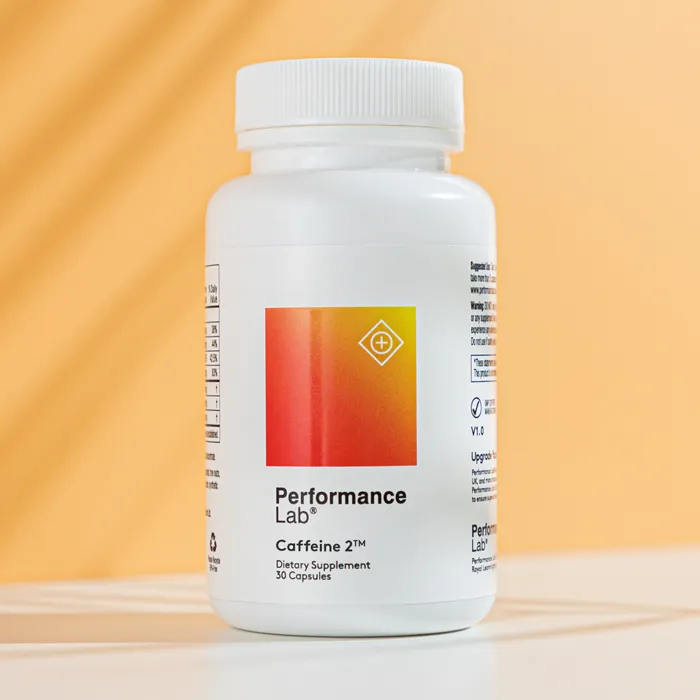
Performance Lab Caffeine 2 provides balanced, optimized, and productive caffeine stimulation. It’s smarter and cleaner, stacking natural caffeine 50 mg + Suntheanine® L-theanine 100 mg to deliver greater dosing precision, fewer side effects, and superior performance-tuned stimulation.

And if that’s not enough, Caffeine 2 boosts the benefits with Ajipure® L-Tyrosine + NutriGenesis® B-Complex to restore caffeine-depleted brain chemicals for optimal performance and recovery. It’s stimulation like you’ve never experienced before.
References
- Kimura K, Ozeki M, Juneja LR, Ohira H. L-Theanine reduces psychological and physiological stress responses. Biol Psychol. 2007;74(1):39-45.
- Nathan PJ, Lu K, Gray M, Oliver C. The neuropharmacology of L-theanine(N-ethyl-L-glutamine): a possible neuroprotective and cognitive enhancing agent. J Herb Pharmacother. 2006;6(2):21-30.
- Haskell CF, Kennedy DO, Milne AL, Wesnes KA, Scholey AB. The effects of L-theanine, caffeine and their combination on cognition and mood. Biol Psychol. 2008;77(2):113-122.
- Adhikary R, Mandal V. L-theanine: A potential multifaceted natural bioactive amide as health supplement. Asian Pac. J. Trop. Biomed. 2017;7(9):842-848.
- Dodd FL, Kennedy DO, Riby LM, Haskell-Ramsay CF. A double-blind, placebo-controlled study evaluating the effects of caffeine and L-theanine both alone and in combination on cerebral blood flow, cognition and mood. Psychopharmacology (Berl). 2015;232(14):2563-2576.
- Giesbrecht T, Rycroft JA, Rowson MJ, De Bruin EA. The combination of L-theanine and caffeine improves cognitive performance and increases subjective alertness. Nutr Neurosci. 2010;13(6):283-290.
- von Ruesten A, Weikert C, Fietze I, Boeing H. Association of sleep duration with chronic diseases in the European Prospective Investigation into Cancer and Nutrition (EPIC)-Potsdam study. PLoS One. 2012;7(1):e30972.
- Kim S, Jo K, Hong KB, Han SH, Suh HJ. GABA and l-theanine mixture decreases sleep latency and improves NREM sleep. Pharm Biol. 2019;57(1):65-73.
- Takeshima M, Miyazaki I, Murakami S, Kita T, Asanuma M. l-Theanine protects against excess dopamine-induced neurotoxicity in the presence of astrocytes. J Clin Biochem Nutr. 2016;59(2):93-99.
- Zheng G, Sayama K, Okubo T, Juneja LR, Oguni I. Anti-obesity effects of three major components of green tea, catechins, caffeine and theanine, in mice. In Vivo. 2004;18(1):55-62.
- Peng WQ, Xiao G, Li BY, Guo YY, Guo L, Tang QQ. l-Theanine Activates the Browning of White Adipose Tissue Through the AMPK/α-Ketoglutarate/Prdm16 Axis and Ameliorates Diet-Induced Obesity in Mice. Diabetes. 2021;70(7):1458-1472.
- Nedeltcheva AV, Kilkus JM, Imperial J, Schoeller DA, Penev PD. Insufficient sleep undermines dietary efforts to reduce adiposity. Ann Intern Med. 2010;153(7):435-441.
- Matsumoto K, Yamada H, Takuma N, Niino H, Sagesaka YM. Effects of green tea catechins and theanine on preventing influenza infection among healthcare workers: a randomized controlled trial. BMC Complement Altern Med. 2011;11:15.
- Park M, Yamada H, Matsushita K, et al. Green tea consumption is inversely associated with the incidence of influenza infection among schoolchildren in a tea plantation area of Japan. J Nutr. 2011;141(10):1862-1870.
- Miyachi T, Tsuchiya T, Oyama A, et al. Perioperative oral administration of cystine and theanine enhances recovery after distal gastrectomy: a prospective randomized trial. JPEN J Parenter Enteral Nutr. 2013;37(3):384-391.
- Borzelleca JF, Peters D, Hall W. A 13-week dietary toxicity and toxicokinetic study with l-theanine in rats. Food Chem Toxicol. 2006;44(7):1158-1166.