
If you've ever knocked back an energy drink hoping to boost your engine for a bit, chances are you've heard about taurine. It's a staple in things like Red Bull and touted as one of the best natural energy supplements alongside caffeine, although when you break it down, it's actually not designed (or synthesized) to boost energy at all.
But when it comes to revving your engines to power you through a lift, we need to bring in the big guns.
Despite being commonplace in so many commercial products, most people are largely unaware of what taurine is and how, or if, it can benefit their performance. That's why we're sorting through the science and finding out if taking taurine pre-workout is to your advantage.
Key Takeaways
- Taurine is a conditionally essential amino acid often added to energy drinks, but its main roles relate to cell hydration, electrolyte balance, and nervous system support rather than direct stimulation.
- As a pre-workout ingredient, taurine may help reduce fatigue, support endurance, and aid recovery by stabilizing cells and helping manage oxidative stress.
- It works best as part of a broader pre-workout stack alongside nitric oxide boosters, caffeine, and other performance-oriented nutrients.
- Choosing a balanced formula lets you benefit from taurine's support without relying on sugar-heavy energy drinks.
What Is Taurine?
Taurine is a naturally occurring amino acid present in the human body in relatively large amounts. In a 70 kg human, there's roughly 70 g of taurine, making it one of the most abundant organic compounds 1.
Taurine was named because it was first isolated from ox bile (Bos taurus), and its functions were thought to only revolve around bile salt synthesis, osmoregulation, energy storage, and neuroinhibition in the central nervous system (CNS), but it's since developed into so much more.
While taurine can be found in both the heart and brain—in the heart, taurine comprises up to 60% of the free amino acid pool—the bulk of it is found in skeletal muscles, where muscle cells act as the main reservoir 1. Studies show that in the brain, taurine stimulates action potentials in GABAergic neurons and specifically targets the GABAA receptor 2.
It also helps to counteract the excitotoxic effects of glutamate. But interestingly, taurine levels appear to decrease with age, which may be why there's been such a hike in interest over supplementation.
For people who aren't looking for the potential neuroprotective effects of taurine, there are several other roles it plays in the body, including 3–5:
- Maintaining hydration and electrolyte balance in cells
- Formation of bile salts—a key part of digestion (especially of fats)
- Maintaining ocular function
- Regulating mineral levels
- Supporting CNS function
- Regulating immune system health and antioxidant function
It also helps maintain calcium homeostasis within muscle cells and supports calcium release from the sarcoplasmic reticulum for muscle contraction.
Taurine also promotes cell volumization, which can support nutrient delivery and help reduce cramping.
Taurine And Athletic Performance
While taurine's benefits for athletic performance are still not fully elucidated, the two areas where taurine shows the most promise for athletes are endurance performance and post-exercise muscle soreness—two components that all athletes should be aware of.
1. May Improve Endurance Performance
There is a long list of supplements that can improve strength and muscle growth, but the list isn't quite as long where endurance performance is concerned. Taurine, however, shows promise for endurance athletes.
Research suggests that maintaining taurine concentrations in muscle tissue may be important for enhancing endurance performance 6. While the studies to back up the link between taurine and endurance aren't fully concrete, trained individuals do appear to have higher muscle concentrations of taurine compared to untrained individuals, suggesting that it may have a potential role in endurance exercise performance 7, 8.
Since trained individuals typically have higher muscle levels of taurine, supplementing may be less effective for enhancing endurance, or higher amounts may be needed to improve performance. With that said, some research shows the benefit of taurine for improving endurance.
A 2003 study looked at the effects of taurine, carnitine, or glutamine supplementation on endurance exercise performance and fatigue factors in male college students 9.
They found improvements in time-to-exhaustion running performance with taurine (4 g/day) supplementation for two weeks, seeing athletes run 6.9 minutes longer on a treadmill at 75% VO2 max.
Taurine supplementation also appeared to reduce serum inorganic phosphorus concentration, as well as serum ammonia concentration (32% reduction) during the test.
Similarly, a 2018 review looked at the effects of isolated oral taurine ingestion on endurance performance and found that doses ranging from 1 g to 6 g/day provided in a single dose for two weeks improved overall endurance performance with no differences between acute and chronic supplementation 10. At the review level, 1–3 grams before workouts is commonly cited as an effective range.
In endurance studies, taurine administration is typically timed 1–3 hours before training.
Despite some positive studies, the research on taurine supplementation for endurance improvements is largely mixed, and a 2019 report identified 3 grams per day as a practical upper daily dose in sports-use discussions.
However, because taurine is found in higher concentrations in oxidative muscle fibers, it could mean that taurine may improve endurance exercise performance, which may result from greater recruitment of type I muscle fibers during aerobic events.
2. May Reduce Muscle Soreness
The other potential benefit of dietary taurine is muscle soreness and post-workout recovery. There's a large body of research looking at the efficacy of the branched-chain amino acids (BCAAs) for delaying muscle fatigue and soreness after eccentric exercise, and although taurine isn't a BCAA, it could offer the potential for reducing DOMS via improving satellite cell activation and recovery after high-intensity, muscle-damaging exercise 6; satellite cells are the primary cells involved in myofiber development, proliferation, differentiation, and renewal.
Because taurine is found in high concentrations in skeletal muscle, high-intensity exercise damages myofibers and results in disruption of the sarcolemma, which subsequently causes activation of satellite cells and taurine release 6, while taurine also helps maintain calcium homeostasis within muscle cells during contraction and recovery.
Delayed onset muscle soreness (DOMS) is one of the major symptoms associated with eccentric exercise-induced muscle damage and leads to loss of muscle strength, decreased range of motion, inflammation, and an increase in blood levels of muscle proteins 11.
Muscle damage is characterized by infiltration of inflammatory cells to the injured tissue, increases in various inflammatory markers (creatine kinase, lactate dehydrogenase, etc.), and significant oxidant stress—all of which are targets with taurine supplementation 12, 13.
A 2014 study found that taurine supplementation for 21 days (50 mg/kg/day) in male participants led to reduced levels of creatine kinase (CK) and less DOMS compared to the placebo group, which was likely attributed to taurine reducing CK levels and supporting membrane stabilization and recovery 14.
What's more, in the study on taurine combined with BCAAs, taurine may exert even more favorable effects on muscle soreness 12. Thirty-six untrained male subjects were given 2 g of taurine or a placebo three times a day (6 g/day total) for two weeks before exercise and three days after eccentric elbow flexor exercises along with 3.2 g BCAA.
Combined supplementation helped to attenuate some markers of DOMS (visual analog scale (VAS)) and markers of muscle damage (serum LDH, 8-OHdG, CK) induced by high-intensity eccentric exercise.
However, prolonged supplementation of taurine without BCAAs didn't affect muscle soreness. Researchers concluded that BCAA + taurine is most effective for mitigating DOMS induced by eccentric exercise and may help reduce muscle fatigue, which translates to increased muscle performance and can increase muscular endurance.
Should You Take Taurine Pre-Workout?
With all of that said, there does appear to be a benefit for using taurine in pre-workout formulas, but if you're looking for improvements in speed, power, strength, and overall performance, taurine may or may not get you there.
Studies do suggest taurine as an ergogenic supplement for improving exercise performance due to high concentrations found in human skeletal muscle, along with its role in a variety of physiological functions, including energy metabolism, oxidative stress, and inflammation.
However, what you're combining it with may dictate the results you see. Taurine is commonly found in both stimulant and stimulant-free pre-workouts.
Caffeine is one of the most common stimulants found in many pre-workout supplements, and combining taurine with caffeine can be risky business.
Research suggests that cardiac effects of energy supplements are exacerbated when taurine and caffeine are ingested together, which may raise concerns given that caffeine alone can increase blood pressure and heart rate 2.
Rather than putting yourself in harm's way, other natural alternatives selected to enhance exercise performance may be better suited for enhancing all aspects of performance with no potential side effects or contraindications.
We're talking about:
- Beetroot Powder: A natural source of nitric oxide that's clinically proven to increase stamina, improve muscle force efficiency, reduce fatigue, and boost overall cardiovascular function for a stronger pump than ever before.
- Setria® Performance Blend: Maximizes blood flow for a more substantial, longer-lasting boost in nitric oxide production that improves strength, power, speed, endurance, and overall athletic performance. Plus, it fuels, nourishes, and clears muscles post-workout for a head start on growth and recovery.
- Natural Caffeine 80 mg: Moderate-dose caffeine for increased workout energy without overkill.
- L-theanine: Reduces the side effects of caffeine to promote calm vigilance. It delivers peak workout intensity with calmness and clarity by boosting alpha brainwaves.
- L-tyrosine: One of the non-essential amino acids involved in neurotransmitter production, it increases brain chemicals that drive stimulation and workout intensity. It sharpens focus under stress and maintains levels of neurotransmitters depleted by caffeine and intense training.
- NutriGenesis® vitamins + minerals: Tops off the essentials for strength, endurance, hydration, recovery, and more.
Frequently Asked Questions
What are the side effects of taurine?
Taurine is generally well tolerated by healthy adults, and side effects are uncommon at standard supplemental doses. Taking too much may cause mild digestive discomfort, though reactions to taurine in pre-workout supplements may actually come from caffeine or other ingredients that happen to be in the formulation alongside taurine. Taurine helps manage blood pressure by decreasing resistance in blood vessel walls. Taurine lowering blood pressure can be helpful, but it is also important to monitor if you have a history of low blood pressure or are taking medication for high blood pressure. Similarly, taurine can manage blood sugar, which is helpful in some cases, but, due to this, people with diabetes should check with their healthcare provider before supplementing.
Can taurine help neuropathy?
Taurine helps regulate fluid balance, antioxidant activity, and signaling in nerve and muscle cells, which may make it relevant to nerve health. Past research has explored whether taurine depletion contributes to diabetic nerve damage, but there is not enough human evidence to say taurine can treat neuropathy. It may support normal nerve function, but it should not replace medical care by a licensed professional for managing persistent pain, numbness, or tingling.
Is taurine good for the gym?
Yes, taurine may be a useful gym supplement because it supports muscle contraction, fluid balance, and normal muscle function. Taurine in pre-workout formulas may help reduce exercise-induced oxidative stress and neuromuscular fatigue, potentially improving muscular endurance during aerobic and strength exercises. The effects are usually modest, though, so taurine may support physical performance rather than dramatically increase strength or muscle growth.
What are the benefits of taking taurine?
Taurine supports muscle cells, heart health, fluid balance, and energy metabolism. For sports performance, it may enhance exercise performance by supporting fat oxidation, muscle contraction, and muscular endurance during prolonged exercise. Taurine administration has also been studied for lowering blood pressure, supporting healthy blood sugar, and reducing muscle fatigue, although the benefits vary and more taurine does not necessarily produce better results.
Final Thoughts
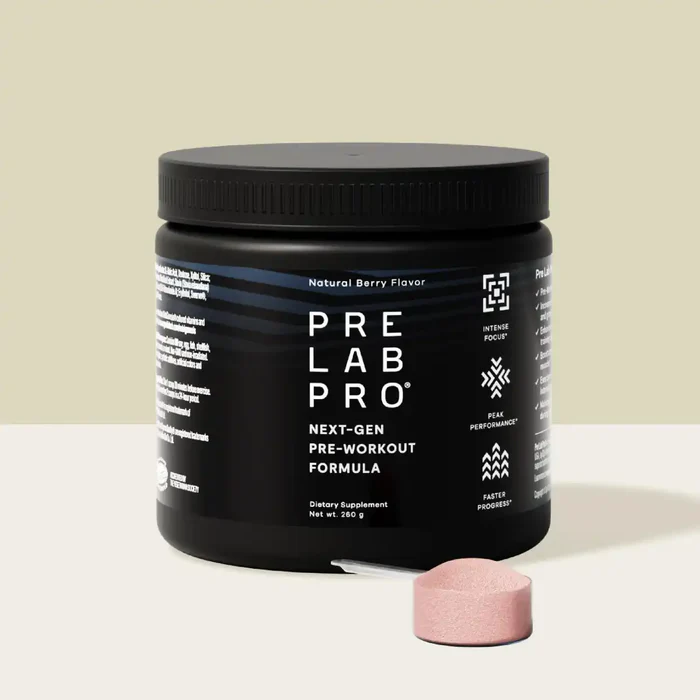
There's no denying that taurine offers some benefits for performance, but the research isn't solid, and there seem to be some safety concerns—especially with stimulant-heavy pre-workouts that may raise high blood pressure risk, even if taurine's heart-health research includes possible blood-pressure support by decreasing resistance in blood vessel walls. If you're looking for guaranteed performance improvements, skip the taurine and opt for a formula that actually works—Pre Lab Pro®.

It's a pre-workout formula that delivers bigger and better results than taurine-heavy or stimulant-heavy products on the market.
Pre Lab Pro® is designed to push your body to its limits using five powerful and all-natural ingredients that elevate your workout to push you through the biggest challenges with calmness, clarity, and ease.
References
- Huxtable RJ. Physiological actions of taurine. Physiol Rev. 1992;72(1):101–163.
- Curran CP, Marczinski CA. Taurine, caffeine, and energy drinks: Reviewing the risks to the adolescent brain. Birth Defects Res. 2017;109(20):1640–1648.
- Ripps H, Shen W. Review: taurine: a “very essential” amino acid. Mol Vis. 2012;18:2673–2686.
- Aruoma OI, Halliwell B, Hoey BM, Butler J. The antioxidant action of taurine, hypotaurine and their metabolic precursors. Biochem J. 1988;256(1):251–255.
- Schuller-Levis GB, Park E. Taurine: new implications for an old amino acid. FEMS Microbiol Lett. 2003;226(2):195–202.
- Kurtz JA, VanDusseldorp TA, Doyle JA, Otis JS. Taurine in sports and exercise. J Int Soc Sports Nutr. 2021;18(1):39.
- Balshaw TG, Bampouras TM, Barry TJ, Sparks SA. The effect of acute taurine ingestion on 3-km running performance in trained middle-distance runners. Amino Acids. 2013;44(2):555–561.
- Hansen SH, Andersen ML, Cornett C, Gradinaru R, Grunnet N. A role for taurine in mitochondrial function. J Biomed Sci. 2010;17(Suppl 1):S23.
- Lee HM, Paik IY, Park TS. Effects of dietary supplementation of taurine, carnitine or glutamine on endurance exercise performance and fatigue parameters in athletes. Korean J Nutr. 2003;36(7):711–719.
- Waldron M, Patterson SD, Tallent J, Jeffries O. The effects of an oral taurine dose and supplementation period on endurance exercise performance in humans: a meta-analysis. Sports Med. 2018;48(5):1247–1253.
- Yu JG, Malm C, Thornell LE. Eccentric contractions leading to DOMS do not cause loss of desmin nor fibre necrosis in human muscle. Histochem Cell Biol. 2002;118(1):29–34.
- Ra S-G, et al. Combined effect of branched-chain amino acids and taurine supplementation on delayed onset muscle soreness and muscle damage in high-intensity eccentric exercise. J Int Soc Sports Nutr. 2013;10(1):51.
- Warren GL, Lowe DA, Armstrong RB. Measurement tools used in the study of eccentric contraction-induced injury. Sports Med. 1999;27(1):43–59.
- da Silva LA, Tromm CB, Bom KF, Mariano I, Pozzi B, da Rosa GL, et al. Effects of taurine supplementation following eccentric exercise in young adults. Appl Physiol Nutr Metab. 2014;39(1):101–104.