
Have you ever knocked back your pre-workout, only to get to the gym and find yourself itching non-stop? Or mid-set, your skin feels prickly and sharp? Most people attribute it to their pre-workout kicking in and take it as a sign it’s working, but it’s not.
The itchy, tingly, burning sensation you feel all over your body—especially in your chest and face—is usually the result of beta-alanine and niacin.
While neither is likely to interfere with your performance, being itchy and uncomfortable can be a huge buzzkill. So, we’re talking about how beta-alanine and niacin contribute to performance and how you can avoid tingles during your workout.
Key Takeaways
- The “tingles” (paresthesia) are commonly caused by beta-alanine; they are harmless but noticeable for some.
- Split dosing, lower amounts, or different timing can reduce the sensation while keeping the benefits.
- Other ingredients, including niacin, may also cause warmth, flushing, or tingling—check the label.
- Choose a balanced formula that supports performance without uncomfortable side effects.
What Causes Tingles and the Pre-Workout Itch?

The tingling sensation—often described as pins and needles—that you feel after taking a pre-workout is acute paresthesia. While it is usually localized to the hands, arms, feet, and legs, it can happen anywhere on the body. Fortunately, the sensation is generally harmless unless it is accompanied by symptoms of a severe allergic reaction, though it can still be uncomfortable.
You’re probably familiar with pins and needles when your hand or leg falls asleep. That sensation is caused by pressure on a nerve and subsides after the position is changed. Pre-workout paresthesia is not the result of a compressed nerve—it results from high doses of beta-alanine, a non-essential beta-amino acid that stimulates neurons in the skin.
One of the significant side effects of supplementing with beta-alanine is paresthesia, which can occur when amounts exceeding 800 mg are consumed in a single dose 1. However, the symptoms experienced from beta-alanine are transient and caused by elevated plasma concentrations.
While the exact mechanism behind beta-alanine-related itchiness and paresthesia is not fully clear, it is thought to involve neurons in the skin that signal the itch sensation. When beta-alanine interacts with nerve receptors, sensory neurons send signals to the brain that cause itchiness 2.
Although it may be uncomfortable and annoying, there is no evidence suggesting that this response is harmful.
The other compound that can cause flushing and tingles is niacin, or vitamin B3. It is an essential nutrient involved in the generation of ATP during respiration. At doses around 30 mg per day, niacin is known to cause what is referred to as “niacin flush.”
High-dose niacin causes the tiny capillaries in your skin to dilate, increasing blood flow to the skin’s surface and causing flushing 3. Flushing usually manifests as redness or warmth of the skin—often on the face and chest—but can also be accompanied by tingling or itching. The response is transient and typically lasts about an hour, though it may cause discomfort.
What Is Beta-Alanine?
If you take a pre-workout, you’ve probably heard about beta-alanine. It is a non-essential amino acid that plays a significant role in muscle carnosine levels.
Here’s the short version.
A decrease in muscle pH—intramuscular acidosis—is one of the primary contributors to fatigue during intense exercise. Carnosine plays a significant role in regulating muscle pH and is produced in skeletal muscle from the precursor amino acids L-histidine and β-alanine 1.
Because beta-alanine is the rate-limiting factor in carnosine synthesis, supplementation can increase muscle carnosine content and improve muscle-buffering capacity, thereby supporting physical performance and reducing fatigue during high-intensity activities 4.
Several studies have shown that long-term beta-alanine supplementation—1.6–6.4 g per day for 2–10 weeks—can significantly increase muscle carnosine concentrations 4.
Some research suggests that beta-alanine may be most effective for exercises that rely heavily on ATP synthesis from anaerobic glycolysis. Here’s why.
As training progresses, hydrogen ions produced from lactic acid dissociation can exceed the intracellular buffering capacity of muscles, causing muscle pH to fall.
Hydrogen ion accumulation is thought to contribute to the onset of fatigue during short-duration, maximal exercise because it interferes with several metabolic processes, resulting in decreased force production and fatigue 5.
In simple terms: Hydrogen ion accumulation makes muscles more acidic, disrupting their normal function and interfering with their ability to contract.
Some of the key benefits linked to beta-alanine supplementation include:
- Increases carnosine synthesis and muscle-buffering capacity
- Improves athletic performance
- Enhances muscle growth
- Increases physical work capacity
- Accelerates muscle recovery
- Boosts endurance
Tips for Maximizing Your Workout Without Jitters
1. Choose Slow-Release Beta-Alanine as a Pre-Workout Supplement
While there are several benefits to taking beta-alanine, cutting it out is not your only option if you want to avoid the itch—consider sustained-release options.
Because large doses of beta-alanine drastically increase blood concentrations, leading to major tingles, slowing absorption is key to mitigating the side effects.
Most studies agree that more than 800 mg in a single dose will result in tingles, so either spreading out your intake or taking a sustained-release supplement such as SR CarnoSyn® beta-alanine is ideal for reducing jitters and tingles.
2. Minimize Stimulants to Reduce Pre-Workout Itchiness
Caffeine may not cause tingles, but it can cause jitters when taken in large amounts, curbing your focus just as itchiness and tingles can.
Although caffeine offers performance benefits, mega doses—that is, doses exceeding 9 mg/kg of body weight—have not been shown to provide additional performance benefits over doses of 3–6 mg/kg of body weight 6.
To maximize focus, concentration, and performance, avoid overdoing it on caffeine. Stick to low-to-moderate doses for optimal performance.
Frequently Asked Questions
Is pre-workout good or bad for you?
Pre-workout is not automatically good or bad; it depends on how you use it. When used appropriately, it can help overcome neuromuscular fatigue and boost workout performance. These dietary supplements vary widely, but a transparent formula used at recommended doses may improve focus and support muscle performance during high-intensity exercise. Oversized stimulant doses can instead cause nausea, jitters, poor sleep, or increased blood pressure. Branched-chain amino acids and other ingredients found in popular pre-workout supplements do not automatically make a product better, so fitness enthusiasts should choose brands that disclose exact amounts and suit their caffeine tolerance and overall health.
Is it normal for pre-workout to make you tingle?
Yes, it is completely normal to wonder whether the tingling sensation is supposed to happen. The usual culprit is beta-alanine. Beta-alanine combines with histidine to form carnosine, which may help delay muscle fatigue during high-intensity exercise, but larger amounts can activate G protein-coupled receptors on certain neurons in the skin. That creates the familiar pre-workout tingle, pre-workout itch, or beta-alanine itch. It is generally recognized as temporary and harmless, although beta-alanine supplements can feel uncomfortable.
How long does pre-workout tingling last?
The pre-workout tingle is commonly felt for about 60 to 90 minutes, although it may disappear sooner depending on the dose and your sensitivity. Larger single servings tend to cause more pronounced effects. A sports nutrition position stand recommends splitting oral β-alanine supplementation into smaller doses or using a sustained-release form, which may reduce pre-workout itchiness without removing beta-alanine from your routine completely.
Why does pre-workout make me nauseous?
Pre-workout can make you nauseous when high caffeine, magnesium, creatine, sodium bicarbonate, or other concentrated ingredients hit an empty stomach. Taking too much, mixing it with too little water, dry-scooping, or combining it with coffee can make the problem worse. Try a smaller serving with more water and a light meal, and choose brands that clearly list their caffeine content. Stop taking it and speak with a healthcare professional if the nausea is severe, persistent, or accompanied by repeated vomiting.
Can you take pre-workout on GLP-1?
Possibly, but it depends on your specific risks. GLP-1 medications delay stomach emptying and commonly cause nausea, while caffeine and other pre-workout ingredients can also upset your stomach or affect blood pressure. The combination may feel especially rough after starting the medication or increasing your dose, especially for older adults. Check with a healthcare professional first, particularly if you already have digestive symptoms, struggle to stay hydrated, or use insulin or another medication that can lower blood sugar. They can perform a systematic risk assessment to make sure the combination is right for you.
Final Thoughts
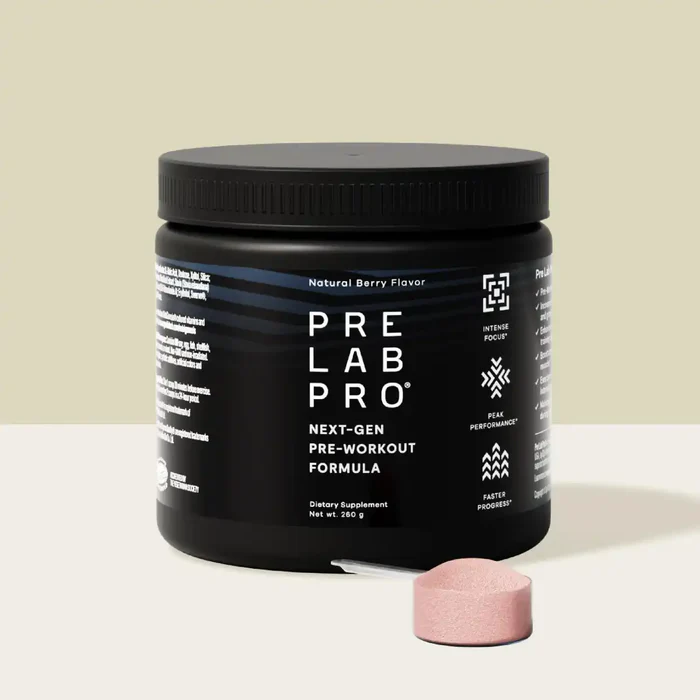
If you’re looking to avoid unwanted side effects from your pre-workout, the best advice is to choose a pre-workout without beta-alanine or be mindful of how much is in your formula. With Pre Lab Pro®, you’re getting all the perks of a solid pre-workout, without beta-alanine.

It is a complex of natural compounds designed to increase nitric oxide production, boost blood flow, and turbocharge your workout while reducing the mega-stimulation found in most conventional pre-workout supplements.
References
- Artioli GG, Gualano B, Smith A, Stout J, Lancha AH Jr. Role of beta-alanine supplementation on muscle carnosine and exercise performance. Med Sci Sports Exerc. 2010;42(6):1162-1173.
- Liu Q, Sikand P, Ma C, et al. Mechanisms of itch evoked by β-alanine. J Neurosci. 2012;32(42):14532-14537.
- Kamanna VS, Ganji SH, Kashyap ML. The mechanism and mitigation of niacin-induced flushing. Int J Clin Pract. 2009;63(9):1369-1377.
- Bellinger PM. β-Alanine supplementation for athletic performance: an update. J Strength Cond Res. 2014;28(6):1751-1770.
- Hobson RM, Saunders B, Ball G, Harris RC, Sale C. Effects of β-alanine supplementation on exercise performance: a meta-analysis. Amino Acids. 2012;43(1):25-37.
- Mielgo-Ayuso J, Marques-Jiménez D, Refoyo I, Del Coso J, León-Guereño P, Calleja-González J. Effect of caffeine supplementation on sports performance based on differences between sexes: a systematic review. Nutrients. 2019;11(10):2313.