

If you know a thing or two about probiotics, you’ll know they have a shelf life. So the longer you leave them, the more they deteriorate.
And by deteriorate — we mean die.
Which is less than ideal. Because the whole point of probiotics, is that they’re a lively bunch of friendly bacteria. We want them to arrive safely in our gut. Intact, fully-functioning, ready to get stuck in and put their good-bacteria stamp on our microbiome.
To be classified as probiotics, these microbes must be alive when consumed.
Probiotics are defined as live microorganisms, and most of the research behind their benefits is based on them being alive and active when consumed.
While newer research suggests that inactivated microbes (postbiotics, defined in 2021) may also offer benefits, this area is still developing and less well understood. For now, viability remains a key marker of probiotic quality, which is why storage, handling, and processes like freezing matter. (1)
In that case, what can we do if we want to prolong the shelf life of these products? Is it a use-it-or-lose-it approach, or can you freeze probiotics?
Short answer: Yes, you can freeze probiotics, but the process may affect their viability of live probiotics depending on the type and how they are handled. Read on to learn more...
Key Takeaways
- Many probiotic strains can survive freezing if they’re properly freeze-dried and protected, then reactivated in the gut.
- Survival depends on strain, formulation, moisture control, temperature swings, and time spent frozen/thawing.
- Quality products use protective matrices and packaging to maintain viability across storage and shipping.
- Pairing probiotics with prebiotic fibers supports effectiveness and overall microbiome balance.
Learn here about the differences between prebiotics and probiotics
What Are Probiotics And How Do They Work?

Probiotics have gained massive traction in recent years.
The big supermarket brands are all over this. You only need to wander down the chilled aisle and you’ll find cultured yogurt shots, kefir fruit drinks, low-fat, high-fibre gut-health products. You can even buy probiotic dog treats.
And why not? Fido is a much calmer dog now that his gas and bloating is gone.
Live and Active Cultures for Gut Health Benefits
Probiotics are live microorganisms that, when taken in the billions, offer positive health benefits, including better digestion. (2)
Depending on the strain, this beneficial bacteria inhabits the intestine and supports everything from improved digestive health, to bowel function, mood, immunity, and a diverse and active gut microbiome.
They repopulate and rebalance the gut, supporting the gut microbiome.
Fermented foods and probiotic-rich products not only support gut health but may also provide nutritional benefits, such as essential vitamins and nutrients like B12, C, and K2. (3)
So how do they work?
The first thing worth noting is their life cycle. Science has shown that their journey from production to action involves several stages and each is key to their function and overall efficacy.
The Life Cycle of a Probiotic
Probiotic Supplements

Selection and Cultivation
Manufacturers start by selecting specific strains for their beneficial properties. These are then grown in controlled environments and harvested.
Stabilization
Probiotics are sensitive to environmental stressors like heat, moisture and oxygen. To counter this, they need to be packaged in a dormant state. This can be done by freeze-drying or spray drying.
Freeze-drying is widely used to preserve probiotics because it helps maintain their structure and biological activity while allowing long-term storage. That said, it’s not a perfect process. Some cell damage still occurs, which is why protective compounds and careful processing are essential to maintain viability. (4)
Encapsulation and Packaging
Probiotics are coated in protective materials (e.g., lipids, polysaccharides) to shield them from oxygen, heat, and moisture. They may be blended with stabilizers like trehalose or skim milk powder to enhance shelf life.
They're then packaged in airtight, moisture resistant containers. Packaging and encapsulation is key with probiotics. Not only do they need to withstand the journey from manufacturer to supermarket, they also need to survive digestion.
Consumption
Upon entering the body, probiotics face challenges like stomach acid and bile salts. Some strains are resilient enough to survive these harsh conditions, while spore-forming probiotics (e.g., Bacillus) germinate and activate in the gut. (5)
Germination and Activation
Spore-forming probiotics "wake up" when exposed to gut conditions (moisture, nutrients, and temperature). Non-spore-forming strains (e.g., Lactobacillus, Bifidobacterium) don't germinate but rehydrate and become active.
Benefits and Function
Probiotics work to balance gut microbiota by competing with harmful bacteria. They produce beneficial compounds like short-chain fatty acids and antimicrobial peptides. They create favourable conditions for beneficial bacteria to thrive, and then they get excreted.
Yep. They do their job and then they're out.
Most probiotics don't permanently colonize the gut. So you'll need to take them every day. (6)
Yogurt And Kefir

The approach for yogurt and kefir is slightly different. Probiotics in these products are typically in an active or semi-active state.
During the fermentation process, live bacteria actively convert sugars into lactic acid, creating the tangy flavor and creamy texture. Once fermentation is complete, the product is cooled to slow bacterial activity and extend shelf life, but the probiotics remain metabolically active rather than dormant.
Refrigeration is essential to maintain their viability, as heat or freezing can damage the live cultures.
This semi-active state means that probiotics in yogurt or kefir have a shorter shelf life and require careful handling, compared to the dormant probiotics in supplements.
What Happens to Probiotics during the Freezing Process?
We know that freezing slows down bacterial metabolism. We also know that as water freezes within cells, it expands to form sharp ice crystals. There are pros and cons to this process. Depending on the type, some will fare better than others.
Can I Freeze Probiotic Capsules?
No. Generally, it isn't recommended to freeze probiotic capsules.
The main reason for this is because the freezing and thawing process may compromise the integrity of the capsules.
Also, it's not really necessary to freeze probiotics in capsule form. They tend to have a shelf life of at least a year as long as they are stored at ambient temperature and humidity, so avoid the freezer. (7)
Can I Freeze Yogurt and Kefir?

Yes, yogurt and kefir can be frozen, and many of the bacteria can survive the process. However, freezing doesn’t preserve probiotic levels perfectly, and it can affect both viability and texture over time.
Studies on frozen fermented dairy products show that a significant proportion of lactic acid bacteria can remain viable after freezing and long-term storage.
In one study, yogurt stored at sub-zero temperatures for several months still retained around one-third of its original viable bacterial count after 150 days, showing that freezing does not eliminate probiotics entirely, but does reduce their numbers or kill bacteria over time. (8)
That said, survival is not constant. Viability tends to decline gradually during frozen storage, and the extent of loss depends on several factors, including the bacterial strain, the formulation of the yogurt or kefir, and the presence of protective ingredients like milk solids or sugars.
It is also important to note that freezing is not a neutral process for bacteria. Ice crystal formation and temperature stress can damage probiotic cell membranes, meaning that some loss of viability is expected even when the cultures remain alive after thawing.
In practical terms, this means frozen yogurt or kefir can still contain live cultures after thawing, but the total number of probiotic bacteria is usually lower than in the fresh product. The longer the storage time, the greater the reduction is likely to be.
Finally, freezing can also affect texture and taste. Ice formation can change the structure of fermented dairy products, and separation or graininess may occur after thawing, even if the bacteria survive.
Can I Freeze Sauerkraut and other Fermented Foods?

Contrary to popular belief, not all fermented foods contain probiotics.
Fermented foods and probiotics
While fermented foods are made using microbes, they are not automatically considered probiotic foods. According to the official scientific definition, probiotics must contain specific live microorganisms in adequate amounts that have been proven to provide a health benefit.
Many fermented foods do not meet this requirement because the strains are not identified or clinically tested.
The Fermentation Process
That said, some fermented foods such as kimchi and kombucha may still contain live microbes, and fermentation can also produce beneficial compounds even when the bacteria are no longer active.
For example, commercially packaged or canned sauerkraut is often pasteurised, which removes live bacteria, meaning it no longer contains active cultures. However, traditionally fermented, unpasteurised sauerkraut may still contain live microbes.
Can you freeze fermented foods?
Fermented foods can be frozen, but freezing changes their microbial profile over time. Many fermented foods contain live microorganisms at the point of production, but these populations are sensitive to storage conditions.
Studies show that lower temperatures slow microbial activity and can help preserve viability compared with warmer storage, but freezing does not fully stop biological change, and gradual reductions in viable bacteria can still occur depending on the food, strain, and storage duration. (9)
Importantly, fermented foods are complex biological systems. Even when the number of live microbes decreases during storage, fermentation-derived compounds such as organic acids, peptides, and other metabolites remain present.
These compounds are formed during fermentation itself and are generally more stable than live bacterial cultures, meaning that some of the functional characteristics of fermented foods may persist even if microbial viability declines.
However, the effects of freezing on fermented foods specifically are less extensively studied than refrigeration or fermentation processes themselves. As a result, outcomes can vary widely depending on the product type, how it was fermented, and how it is stored.
In general, fermented foods should be treated as biologically active products whose microbial content is sensitive to processing and storage conditions, rather than as stable probiotic sources. (10)
Fermented foods do come with a whole host of health benefits, so incorporating them into your diet is a smart move. (11)
Remember that probiotics are temperature sensitive so only freeze things you can eat cold.
It’s worth keeping in mind that textures can change during the defrosting stage and may not be as appealing as their fresh, pre-frozen version. Freezing can also impact the taste of fermented foods, sometimes making them less enjoyable than when fresh.
The Bottom Line: Does Probiotic Good Bacteria Survive Freezing?
Freezing probiotics is possible, but it’s dependant on type, length of freeze, supplier and more. (12)
If you have a quality probiotic supplement from a reputable company, then capsules shouldn’t need to be frozen. The shelf life on these tends to be between one and two years. As long as you store it according to instructions, you should be fine.
Freezing capsules beyond this point isn’t recommended as it may cause the capsule to degrade.
For frozen yogurts and drinks containing live and active cultures, it's possible to freeze them without too much initial loss of bacteria, but storage time will inevitably influence numbers.
As for fermented foods, they are probably best consumed fresh. They tend not to freeze too well and will certainly lose probiotic strains if heated.
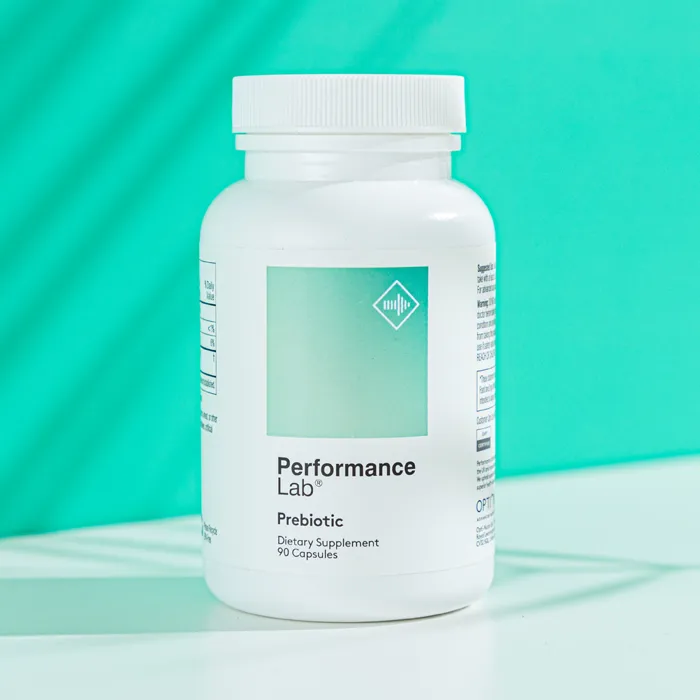
Whatever probiotic you take, and whatever lengths you go to in order to preserve them, get the most out of it by pairing it with a prebiotic supplement like Performance Lab® Prebiotic.

A quality prebiotic is food for the good bacteria you’re about to introduce.
Your probiotic can only stay in your gut for a finite amount of time before being excreted. Help it get to work and make the most of its time in your gut, by feeding it the fiber it needs to thrive.
Shop Performance Lab® Prebiotic
References
- Salminen, S., Collado, M. C., Endo, A., Hill, C., Lebeer, S., Quigley, E. M. M., Sanders, M. E., Shamir, R., Swann, J. R., Szajewska, H., & Vinderola, G. (2021). The International Scientific Association of Probiotics and Prebiotics (ISAPP) consensus statement on the definition and scope of postbiotics. Nature Reviews Gastroenterology & Hepatology, 18(9), 649–667. https://doi.org/10.1038/s41575-021-00440-6
- Hill, C., et al. (2014). The ISAPP consensus statement on probiotics. Nature Reviews Gastroenterology & Hepatology. https://www.nature.com/articles/nrgastro.2014.66#Sec4
- Marco, M. L., Heeney, D., Binda, S., Cifelli, C. J., Cotter, P. D., Foligné, B., Gänzle, M., Kort, R., Pasin, G., Pihlanto, A., Smid, E. J., & Hutkins, R. (2017). Health benefits of fermented foods: microbiota and beyond. Current Opinion in Biotechnology, 44, 94–102. https://doi.org/10.1016/j.copbio.2016.11.010
- Aschenbrenner, M., Först, P., & Kulozik, U. (2015). Freeze-drying of probiotics. https://doi.org/10.1201/b18807-15
- Govaert, M., Rotsaert, C., Vannieuwenhuyse, C., Duysburgh, C., Medlin, S., Marzorati, M., & Jarrett, H. (2024). Survival of probiotic bacterial cells in the upper gastrointestinal tract and the effect of the surviving population on the colonic microbial community activity and composition. Nutrients, 16(16), 2791. https://doi.org/10.3390/nu16162791
- Derrien, M., & van Hylckama Vlieg, J. (2015). Fate, activity, and impact of ingested bacteria within the human gut microbiota. Trends in Microbiology, 23, 354–366.
- Fenster, K., Freeburg, B., Hollard, C., Wong, C., Rønhave Laursen, R., & Ouwehand, A. C. (2019). The production and delivery of probiotics: A review of a practical approach. Microorganisms, 7(3), 83. https://doi.org/10.3390/microorganisms7030083
- Kim, S. H., Lim, C. H., Lee, C., et al. (2009). Optimization of growth and storage conditions for lactic acid bacteria in yogurt and frozen yogurt. Journal of the Korean Society for Applied Biological Chemistry, 52, 76–79. https://doi.org/10.3839/jksabc.2009.013
- Cabello-Olmo, et al. (2020). Influence of storage temperature and packaging on bacteria and yeast viability in a plant-based fermented food.
- Tyutkov, N., Zhernyakova, A., Birchenko, A., Eminova, E., Nadtochii, L., & Baranenko, D. (2022). Probiotics viability in frozen food products. Food Bioscience, 50(Pt A), 101996. https://doi.org/10.1016/j.fbio.2022.101996
- Marco, M. L., Heeney, D., Binda, S., Cifelli, C. J., Cotter, P. D., Foligné, B., Gänzle, M., Kort, R., Pasin, G., Pihlanto, A., Smid, E. J., & Hutkins, R. (2017). Health benefits of fermented foods: microbiota and beyond. Current Opinion in Biotechnology, 44, 94–102. https://doi.org/10.1016/j.copbio.2016.11.010
- Champagne, C. P., Ross, R. P., Saarela, M., Hansen, K. F., & Charalampopoulos, D. (2011). Recommendations for the viability assessment of probiotics as concentrated cultures and in food matrices. International Journal of Food Microbiology, 149(3), 185–193. https://doi.org/10.1016/j.ijfoodmicro.2011.07.005