

We've talked about L-tryptophan a fair bit—what it is, how it can help control your anxiety, and why it makes you sleepy, but there's one important factor we haven't hit on:
Is it safe?
In the following article, we'll answer that very question.
So, with no further ado, let's dive in!
Key Takeaways
- L-tryptophan is an essential amino acid often taken in a supplement form. It's typically safe if you're healthy and take modest doses (250–1,500 mg per day, split into 1–3 doses) for short‑term use. Though side effects like nausea, drowsiness, or headache can occur.
- Very high intakes and certain historical manufacturing issues have been linked to eosinophilia-myalgia syndrome (EMS). This highlights the need for quality-controlled products and sensible dosing.
- Pregnancy, breastfeeding, and use of CNS depressants, antidepressants, monoamine oxidase inhibitors (MAOIs), or other serotonergic drugs or herbs increase the risk of adverse effects and potential serotonin syndrome.
- If you have health conditions like bipolar disorder or take medications that affect the brain or nervous system, you should absolutely consult a doctor before using L-tryptophan.
L-Tryptophan - An Essential Amino Acid

L-tryptophan is one of twenty amino acids that's needed by your body for protein synthesis and other chemical compounds.
But unlike the other 11 amino acids, tryptophan belongs to the class of 9 amino acids that are essential, i.e. the body can't make them. Unlike the tryptophan produced by some plants and bacteria, we must obtain it through our diet.
We need tryptophan for basic metabolic functions, energy, eye health, niacin, serotonin synthesis, melatonin, so it plays roles in mood and sleep. (10, 11, 15, 16)
Why People Take L‑Tryptophan Supplements
Because of these roles, you'll see people using dietary supplements with l‑tryptophan to support:
- Healthy stress response.
- Cognitive function and wellness.
- Appetite or pain perception.
- Sleep and sleep disorders, due to tryptophan's role in melatonin and serotonin production.
- Help ease withdrawal symptoms in patients undergoing smoking cessation (14)
Beyond these, L-tryptophan is sometimes used for premenstrual syndrome (PMS) and the more severe premenstrual dysphoric disorder (PMDD). It may help with mood swings that occur during the menstrual cycle in healthy women by maintaining steady l tryptophan levels. (17)
That said, tryptophan research quality and results vary by health goals. (12)
Whether you fall into the group that takes tryptophan to improve energy levels or boost mood, or maybe you take it to check your anxiety and improve your sleep, it can be a great supplement to keep on hand and to be used alongside a balanced diet and daily exercise.
As an amino acid, you'd probably think its safety is a no brainer, because, well, your body synthesizes amino acids anyway, so why would giving it more do any harm?
Well, that's partly right.
But just like anything else—be it natural or non—too much of a good thing is possible.
How Your Body Uses Tryptophan
First off, let's give you a quick reminder of why people take tryptophan to begin with, then you can understand why it may not be so good for some people…
The body metabolizes Tryptophan in two main pathways; which shows the effect it will elicit.
As the pathways are a little complicated, we'll save you from all the science-y jargon and just give you the main idea for each one in the next section.
The Two Pathways of L-Tryptophan
- Kynurenine pathway: tryptophan is metabolized into alanine and niacin, quinolinic acid, and kynurenic acid
- Serotonin pathway: tryptophan is metabolized into 5-HTP, serotonin, and melatonin
The Two Pathways Explained
The first pathway is a major energy-producing pathway, synthesizing NAD, the main energy storage molecule and accounts for 95% of dietary tryptophan degradation. (9)
The second pathway involves the conversion of tryptophan to serotonin, a major hormone involved in mood regulation.
Then there's melatonin, the hormone involved in a variety of processes including regulation of the sleep cycle, immune function, the endocrine system, reproduction, free radical scavenging, and regulating mental state and behaviour.
And while you may think the latter pathway does more, this pathway only accounts for approximately 1% of dietary tryptophan degradation.
Getting Your Tryptophan from Food
Based on the percent of degradation, it's clear that food intake of tryptophan is a hit or miss. Food sources don't have the greatest reliability if you're looking to it for affecting mood and sleep.
Remember why? Because tryptophan competes with other amino acids to get on the transport protein that shuttles them to the brain.
Suppose there's a lot of competition (i.e. high amounts of larger amino acids like BCAAs, tyrosine, phenylalanine, and methionine). In that case, chances are slim that tryptophan is going to catch a ride.
With supplements, however, you're getting the pure form of tryptophan, meaning you're in the clear to jump on the transport protein and enter the brain without having to fight off valine, isoleucine, methionine, or any other amino acid bullies.
Is L‑Tryptophan Safe for Most People?

The good news is that you may not want to overdo it on the turkey. Still, with L-tryptophan supplementation, you're likely in the clear assuming you keep it to a reasonable dosage and don't have any underlying conditions.
This is backed by clinical trials that show L-tryptophan has a low risk. Any negative side effects are often mild and go away.
Now, generally safe doesn't automatically mean safe for everyone, at any dose, for however long. Your unique combination of factors like health history, age, medications, liver and kidney function, and other conditions play a big role in the risk-benefit balance.
Safe Dosages
With tryptophan, most protocols use doses in the low hundreds of milligrams per day. Some common ranges and timings include:
- General wellness: 250–1,000 mg per day, often split into 2–3 doses.
- Sleep support: 250–1,000 mg taken 30–60 minutes before bedtime, sometimes with a small low-protein, carbohydrate‑containing snack to help it cross the blood-brain barrier. (13)
Higher daily totals, like the ones above 3,000–4,500 mg per day, don't show greater proportional benefits and may increase the risk of side effects. You should stay well below this unless under specialist supervision.
How Much is Too Much?
The no‑observed‑adverse‑effect level (NOAEL) in people is around 4.5 g/day - this is far higher than most people need or should take regularly without their doctor's approval. Especially since more research is needed on long-term safety of such doses. (12)
And while some people notice a significant improvement in how they feel, there are also occasional reports of side effects, which include:
- Nausea and vomiting (mild)
- Drowsiness
- Headache
- Light-headedness
If you experience any unusual symptoms while taking the supplement, you should stop use right away.
Other possible, less common side effects include:
- Dry mouth or gastrointestinal upset (bloating, diarrhea, constipation).
- Vivid dreams or changes in sleep architecture.
- Sweating, flushing, or mild agitation in some people
What Else You Might Find
Excessive consumption of L-tryptophan has been linked to eosinophilia-myalgia syndrome (EMS). This very rare multi-system condition causes inflammation in areas of the body like the muscles, skin, and lungs. (4)
This condition causes high levels of eosinophils, a type of white blood cell, to build up within the body and can lead to severe complications. It arises in two phases: acute and chronic.
The acute phase includes myalgias (severe muscle pain), fevers, rash, arthralgias, weight gain, edema, and dyspnea. The chronic phase includes muscle cramps and chronic pain, weakness, weight loss, fatigue, neuropathy, and skin changes.
Doesn't sound too pleasant, does it?
So How Safe is Safe?
While L-tryptophan is safe for most people supplementing with moderate doses, if you're pregnant, you may want to reconsider.
Supplementing with L-tryptophan may be unwise for pregnant women because of potential effects on the fetus and potential to suppress the central nervous system.
There isn't enough information available on the safety of L-tryptophan when breastfeeding, so it's best to steer clear of it to avoid any complications.
Animal research suggests that tryptophan supplementation during pregnancy increases fetal levels of hypothalamic serotonin and serum progesterone and prolactin.
Additionally, there is an increased risk of developing pituitary prolactinomas and mammary adenomas.
If you're on meds or other dietary supplements, you'll want to sit this one out
Just like the title suggests, L-tryptophan can be a bit problematic if you're on certain medicines or prescription drugs.
This is especially true if you're taking any CNS depressants (i.e. sedatives) like clonazepam (Klonopin), lorazepam (Ativan), phenobarbital (Donnatal), or zolpidem (Ambien). Also avoid taking it with tricyclic antidepressants.
Taking tryptophan along with sedatives can exacerbate the effect and cause excessive drowsiness.
But it's not just sedatives you have to be wary of.
Cough medications, anti-depressants, MAOIs, and any other drugs that increase brain concentrations of serotonin can react negatively with L-tryptophan.
The information here is for educational purposes only and is not medical advice. If you’re on prescription medications or have any health conditions, always check with your healthcare provider before taking L-tryptophan.
Ever thought too much serotonin in your brain could be a problem? If you take tryptophan with these drugs, it can.
Excessive amounts of serotonin flooding the brain can cause heart problems, shivering, and induce anxiety.
But is there anything else you should be wary of? Find out in the next section.
L-Tryptophan - What Else You Need to Know
Taking L-tryptophan alongside herbs with sedative properties, which includes things like hops, Jamaican dogwood, kava, catnip, skullcap, and valerian, may increase drowsiness.
This also applies to supplements with serotonergic properties like 5-HTP and SAMe, as the effect of L-tryptophan on increasing serotonin levels may increase both the effects and side effects of the supplements.
Related Post: L-tryptophan vs. 5-HTP: Which is Better?
And specifically, combining L-tryptophan with St. John's Wort may increase the risk of developing serotonin syndrome, a condition that results from too much serotonin circulating in the body.
With all of that said, if you're thinking about taking L-tryptophan for therapeutic purposes and have a pre-existing condition or a family history of metabolic issues, speak with your doctor before self-prescribing.
And either way, always use moderate doses to avoid any complications.
Take-Home Tips for Safer Use
- Start low and go slow. Begin at the low end of the range and see how you feel for at least a week before increasing.
- Don't stack with multiple serotonergic agents. Steer clear of combining it with 5‑HTP, St. John’s wort, or serotonergic medications without professional guidance.
- Avoid alcohol and heavy sedatives near bedtime doses. This reduces the risk of drowsiness or impaired coordination.
- Use short‑term, then reassess. For sleep or stress, try several weeks, then see with your clinician rather than taking it non-stop.
- Always pick third-party tested, reputable supplement brands with transparent doses(look for USP, NSF, and ConsumerLab certifications).
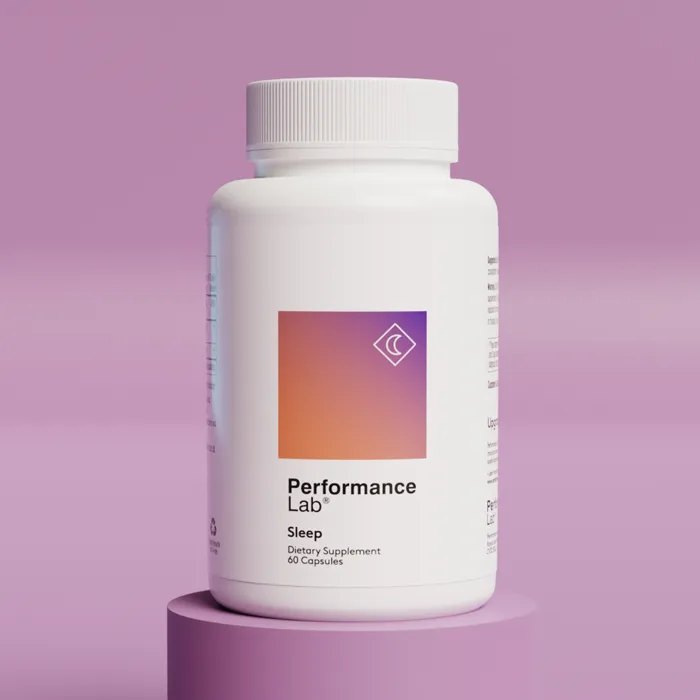
Our recommended supplement with tryptophan for supporting healthy sleep is Performance Lab®Sleep.

References
- AA Badawy. Kynurenine Pathway of Tryptophan Metabolism: Regulatory and Functional Aspects. Int J Tryptophan Res. Mar 2017; 10.
- AA Badawy. Tryptophan Metabolism: A Versatile Area Providing Multiple Targets for Pharmacological Intervention. Egypt J Basic Clin Pharmacol. 2019; 9: 10.
- E Höglund, O Overli, S Winberg. Tryptophan Metabolic Pathways and Brain Serotonergic Activity: A Comparative Review. Front. Endocrinol. 2019 April; 10: 158.
- JD Fernstrom. Effects and Side Effects Associated with the Non-Nutritional Use of Tryptophan by Humans. The Journal of Nutrition. Dec 2012; 142(12): 2236S–2244S.
- DJ Groskreutz, J Mandel. Pulmonary Vasculitis. Pulmonary Vascular Disease. Elsevier BV; 2006.
- PJ DiSaia, G Chaushuri, LC Giudice, TR Moore, LH Smith, MM Porto. Women's Health Review: A Clinical Update in Obstetrics–Gynecology. Elsevier Health Sciences; 2012.
- C Santana, L Martin, F Valladares, L Diaz-Flores, C Santana-Herrera, A Milena, M Rodríguez Díaz. Tryptophan ingestion by pregnant rats induces pituitary and mammary tumours in the adult female offspring. Human Reproduction. Aug 1999; 14(8): 2155–2161.
- L-Tryptophan. MedLine Plus. January 02, 2020.
- Giuliano MG, Tognini P. Tryptophan Metabolism in Neurodevelopment and Its Implications For Neurodevelopmental Disorders. Mol Neurobiol. 2025 Nov 20;63(1):97. doi: 10.1007/s12035-025-05437-9. PMID: 41261305; PMCID: PMC12630162.
- Kikuchi AM, Tanabe A, Iwahori Y. A systematic review of the effect of L-tryptophan supplementation on mood and emotional functioning. J Diet Suppl. 2021;18(3):316-333. doi: 10.1080/19390211.2020.1746725. Epub 2020 Apr 10. PMID: 32272859.
- Chojnacki C, Gąsiorowska A, Popławski T, Konrad P, Chojnacki M, Fila M, Blasiak J. Beneficial Effect of Increased Tryptophan Intake on Its Metabolism and Mental State of the Elderly. Nutrients. 2023 Feb 7;15(4):847. doi: 10.3390/nu15040847. PMID: 36839204; PMCID: PMC9961537.
- Friedman M. Analysis, Nutrition, and Health Benefits of Tryptophan. Int J Tryptophan Res. 2018 Sep 26;11:1178646918802282. doi: 10.1177/1178646918802282. PMID: 30275700; PMCID: PMC6158605.
- Elsevier. Tryptophan Brain Level [Internet]. Amsterdam: Elsevier; c2025 [cited 2025 Dec 23]. Available from: https://www.sciencedirect.com/topics/immunology-and-microbiology/tryptophan-brain-level
- Bowen DJ, Spring B, Fox E. Tryptophan and high-carbohydrate diets as adjuncts to smoking cessation therapy. J Behav Med. 1991 Apr;14(2):97-110. doi: 10.1007/BF00846173. PMID: 1880796.
- Tsujita N, Akamatsu Y, Nishida MM, Hayashi T, Moritani T. Effect of Tryptophan, Vitamin B6, and Nicotinamide-Containing Supplement Loading between Meals on Mood and Autonomic Nervous System Activity in Young Adults with Subclinical Depression: A Randomized, Double-Blind, and Placebo-Controlled Study. J Nutr Sci Vitaminol (Tokyo). 2019;65(6):507-514. doi: 10.3177/jnsv.65.507. PMID: 31902864.
- Bunce GE, Hess JL, Davis D. Cataract formation following limited amino acid intake during gestation and lactation. Proc Soc Exp Biol Med. 1984 Sep;176(4):485-9. doi: 10.3181/00379727-176-41902. PMID: 6463060.
- Steinberg S, Annable L, Young SN, Liyanage N. A placebo-controlled clinical trial of L-tryptophan in premenstrual dysphoria. Biol Psychiatry. 1999 Feb 1;45(3):313-20. doi: 10.1016/s0006-3223(98)00005-5. PMID: 10023508.