
You know that feeling when you're exhausted, but your brain refuses to switch off?
L-theanine, the naturally occurring amino acid found in tea, has attracted attention for its potential to promote relaxation without acting as a sedative. Rather than knocking you out, theanine appears to work by helping to calm the brain and reduce the mental and physical effects of stress, which may make it easier to settle down for sleep.
But does L-theanine actually improve sleep, or is its reputation as a natural sleep aid based mainly on its calming effects?
In this guide, we'll look at what the research says about L-theanine and sleep, including how it may influence neurotransmitters and brain activity, whether it can help you fall asleep faster and what doses have been studied. We'll also look at its potential benefits for stress, anxiety and focus, as well as what to consider for anyone thinking of taking a theanine supplement.
Key Takeaways
- L-theanine may promote relaxation and make it easier to wind down without acting as a sedative.
- Research suggests it may support sleep quality by reducing stress and promoting a more relaxed state, although the evidence is not yet conclusive.
- Sleep studies have generally used higher doses than the amount of L-theanine found in a typical cup of tea, with research commonly examining 200–450 mg per day.
- If sleep is your main goal, a dedicated sleep formula may offer broader support than relying on L-theanine alone.
What is Theanine?

Theanine is found in tea leaves, primarily in green and black tea, as well as oolong tea. It's likely responsible for that sigh of pleasure you feel from a good cup of tea.
One serving of tea typically provides about 25 to 60 mg of L-theanine. (1)
L-theanine is known for its powerful calming effects, and it's now also available as a dietary supplement in dozens of formulas, from caffeine pills to sleep aids.
As I said, theanine is not a sedative; it doesn't put you to sleep. But it may help you to relax so you can fall asleep faster. Let's briefly get into the science to discover how it does that...
Theanine and Glutamate Receptors: How Does It Relax You?

Arguably, theanine's best feature is its ability to influence the body's glutamate receptors.
To the brain's neurons, theanine and glutamate look remarkably similar and are easily confused. Glutamate is an excitatory neurotransmitter, which means it encourages neurons to fire. Too much of this can cause stress, anxiety and overstimulation, which can have a knock-on effect on sleep.
That's where theanine comes in. Glutamate first needs to bind to a receptor before it can excite the neurons - consider it like finding a parking space - and theanine blocks glutamate from binding to brain cells by sneaking in and binding to the receptor instead. Essentially, theanine steals the parking space.
And whereas glutamate would trigger the car alarm, exciting the brain, theanine turns the noise down, reducing the excitement from a 10 to a six or a seven and calming brain activity. Prompting calm alertness.
L-theanine has also been shown to increase levels of GABA in the brain, an inhibitory neurotransmitter that reduces nerve activity. Further curbing over-excitement and reducing stress and anxiety. (2, 3)
Theanine Studies on Anxiety and Relaxation
Several studies have shown that theanine may support relaxation and help manage stress in stressful situations. For instance:
-
A review of five human clinical trials concluded that L-theanine supplementation helped to reduce acute stress and anxiety in people experiencing stressful situations. (4)
-
Another study detected a significant reduction in resting heart rate following a stressful task after 200mg of L-theanine supplementation. (5)
-
Doses of between 200-400mg of theanine a day have been shown to help with both stress and anxiety in chronic and acute stressful conditions. (6)
-
A 2019 study of 30 people showed reduced stress, depression and anxiety scores after taking 200mg per day of theanine for four weeks. At the same time, Pittsburgh Sleep Quality Index (PSQI) scores also fell, so let's discuss now how theanine can potentially support sleep. (7)
Theanine and Sleep: How Can It Improve Sleep Quality?

So how does theanine specifically support sleep, given that it doesn't have inherent sedative properties? There are actually three main ways it may help. They are:
1. Stress Reduction as 'a Safe Natural Sleep Aid'
As I've already mentioned, theanine's ability to relax and calm the mind may have a knock-on effect on sleep. As a 2015 sleep study concluded...
STUDY: "Anxiolysis (reducing anxiety) is required for the initiation of high-quality sleep... L-theanine is not a sedative but promotes good quality of sleep through anxiolysis. This review suggests that L-theanine is a safe natural sleep aid." (8)
2. Additional Support for Serotonin and Dopamine
l-theanine appears to affect neurotransmitters dopamine and serotonin levels, both involved in regulating sleep and the sleep-wake cycle, as well as mood and emotion.
Serotonin, for instance, is needed to make the 'sleep hormone' melatonin. Melatonin helps to regulate our natural sleep-wake cycle (circadian rhythm). Dopamine is also connected to the sleep-wake cycle, telling the body when it's time to wake up. Together, they aid restful sleep. (9, 10)
3. Theanine and Alpha Brainwaves and Brain Electrochemical Activity
Theanine has been shown in EEG tests to increase alpha brainwaves, part of the brain's electrochemical activity linked to relaxation.
Alpha brainwaves are the type of brainwaves you typically experience just before sleep, when you are relaxed with your eyes shut. This may help to improve sleep by easing the transition from quiet wakefulness to sleep onset. (11)
Note that studies show you will need more theanine than the amount you'd typically find in a cup of black tea. (12, 13)
Let's look at some sleep studies to see what they say...
Sleep Medicine Studies: 'Theanine Helped People Fall Asleep Faster (Sleep Latency)'
Some sleep studies suggest theanine may address certain sleep problems.
REVIEW 1: Effects of L-theanine on Sleep Duration, Sleep Onset and More
A 2025 review looked at 13 studies involving 550 people, including 11 randomised controlled trials, to assess how L-theanine affects sleep. The studies generally used doses of 200–450 mg per day.
Overall, the research suggests that L-theanine may help people fall asleep more easily, stay asleep, sleep more efficiently and feel more satisfied with their sleep and more refreshed when they wake up.
Notably, it did this without increasing sleep duration - the length of time they were asleep. Meaning the improved sleep quality appeared to come more from sleep feeling restorative than from longer sleep duration. (14)
The researchers concluded that l-theanine shows potential to support sleep and enhance sleep quality, but further research is warranted.
REVIEW 2: L-theanine and Sleep Disturbances and More
I've already mentioned a second study that examined the effects of theanine on stress and cognitive function. The study, which gave participants 200mg of theanine a day, also discovered sleep benefits, measured by the Pittsburgh Sleep Quality Index (PSQI).
Specifically, the L-theanine group showed improvements in:
-
Sleep latency
-
Sleep disturbance
-
Use of sleep medication
The overall PSQI score also decreased significantly after L-theanine administration, indicating fewer participant-reported sleep disturbances. (15)
The Caveats
These results are promising but not definitive. The sleep studies varied in their design and how they measured sleep, and more research is needed to confirm how consistently L-theanine can support sleep.
Current evidence is stronger for subjective sleep quality than for proving consistent changes in deep sleep, NREM sleep, or rapid eye movement patterns.
If sleep is your main goal, a dedicated sleep supplement may be a more appropriate option, as these formulas are specifically designed to support sleep rather than relying on the effects of a single ingredient.
Best Natural Sleep Supplement
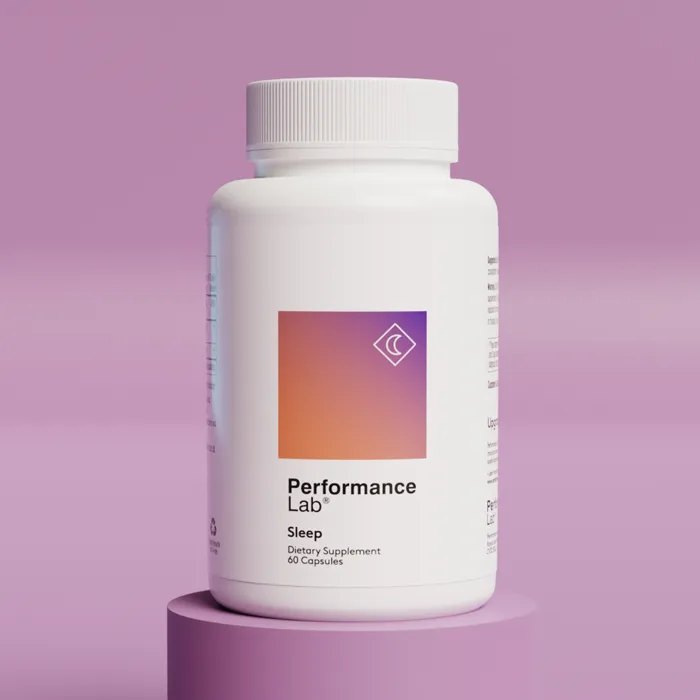
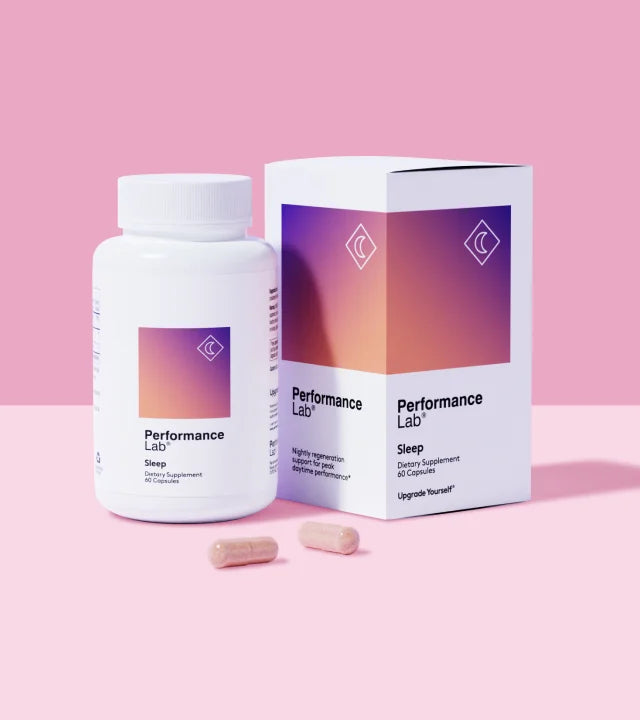
Performance Lab Sleep is a quality sleep stack, a combination of four carefully chosen ingredients that have been examined and recognized for their sleep support. It includes montmorency tart cherries, one of the richest sources of natural melatonin around. Melatonin is commonly known as the 'sleep hormone' because it tells your body when it's time to get ready for bed.
Sleep also includes magnesium, shown to help relax muscles ahead of sleep; L-tryptophan and lemon balm to calm the nerves before bed.
An immediate change in quality and consistency of sleep. I highly recommend it.Stephanie B
Let's get back to l-theanine for a moment...
How Long Does it Take L-theanine to Work?
L-theanine crosses the blood brain barrier rapidly and starts to work within 30-60 minutes, with studies on timing using doses ranging from 50-200mg. Some people take a theanine complex at night for sleep improvement, and it is generally described as non-habit forming without causing morning grogginess.
Reports on how long it lasts vary, depending on the individual, dosage and the effect being measured. One trial examining alpha brainwaves in particular noticed increased activity for three hours after supplementation (of 200mg of theanine). Meanwhile, Psychology Today states that theanine's calming effects may last for up to 8-10 hours. (16, 17, 18)
How Much L-Theanine Do You Need? Dosage
A typical dose of l-theanine is usually between 100-200mg per day, although sleep and stress research commonly study 100-450mg a day.
L-theanine supplements have also been studied at much higher intakes and are generally well tolerated in doses up to 900 mg/day, though long term safety in such dosages has not been established. (19)
Studies suggest effective doses include:
For Stress and Anxiety: 200-400mg a day. (20)
For Sleep Support: 200-450mg a day. (21)
For Improved Attention: A single dose of 200mg. (22)
How Safe is L-theanine?

Theanine has been 'generally recognized as safe' by the FDA . Animal studies have found no toxicity from doses of up to 4,000mg a day, though that cannot be translated to humans. (23)
Most human studies have used L-theanine doses of 500 mg per day or less, although higher doses have also been investigated. In one randomised, placebo-controlled trial, healthy adults taking 840 mg of L-theanine daily for four weeks experienced no clinically significant adverse effects or abnormal laboratory findings. (24)
Any side effects are usually mild, while high doses may cause gastrointestinal upset.
Long-term safety data on L-theanine is limited, especially at higher doses.
Health warnings
Note that theanine may lower blood pressure slightly, so anyone taking blood pressure medications should be careful. There are some claims that it may also have a small interaction with sedatives, though most research has failed to back that up. Likewise, anyone who is pregnant, breastfeeding, is on medication or has a medical condition should check with a healthcare provider or other qualified healthcare professionals before taking. (25)
Another Health Benefit of L-theanine: Sharper Focus

As I mentioned above, L-theanine encourages alpha brain waves, which are known to help with focus, mental clarity and a calm alertness. The study I referenced above demonstrated three hours of raised alpha waves after a 200mg supplemental dose of l-theanine.
But where theanine really comes into its own is when it's mixed with caffeine.
Theanine helps to counteract some of the negative side effects of caffeine content, such as anxiety and jitters. So when you take the two together - either in green tea or in supplements, for example - you get the increased energy and alertness without the overstimulation. That's why the combination is colloquially known as Smart Caffeine. (26)
Theanine and Caffeine Study:
A clinical trial of young adults combined 97mg of L-theanine with 40mg of caffeine. The 'combination significantly improved accuracy during task switching and self-reported alertness and reduced self-reported tiredness'. (27)
Other studies have proved that the combination of caffeine and theanine helps to improve attention better than caffeine alone.
Caffeine + L-Theanine Studies
One study combined 50mg of caffeine with 100mg of theanine and tested it against a placebo control group or caffeine alone.
It found that while taking caffeine alone improved certain measures, the combination of both further improved accuracy and speed of attention tasks after 60 minutes. At the same time, it also reduced susceptibility to distracting information for at least 90 minutes. (28)
Another study tested caffeine and theanine in combination and alone. The combination of the two showed improvements beyond those seen with the individual ingredients, including faster simple reaction time, faster numeric working-memory reaction time and improved sentence-verification accuracy. (29)
Best Caffeine + Theanine Supplement
Take advantage of the combination of theanine and caffeine with Performance Lab Caffeine 2. This crash-free caffeine pill combines a modest 50mg of caffeine with 100mg of theanine. Also included are 250mg of tyrosine and various B vitamins, often depleted when drinking coffee or taking caffeine pills.
Performance Lab Caffeine 2 offers calm, controlled energy without the traditional jitters you might experience with other caffeine pills. The 50mg caffeine per serving also gives you the flexibility to choose your own dose. (Do not take more than 5 capsules per day).
Great stuff! I won't take caffeine without the L-theanine. This is the perfect blend and also has added B vitamins!Cindy S

More: L-theanine usage, dosage and health benefits
Final Thoughts
L-theanine is an interesting option if stress, anxiety or an overactive mind is making it difficult to wind down at night. Rather than acting as a conventional sedative, it appears to promote a more relaxed state, potentially helping you fall asleep more easily and improving how restful your sleep feels.
The research so far is promising. However, the evidence isn't strong enough to say that L-theanine will improve sleep for everyone, and more research is needed to understand its effects on sleep architecture and longer-term sleep quality.
It's also worth remembering that better sleep isn't necessarily about finding a single ingredient that makes you sleepy. Stress, caffeine, your sleep environment, daily routine and your body's natural sleep-wake cycle can all play a role.
If sleep is your main concern, a dedicated sleep supplement such as Performance Lab Sleep may make more sense than relying on L-theanine alone.
References
- “L-Theanine for Sleep.” Sleep Foundation. https://www.sleepfoundation.org/sleep-aids/l-theanine-for-sleep.
- Kimura, K., Ozeki, M., Juneja, L. R., & Ohira, H. “L-Theanine Reduces Psychological and Physiological Stress Responses.” Biological Psychology, vol. 74, no. 1, 2007, pp. 39–45. doi:10.1016/j.biopsycho.2006.06.006.
- Hidese, S., Ogawa, S., Ota, M., et al. “Effects of L-Theanine Administration on Stress-Related Symptoms and Cognitive Functions in Healthy Adults: A Randomized Controlled Trial.” Nutrients, vol. 11, no. 10, 2019, article 2362.
- Everett, J. M., Gunathilake, D., Dufficy, L., Roach, P., Thomas, J., Upton, D., & Naumovski, N. “Theanine Consumption, Stress and Anxiety in Human Clinical Trials: A Systematic Review.” Journal of Nutrition & Intermediary Metabolism, vol. 4, 2016, pp. 41–42. https://www.sciencedirect.com/science/article/pii/S2352385915003138.
- Williams, J., Kellett, J., Roach, P., McKune, A., Mellor, D., Thomas, J., & Naumovski, N. “L-Theanine as a Functional Food Additive: Its Role in Disease Prevention and Health Promotion.” Beverages, vol. 2, no. 2, 2016, article 13. doi:10.3390/beverages2020013.
- Lopes Sakamoto, F., Metzker Pereira Ribeiro, R., Amador Bueno, A., & Oliveira Santos, H. “Psychotropic Effects of L-Theanine and Its Clinical Properties: From the Management of Anxiety and Stress to a Potential Use in Schizophrenia.” Pharmacological Research, vol. 147, 2019, article 104395. doi:10.1016/j.phrs.2019.104395.
- Hidese, S., Ogawa, S., Ota, M., Ishida, I., Yasukawa, Z., Ozeki, M., & Kunugi, H. “Effects of L-Theanine Administration on Stress-Related Symptoms and Cognitive Functions in Healthy Adults: A Randomized Controlled Trial.” Nutrients, vol. 11, no. 10, 2019, article 2362. doi:10.3390/nu11102362.
- Rao, T. P., Ozeki, M., & Juneja, L. R. “In Search of a Safe Natural Sleep Aid.” Journal of the American College of Nutrition, vol. 34, no. 5, 2015, pp. 436–447. doi:10.1080/07315724.2014.926153.
- “Serotonin.” Cleveland Clinic. https://my.clevelandclinic.org/health/articles/22572-serotonin.
- “What’s the Difference Between Dopamine and Serotonin?” Healthline. https://www.healthline.com/health/dopamine-vs-serotonin#depression.
- “Alpha Waves and Sleep.” Sleep Foundation. https://www.sleepfoundation.org/how-sleep-works/alpha-waves-and-sleep.
- Nobre, A. C., Rao, A., & Owen, G. N. “L-Theanine, a Natural Constituent in Tea, and Its Effect on Mental State.” Asia Pacific Journal of Clinical Nutrition, vol. 17, suppl. 1, 2008, pp. 167–168.
- Gómez-Ramírez, M., Higgins, B. A., Rycroft, J. A., Owen, G. N., Mahoney, J., Shpaner, M., & Foxe, J. J. “The Deployment of Intersensory Selective Attention: A High-Density Electrical Mapping Study of the Effects of Theanine.” Clinical Neuropharmacology, vol. 30, no. 1, 2007, pp. 25–38. doi:10.1097/01.WNF.0000240940.13876.17.
- Bulman, A., D’Cunha, N. M., Marx, W., Turner, M., McKune, A., & Naumovski, N. “The Effects of L-Theanine Consumption on Sleep Outcomes: A Systematic Review and Meta-Analysis.” Sleep Medicine Reviews, vol. 81, 2025, article 102076. doi:10.1016/j.smrv.2025.102076.
- Hidese, S., Ogawa, S., Ota, M., et al. “Effects of L-Theanine Administration on Stress-Related Symptoms and Cognitive Functions in Healthy Adults.” 2019.
- van der Pijl, P. C., Chen, L., & Mulder, T. P. J. “Human Disposition of L-Theanine in Tea or Aqueous Solution.” Journal of Functional Foods, vol. 2, no. 4, 2010, pp. 239–244. https://doi.org/10.1016/j.jff.2010.08.001.
- Lake, James. “L-Theanine Reduces Symptoms of Anxiety.” Psychology Today, 2017. https://www.psychologytoday.com/gb/blog/integrative-mental-health-care/201703/l-theanine-reduces-symptoms-anxiety.
- Evans, M., et al. “A Randomized, Triple-Blind, Placebo-Controlled, Crossover Study to Investigate the Efficacy of a Single Dose of AlphaWave® L-Theanine on Stress in a Healthy Adult Population.” Neurology and Therapy, vol. 10, 2021, pp. 1061–1078.
- “What Is L-Theanine? Potential Benefits, Risks and What the Science Says.” Cleveland Clinic. https://health.clevelandclinic.org/l-theanine.
- Everett, J. M., Gunathilake, D., Dufficy, L., Roach, P. D., Thomas, J., Upton, D., & Naumovski, N. “Theanine Consumption, Stress and Anxiety in Human Clinical Trials: A Systematic Review.” In 39th Annual Scientific Meeting of the Nutrition Society of Australia, 2015.
- Cotter, J., Caddick, C. E., Harper, J. L., & Ebajemito, J. K. “Examining the Effect of L-Theanine on Sleep: A Systematic Review of Dietary Supplementation Trials.” Nutritional Neuroscience, vol. 29, no. 2, 2026, pp. 224–238. doi:10.1080/1028415X.2025.2556925.
- Gerolymos, C., Saddier, E., Boyer, L., & Fond, G. “Cognitive and Affective Effects of L-Theanine: A Systematic Review and Meta-Analysis of 31 Randomized Trials.” Molecular Psychiatry, 2026, ahead of print. https://doi.org/10.1038/s41380-026-03727-9.
- Borzelleca, J. F., Peters, D., & Hall, W. “A 13-Week Dietary Toxicity and Toxicokinetic Study with L-Theanine in Rats.” Food and Chemical Toxicology, vol. 44, no. 7, 2006, pp. 1158–1166. https://doi.org/10.1016/j.fct.2006.03.014.
- Higashiyama, et al. “Evaluation of Safety of Long-Term and Excessive Intake of L-Cystine and L-Theanine in Healthy Adult Subjects.” Seikatsu Eisei, vol. 52, no. 4, 2008, pp. 229–236.
- “Theanine: Uses, Side Effects, and More.” WebMD. https://www.webmd.com/vitamins/ai/ingredientmono-1053/theanine.
- Giles, G. E., Mahoney, C. R., Brunyé, T. T., Taylor, H. A., & Kanarek, R. B. “Caffeine and Theanine Exert Opposite Effects on Attention under Emotional Arousal.” Canadian Journal of Physiology and Pharmacology, vol. 95, no. 1, 2017, pp. 93–100. doi:10.1139/cjpp-2016-0498.
- Giesbrecht, T., Rycroft, J. A., Rowson, M. J., & De Bruin, E. A. “The Combination of L-Theanine and Caffeine Improves Cognitive Performance and Increases Subjective Alertness.” Nutritional Neuroscience, vol. 13, no. 6, 2010, pp. 283–290. doi:10.1179/147683010X12611460764840.
- Owen, G. N., Parnell, H., De Bruin, E. A., & Rycroft, J. A. “The Combined Effects of L-Theanine and Caffeine on Cognitive Performance and Mood.” Nutritional Neuroscience, vol. 11, no. 4, 2008, pp. 193–198. doi:10.1179/147683008X301513.
- Haskell, C. F., Kennedy, D. O., Milne, A. L., Wesnes, K. A., & Scholey, A. B. “The Effects of L-Theanine, Caffeine and Their Combination on Cognition and Mood.” Biological Psychology, vol. 77, no. 2, 2008, pp. 113–122.