

Key Takeaways
- We've been using herbs like turmeric and ginger since ancient times for wellness purposes, including to soothe inflammation. (1, 2)
- Limited and inconclusive evidence suggests that synergistic herbal blends may support your natural inflammatory pathways better than single herbs alone. (3, 4)
- Compounds in plants like turmeric absorb better with black pepper or healthy fats. (5, 6)
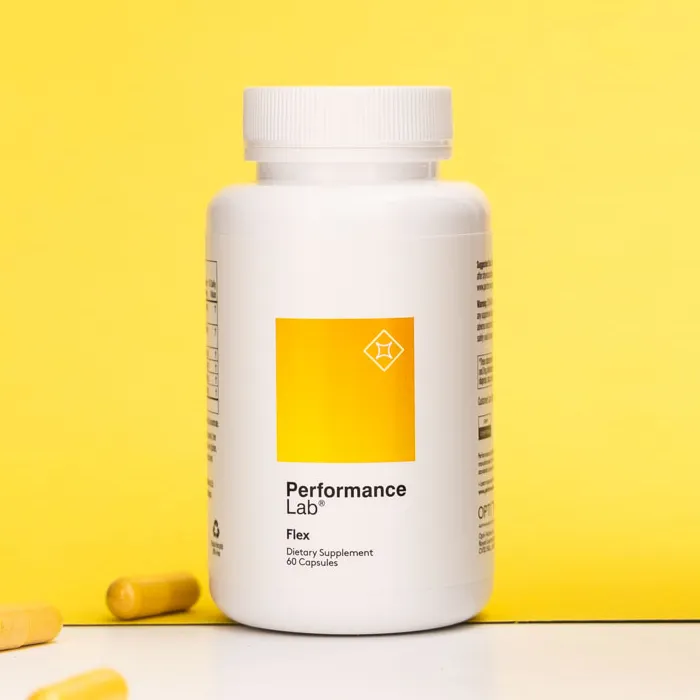
- Performance Lab® Flex uses standardized botanical extracts in a clean, convenient capsule.
Herbs have been used for anti-inflammatory purposes for millenia. Only in recent decades, though, science has been catching up on their potential effects and benefits.
Keep in mind that herbs mentioned in this guide are not medications. They are by no means a replacement for proper medical care and advice.
In addition, not all herbs you see marketed online are proven as effective, and some may not be safe (being natural doesn't always guarantee zero risk of side effects).
To help you make an informed choice, this guide gives you the lowdown on anti-inflammatory herbs: their traditional uses, which ones actually work, and how to use them according to science.
The 5,000-Year Evolution of Phytotherapy

In 1991, a group of hikers in the snowy Alps discovered an incredibly well-preserved body of "Ötzi the Iceman" frozen inside a glacier.
Alongside his body were preserved tools, including birch bark containers with fungi.
It's believed that these fungi were used not only for tinder but also for medicine — making this potentially one of the first glimpses into prehistoric healing practices. (7, 8)
Over the millenia, many traditions and cultures have used herbs and spices to contribute to overall health and well-being.
Traditional Uses of Herbs
Traditional Indian cuisine and medicine have used turmeric and ginger as primary anti-inflammatory agents.
Traditional Chinese Medicine (TCM), which has the oldest pharmacopea (Shennong Ben Cao Jing), has used hundreds of herbs, including ginseng for energy and immunity and astragalus for immune support and strength.
European folk medicine, on the other hand, often turned to rosemary and willow bark, among others.
This was not just cultural — these herbs were used because they worked.
Without the privileges of modern medicine, societies relied on trial and error to determine which plants could ease pain, reduce swelling, and help restore function.
See also: Top 9 Anti-Inflammatory Spices
The Modern Pivot
Fast forward to today: we're enjoying many benefits of scientific advancement.
But we're also seeing a return to plant-based support, often due to the concern of side effects of harsh drugs, such as stomach ulcers, cardiovascular risks, and kidney damage.
In fact, as many as 80% of people worlwide are estimated to be using some kind of herbal medicine for some health goals. (9)
In China, traditional medicine makes up 40% of all health care delivered and more than 90% of their general hospitals have units for traditional medicine, according to the World Health Organization. (10)
And unlike our ancestors, we now have clinical support to support some of their use.
What Science Says About the Role of Herbs in Chronic Inflammation
Plant compounds like curcuminoids (from turmeric), gingerols (from ginger), and boswellic acids (from frankincense) act as natural regulators. These compounds have been shown to potentially go beyond masking discomfort — they might modulate the root inflammatory agents:
- NF-κB pathway
- COX-2 enzyme
- 5-LOX enzyme
Dr. Liu, a double board-certified physician specializing in Infectious Disease and Internal Medicine, says that anti-inflammatory herbs may offer several health benefits. These include contributing to a healthy immune function, supporting people with chronic conditions, and providing antioxidant properties. (11)
But here is the important part:
Not all herbs are the same. Many aren't proven to work. But the select few from this guide do have the potential to help support normal bodily processes.
They're not a replacement for medications, nor are they approved in the U.S. for treating rheumatoid arthritis or any other chronic disease.
That said, they can play a supportive role when combined with healthy foundations — an anti-inflammatory diet, regular physical training, and sleep and recovery.
Top Herbs Ranked by Anti-Inflammatory Potential

- Turmeric (Curcuma longa) – here's something many people don't know about turmeric: it's one of the most clinically researched herbs for inflammation, potentially helping with joints, brain function, detoxification, and heart health. (12, 13) But, your body might absorb only 2-3% of its key anti-inflammatory compound curcumin. To resolve this, supplements often use 500-1000 mg of turmeric (curcumin) with black pepper (piperine) or another delivery technology to boost the curcumin absorption, sometimes up to 2000%. (14) Curcumin doesn't work for everyone, though, and it may cause side effects for some people, especially if taken in excessive amounts.
- Boswellia (Frankincense) – Boswellia is a tree resin traditionally used for joint discomfort. Early experimental studies show it has a unique ability to ease joint inflammation. How? In part, by helping to stop the pro-inflammatory 5-LOX enzyme from going into overdrive. (15, 16) It's most commonly taken as a supplement for this purpose.
- Ginger – traditional uses and modern research suggest that ginger may help with nausea, joint discomfort, muscle soreness, cramps, and systemic inflammation. (11, 17) Studies have used both low and high amounts, but between 1,000-3,000 mg of ginger per day seems to be the "sweet spot". (18) It seems to work by reducing inflammatory markers such as CRP (C-reactive protein) and TNF‑α (tumor necrosis factor alpha), though the effect looks modest. (19) You'll often see ginger paired with turmeric for potentially synergistic anti-inflammatory properties.
- Garlic - Ever wondered why garlic is so pungent? It's because it contains high amounts of sulfur compounds. These not only give garlic its distinct smell, but they also help influence immune responses and inflammatory signaling. (20) The optimal and safe dose is 1-3 cloves with food, or 600 mg as a supplement extract. (21)
- Green Tea + Cardamom – green tea and cardamom pack unique antioxidants that may help protect cells from damage and positively influence normal bodily functions, including inflammatory responses. (22, 23) That said, human studies are limited and the effectiveness seems modest at best.
- Rosemary & Other Culinary Herbs – Herbs like rosemary contain polyphenols like rosmarinic acid that act as antioxidants and potentially mild inflammation modulators. (24) These herbs often fly under the radar but may have cumulative effects when sprinkled daily on your meals.
- Chamomile – Chamomile is an anti-inflammatory and soothing agent, containing the antioxidant apigenin, best consumed as a tea for gut and skin health. (25)
- Cayenne, cinnamon, cloves – these are culinary anti‑inflammatories to add daily to your routine. These spices are not headline acts, but they can support the overall effect of a healthy diet and lifestyle. (26, 27, 28)
- Butcher's Broom: it supports blood flow and may strengthen veins and capillaries. This is thanks to its natural anti-inflammatory steroids, such as ruscogenin. (29)
- Dandelion Leaf: it acts as a natural diuretic, helping to relieve water retention and inflammation. (30)
- Horse Chestnut: native to the Balkan region, horse chestnut is not only a flavorful fall treat but it may also help those with chronic venous insufficiency, thanks to its active component aescin, which is shown to ease inflammation, strengthen blood vessels, and reduce leg swelling. (31)
You may ask, "what is the strongest herb for fighting inflammation?" While curcumin might be the closest to that description, the reality is that a single herb is not always enough on its own.
It's worth noting that some plants mentioned above are generally thought to work best when combined, for modulating multiple inflammatory pathways at once. (3, 4)
Targeted Herbal Strategies for Specific Health Goals
Before combining different herbal blends or spices (especially if taking as a supplement), talk to your doctor to minimize the risk of negative effects.
- For joint comfort & function: boswellia + turmeric + black pepper, best taken as a quality supplement.
- For digestive health: ginger + chamomile tea, after meals or before bed.
- For weight management: green tea + cayenne pepper + cinnamon, 15-30 minutes before meals.
- For leg swelling and vein health: butcher's broom + horse chestnut, best taken as supplements.
- For skin anti inflammatory effects: turmeric + black pepper + ginger + green tea, consumed with a meal that contains anti-inflammatory fats (e.g. extra virgin olive oil or sardines)
- For the immune system: Garlic + Ginger + Green Tea (best taken as fresh ingredients in a warm broth or tea, or as supplements)
- For daily use: ginger + turmeric + cayenne pepper + black pepper (as a tea or supplements)
Tips to Integrate Anti-Inflammatory Herbs Into Your Routine

Pick the form:
- Teas & infusions (turmeric ginger tea, green tea)
- Culinary use (rosemary and other aromatic dried or fresh herbs)
- Supplements (precisely dosed, convenient, standardized extracts, think garlic)
- Creams & topical formulas (for localized inflammation and discomfort, think cayenne pepper)
Maximize absorption:
- Combine turmeric with black pepper (piperine) to enhance curcumin bioavailability.
- Healthy fats like olive oil can further enhance the efficacy of herbs and spices.
- Let crushed garlic sit exposed to air for 10 minutes before consumption to activate its compounds (allicin).
Safety First:
- Some herbs can interact with medications like blood thinners and may not be for those with ulcers, pregnancy, bleeding disorders, or aspirin allergy without asking their doctor first.
- Start small by introducing one or two new herbs or spices weekly to gradually explore their effects. If taking supplements, remember that bigger doses aren't always better or safe.
- If you have chronic inflammation, autoimmune conditions, or symptoms like severe pain or joint swelling, get professional help and advice rather than trying to self-treat the issue.
Your Go-To Starter Recipes by Performance Lab®
Mixing different herbs and spices with science-backed benefits can create flavorful and health-boosting blends like these:
The "Golden Milk" 2.0

What is it? A soothing, anti-inflammatory recipe using lipid-enhanced absorption and piperine+heat activation.
How to make? Whisk 1 tsp turmeric, 1/2 tsp ginger, and 1/4 tsp black pepper into 1 cup full-fat coconut milk. Simmer for 5–8 minutes to thermally enhance the absorption of the curcuminoids.
Tart Cherry & Ginger Tonic

What is it? A recovery stack pairing anthocyanins with gingerols to ease post-workout soreness and aid a normal inflammatory response.
How to make? Combine 8 oz tart cherry juice concentrate with 1 tsp fresh grated ginger and a pinch of sea salt.
Systemic Herbal Infusion

What is it? A broad-spectrum antioxidant stack for general wellness.
How to make? Steep 1 tsp green tea, 1/2 tsp turmeric root, and 1 tsp dried chamomile in 85°C water for 5 minutes.
The "Willow Bark" Protocol

What is it? Willow bark tea is a rich source of salicin (nature's original precursor to aspirin) for soothing, plant-based musculoskeletal support.
How to make? Infuse 2 tsp white willow bark in hot water for 10 minutes.
You can experiment with using both fresh and dried forms of herbs and spices. Fresh herbs often have a more vibrant aroma while dried herbs are convenient and last longer.
Why Some People Don't Use Herbs & Natural Remedies
If herbs are so good, why isn't everyone using them in their raw form?
The idea of using herbs for anti-inflammatory effects has a few limitations for some people, including: the taste and convenience.
- The taste problem: Herbs like turmeric and ginger are earthy, bitter, and pungent. Stirring Boswellia powder or chewing its raw resin is not everyone's cup of tea.
- The preparation issue: You might feel motivated about creating a homemade anti-inflammatory routine at first, but cleaning, washing, and peeling can get tedious over time.
- Bioavailability & quality: Effectiveness can vary from plant to plant depending on where you buy it.
- Lack of precision in dosing: You don't know exactly how many milligrams of active curcuminoids or another key compound you're getting from a random root bought at the health food store. Now, you don't necessarily need to know this information to experience benefits, but precision can be beneficial when testing.
This doesn't mean that herbs are outdated. In fact, they may very well work for you if you don't mind eating them raw, can stay consistent preparing them daily, know where you're sourcing them from, and know roughly how much of what you're ingesting. Ingesting healthy compounds through a healthy diet is far more important than any supplement.
However, if you prefer convenience, a modern formulation is worth considering.
The Performance Lab® Solution: Flex

At Performance Lab®, we recognize the anti-inflammatory potential of plants, but we also take advantage of technology with the intention to make those plants better.
Performance Lab® Flex is a joint supplement that helps solve the "taste, mess, quality, and absorption" issues.
It utilizes high-quality ingredients and herbs as patented, standardized extracts:
- CurcuWIN® Turmeric: formulated to have better absorption than regular turmeric powders. (32) The light dose of 250 mg per serving is ideal if you're sensitive or simply looking to avoid high-dosed supplements. That said, you can take a double serving of Flex daily when needing an additional "boost".
- AprèsFlex® Boswellia Serrata: A patented extract that contains a higher concentration of the key boswellic acid, AKBA, and is suggested in scientific research to be superior to standard Boswellia extracts (33, 34, 35, 36)
- 3rd-party tested: The plant-powered Flex formula upholds the highest quality standards and contains NutriCaps® Pullulan Capsule and Nu-FLOW® Rice Concentrate as the only "other ingredients".
Thanks to modern nutrient delivery, Flex provides complementary support of multiple herbal components in a clean, easy-to-take capsule.
You don't have to worry about bitter taste and yellow-stained fingers - just convenient, premium wellness support.
Summary
We've used herbs to manage inflammation for millenia — and modern science supports, to a degree, some of their anti-inflammatory benefits.
Turmeric, ginger, garlic, and polyphenol-rich herbs are helpful additions to an anti-inflammatory eating plan and active lifestyle. But they can't replace medical advice regarding reducing joint pain or dealing with rheumatic diseases.
What's more, their effectiveness can vary based on the formulation, absorption, and your consistency.
If you're seeking a beginner-friendly supplement with herbs for anti-inflammatory support, check out Performance Lab® Flex, which combines traditional wisdom with modern nutritional science to provide gentle joint support.
References
- Rashrash, M., Schommer, J. C., & Brown, L. M. (2017). Prevalence and Predictors of Herbal Medicine Use Among Adults in the United States. Journal of patient experience, 4(3), 108–113. https://doi.org/10.1177/2374373517706612
- Anand, U., Jacobo-Herrera, N., Altemimi, A., & Lakhssassi, N. (2019). A Comprehensive Review on Medicinal Plants as Antimicrobial Therapeutics: Potential Avenues of Biocompatible Drug Discovery. Metabolites, 9(11), 258. https://doi.org/10.3390/metabo9110258
- Eawsakul, K., & Bunluepuech, K. (2024). Exploring Synergistic Inhibition of Inflammatory and Antioxidant Potential: Integrated In Silico and In Vitro Analyses of Garcinia mangostana, Curcuma comosa, and Acanthus ebracteatus. Advances in pharmacological and pharmaceutical sciences, 2024, 8584015. https://doi.org/10.1155/2024/8584015
- Sethi, V., Garg, M., Herve, M., & Mobasheri, A. (2022). Potential complementary and/or synergistic effects of curcumin and boswellic acids for management of osteoarthritis. Therapeutic advances in musculoskeletal disease, 14, 1759720X221124545. https://doi.org/10.1177/1759720X221124545
- Prasad, S., Tyagi, A. K., & Aggarwal, B. B. (2014). Recent developments in delivery, bioavailability, absorption and metabolism of curcumin: the golden pigment from golden spice. Cancer research and treatment, 46(1), 2–18. https://doi.org/10.4143/crt.2014.46.1.2
- Tabanelli, R., Brogi, S., & Calderone, V. (2021). Improving Curcumin Bioavailability: Current Strategies and Future Perspectives. Pharmaceutics, 13(10), 1715. https://doi.org/10.3390/pharmaceutics13101715
- Vunduk, J., Klaus, A., Kozarski, M., Petrović, P., Žižak, Ž., Nikšić, M., & Van Griensven, L. J. L. D. (2015). Did the Iceman know better? Screening of the medicinal properties of the birch polypore medicinal mushroom, Piptoporus betulinus (higher Basidiomycetes). International Journal of Medicinal Mushrooms, 17(12), 1113–1125. https://www.researchgate.net/publication/291689226_Did_the_Iceman_Know_Better_Screening_of_the_Medicinal_Properties_of_the_Birch_Polypore_Medicinal_Mushroom_Piptoporus_betulinus_Higher_Basidiomycetes
- Musselman, A. (2024, August 5). Who was Ötzi the Iceman? NOVA. https://www.pbs.org/wgbh/nova/article/who-was-otzi-the-iceman/
- Ekor M. (2014). The growing use of herbal medicines: issues relating to adverse reactions and challenges in monitoring safety. Frontiers in pharmacology, 4, 177. https://pmc.ncbi.nlm.nih.gov/articles/PMC3887317/#:~:text=The%20use%20of%20herbal%20medicinal,not%20even%20monitored%20at%20all
- Wachtel-Galor, S., & Benzie, I. F. F. (2011). Herbal medicine: An introduction to its history, usage, regulation, current trends, and research needs. In I. F. F. Benzie & S. Wachtel-Galor (Eds.), Herbal medicine: Biomolecular and clinical aspects (2nd ed.). CRC Press/Taylor & Francis. https://www.ncbi.nlm.nih.gov/books/NBK92773/
- Healthy Immune Doc. (2023, September 20). Reduce inflammation: Top 10 spices to eat now! [Video]. YouTube. https://www.youtube.com/watch?v=qEjS8t6FzJI
- Liu, S., Liu, J., He, L., Liu, L., Cheng, B., Zhou, F., Cao, D., & He, Y. (2022). A Comprehensive Review on the Benefits and Problems of Curcumin with Respect to Human Health. Molecules (Basel, Switzerland), 27(14), 4400. https://doi.org/10.3390/molecules27144400
- Xu, Q., Lian, H., Zhou, R., Gu, Z., Wu, J., Wu, Y., & Li, Z. (2025). Curcumin and multiple health outcomes: critical umbrella review of intervention meta-analyses. Frontiers in pharmacology, 16, 1601204. https://pmc.ncbi.nlm.nih.gov/articles/PMC12176752/
- Hewlings, S. J., & Kalman, D. S. (2017). Curcumin: A Review of Its Effects on Human Health. Foods (Basel, Switzerland), 6(10), 92. https://doi.org/10.3390/foods6100092
- Siemoneit, U., Pergola, C., Jazzar, B., Northoff, H., Skarke, C., Jauch, J., & Werz, O. (2009). On the interference of boswellic acids with 5-lipoxygenase: mechanistic studies in vitro and pharmacological relevance. European journal of pharmacology, 606(1-3), 246–254. https://doi.org/10.1016/j.ejphar.2009.01.044
- Shin, M. R., Kim, H. Y., Choi, H. Y., Park, K. S., Choi, H. J., & Roh, S. S. (2022). Boswellia serrata Extract, 5-Loxin®, Prevents Joint Pain and Cartilage Degeneration in a Rat Model of Osteoarthritis through Inhibition of Inflammatory Responses and Restoration of Matrix Homeostasis. Evidence-based complementary and alternative medicine : eCAM, 2022, 3067526. https://doi.org/10.1155/2022/3067526
- Anh, N. H., Kim, S. J., Long, N. P., Min, J. E., Yoon, Y. C., Lee, E. G., Kim, M., Kim, T. J., Yang, Y. Y., Son, E. Y., Yoon, S. J., Diem, N. C., Kim, H. M., & Kwon, S. W. (2020). Ginger on Human Health: A Comprehensive Systematic Review of 109 Randomized Controlled Trials. Nutrients, 12(1), 157. https://doi.org/10.3390/nu12010157
- Examine.com. (2025, August 28). Ginger benefits, dosage, and side effects. Examine.com. Retrieved January 19, 2026, from https://examine.com/supplements/ginger
- Morvaridzadeh, M., Fazelian, S., Agah, S., Khazdouz, M., Rahimlou, M., Agh, F., Potter, E., Heshmati, S., & Heshmati, J. (2020). Effect of ginger (Zingiber officinale) on inflammatory markers: A systematic review and meta-analysis of randomized controlled trials. Cytokine, 135, 155224. https://doi.org/10.1016/j.cyto.2020.155224
- El-Saadony, M. T., Saad, A. M., Korma, S. A., Salem, H. M., Abd El-Mageed, T. A., Alkafaas, S. S., Elsalahaty, M. I., Elkafas, S. S., Mosa, W. F. A., Ahmed, A. E., Mathew, B. T., Albastaki, N. A., Alkuwaiti, A. A., El-Tarabily, M. K., AbuQamar, S. F., El-Tarabily, K. A., & Ibrahim, S. A. (2024). Garlic bioactive substances and their therapeutic applications for improving human health: a comprehensive review. Frontiers in immunology, 15, 1277074. https://pmc.ncbi.nlm.nih.gov/articles/PMC11194342/
- Examine.com. (2025, September 3). Garlic benefits, dosage, and side effects. Examine.com. Retrieved January 19, 2026, from https://examine.com/supplements/garlic/
- Heydarian, A., Tahvilian, N., Shahinfar, H., Abbas-Hashemi, S. A., Daryabeygi-Khotbehsara, R., & Aryaeian, N. (2023). Effect of cardamom consumption on inflammation and blood pressure in adults: A systematic review and meta-analysis of randomized clinical trials. Food science & nutrition, 12(1), 3–12. https://doi.org/10.1002/fsn3.3738
- Radeva-Ilieva, M., Stoeva, S., Hvarchanova, N., & Georgiev, K. D. (2025). Green Tea: Current Knowledge and Issues. Foods (Basel, Switzerland), 14(5), 745. https://doi.org/10.3390/foods14050745
- Ghasemzadeh Rahbardar, M., & Hosseinzadeh, H. (2020). Therapeutic effects of rosemary (Rosmarinus officinalis L.) and its active constituents on nervous system disorders. Iranian journal of basic medical sciences, 23(9), 1100–1112. https://pmc.ncbi.nlm.nih.gov/articles/PMC7491497
- Valmy, J., Greenfield, S., Shindo, S., Kawai, T., Cervantes, J., & Hong, B. Y. (2025). Anti-inflammatory effect of chamomile from randomized clinical trials: a systematic review and meta-analyses. Pharmaceutical biology, 63(1), 490–502. https://doi.org/10.1080/13880209.2025.2530995
- McCarty, M. F., DiNicolantonio, J. J., & O'Keefe, J. H. (2015). Capsaicin may have important potential for promoting vascular and metabolic health. Open heart, 2(1), e000262. https://doi.org/10.1136/openhrt-2015-000262
- Nabavizadeh, H., Rafiei, A., & Karbakhsh Ravari, F. (2025). Therapeutic Potential of Cinnamon in Allergic Disorders: A Narrative Review of Mechanisms of Action and Clinical Applications. International archives of allergy and immunology, 1–11. Advance online publication. https://doi.org/10.1159/000548301
- Pandey, V. K., Srivastava, S., Ashish, Dash, K. K., Singh, R., Dar, A. H., Singh, T., Farooqui, A., Shaikh, A. M., & Kovacs, B. (2023). Bioactive properties of clove (Syzygium aromaticum) essential oil nanoemulsion: A comprehensive review. Heliyon, 10(1), e22437. https://doi.org/10.1016/j.heliyon.2023.e22437
- Pacuła, W., Sowa, I., Feldo, M., Graczyk, F., Patryn, R., & Wójciak, M. (2025). Current Insights into the Phytochemistry and Pharmacological Properties of Ruscus aculeatus. Molecules (Basel, Switzerland), 30(22), 4417. https://doi.org/10.3390/molecules30224417
- Kania-Dobrowolska, M., & Baraniak, J. (2022). Dandelion (Taraxacum officinaleL.) as a Source of Biologically Active Compounds Supporting the Therapy of Co-Existing Diseases in Metabolic Syndrome. Foods (Basel, Switzerland), 11(18), 2858. https://doi.org/10.3390/foods11182858
- Yan, L., Zhang, Y., Li, Y., Dai, D., Zhu, J., Chen, Y., & Xiao, W. (2025). Efficacy and mechanism of escin in improving the tissue microenvironment of blood vessel walls via anti-inflammatory and anticoagulant effects: Implications for clinical practice. Open life sciences, 20(1), 20251167. https://doi.org/10.1515/biol-2025-1167
- Kothaplly, S., Alukapally, S., Nagula, N., & Maddela, R. (2022). Superior Bioavailability of a Novel Curcumin Formulation in Healthy Humans Under Fasting Conditions. Advances in therapy, 39(5), 2128–2138. https://pmc.ncbi.nlm.nih.gov/articles/PMC9056459/#ack1
- Karlapudi, V., Sunkara, K. B., Konda, P. R., Sarma, K. V., & Rokkam, M. P. (2023). Efficacy and Safety of Aflapin®, a Novel Boswellia Serrata Extract, in the Treatment of Osteoarthritis of the Knee: A Short-Term 30-Day Randomized, Double-Blind, Placebo-Controlled Clinical Study. Journal of the American Nutrition Association, 42(2), 159–168. https://doi.org/10.1080/07315724.2021.2014370
- Sengupta, K., Krishnaraju, A. V., Vishal, A. A., Mishra, A., Trimurtulu, G., Sarma, K. V., Raychaudhuri, S. K., & Raychaudhuri, S. P. (2010). Comparative efficacy and tolerability of 5-Loxin and AflapinAgainst osteoarthritis of the knee: a double blind, randomized, placebo controlled clinical study. International journal of medical sciences, 7(6), 366–377. https://pmc.ncbi.nlm.nih.gov/articles/PMC2974165/#sec19
- Vaishya, R., Agarwal, A. K., Shah, A., Vijay, V., & Vaish, A. (2018). Current status of top 10 nutraceuticals used for Knee Osteoarthritis in India. Journal of clinical orthopaedics and trauma, 9(4), 338–348. https://doi.org/10.1016/j.jcot.2018.07.015
- Examine.com. (n.d.). Boswellia benefits, dosage, and side effects. Examine.com. Retrieved January 19, 2026, from https://examine.com/supplements/boswellia/