

Beetroot powder is a popular supplement used to support blood flow, exercise performance, and nitric oxide production. While beetroot is generally considered safe for most people, some users may experience mild side effects.
The most common side effects of beetroot powder include temporary red urine or stools (known as beeturia), digestive discomfort, and, in some cases, nausea or changes in bowel habits.
If you are wondering whether beetroot powder can cause diarrhea, stomach upset, or whether it is safe to take, this article covers the potential side effects, benefits, and best way to use beetroot supplements.
Key Takeaways
- Beetroot powder is generally well-tolerated; common, mild effects include beeturia (red urine/stool) and GI upset in some users.
- High nitrate intake can interact with certain meds/conditions—check with your clinician if unsure.
- Quality and dosing vary widely; start low, assess tolerance, and time around training if used for performance.
- Hydration and balanced diet enhance nitric-oxide benefits and reduce GI issues.
What is Beetroot Powder?

Beetroot, or beets, is a root vegetable packed with essential nutrients such as fiber, folate, manganese, potassium, and iron. They are not only a delicious, bright component of your side dishes, soups, and salads, but they also offer a range of health benefits.
Beets are one of the best sources of dietary nitrates, which are shown to have positive health effects on the heart, blood pressure, and athletic performance. (1)
Beetroot powder, or beet powder, is a bright pink or red product created from dried ground beetroot. This powder is often sold as a superfood due to the numerous health benefits associated with consuming concentrated beet powder or juice, and it’s also marketed in beetroot supplements that some people compare with drinking beetroot juice or using beet juice.
Beetroot powder can be mixed with water or juice, or even added to soups, dressings, and baked goods for easy eating in foods and drinks. So, it’s a fairly versatile addition to your diet, offering many positive health effects due to the exceptional nutritional profile and nitrate content.
Are There Any Beetroot Powder Side Effects?
While beets come with many benefits, they also come with a few side effects - though, these are often harmless for the majority of people. Many relate to gastrointestinal health. These potential side effects apply broadly to beetroot supplements, including powders, capsules, gummies, and concentrated beetroot extracts.
Colored stools
This is probably the most alarming side effect, yet it’s completely harmless. Upon consumption of beets, you may find that your stools appear reddish or dark. This is simply due to the potent color of beets, which can temporarily affect the color of your stool. (2)
Beeturia
Another completely harmless side effect is the change of color of your urine, too. While beeturia sounds a bit concerning, it simply means the change in color of your urine to a pink or deep red color. This clears up once you reduce the amount of beetroot you’re consuming. Beeturia typically happens to 10-14% of the population, while colored stools are more common.(2, 3)
Allergic reactions
If you have never eaten beets before, you may find that you have an allergy. Although rare, people with allergies to vegetables in the Amaranthaceae family may be more likely to react. This could cause skin rashes, nausea, vomiting, shock, and difficulty breathing. Stop using beet products and seek medical attention if you experience severe symptoms like these. (4)
Upset stomach
Beetroot powder is generally well tolerated, but some people may experience digestive symptoms such as bloating, stomach discomfort, nausea, or changes in bowel habits. (5)
Beet compounds may also influence gut microbiota. (6)
Kidney stones
Too many beets or high-oxalate beetroot supplements may raise the risk of kidney stones, especially if you have a history of kidney stones, since beetroot powder is high in oxalates and high oxalate intake is linked to stone formation. (7)
Individuals with chronic kidney disease or a history of kidney stones should consult their healthcare provider before using concentrated beetroot supplements
For most people, beetroot is a safe supplement to take, provided you follow the dosage guidelines. Talk to a healthcare professional if you have medical conditions or take certain medications before taking it.
What Are the Benefits of Beetroot Powder? Blood Flow and More

Many of the health benefits associated with beetroot powder stem from the nitrate content. Upon consumption of beetroot, or Beta vulgaris, or any other nitrate-rich foods, enzymes found in our saliva convert the nitrates to nitrite, which further converts to nitric oxide in the stomach. (8)
Nitric oxide helps induce several physiological functions, such as vasodilation, blood flow regulation, increasing glucose uptake, and increasing muscle contractions. These effects occur throughout the body and may have beneficial effects on circulation and organ support.
Research shows these physiological effects may help to:
-
Support blood pressure (9, 10)
-
Enhance athletic performance (11)
-
Increase energy and endurance/ stamina/ perceived exertion (12)
-
Improve blood flow (1, 13)
-
Support the immune system via its antioxidant and anti-inflammatory properties (9)
-
Improve recovery (14)
Research suggests beetroot may help lower blood pressure and support people managing high blood pressure, though changes in blood pressure levels can vary by age and sex. Please consult your doctor before taking if you have concerns about blood pressure. (10)
In addition to nitric oxide production, beetroot also contains bioactive compounds called betalains, which also contribute to many other health benefits.
Beetroot Extract for Improving Athletic Performance

People often consume beetroot powder, beet juice, or other beetroot supplements before exercise to improve performance by dilating blood vessels, improving blood flow, and aiding the delivery of oxygen and nutrients to muscles during exercise.
Research shows this may help enhance performance by:
-
Reducing the oxygen cost of exercise, leading to improved muscle efficiency and endurance performance (1)
-
Enhancing muscle contractions, leading to improvements in muscle power and sprint exercise performance. (15)
These potential benefits may extend further, as 2021 research suggests the nitrates in beetroot powder may also lower muscle soreness after certain exercise. (14)
By increasing nitric oxide availability and blood flow, beetroot may contribute to the enhanced “muscle pump” often reported by athletes.
This can also have many advantages on performance, such as increased workout intensity.
Best Way to Take Beetroot Supplements

Much research has indicated that a dose of 5-9 mmol of nitric oxide is required to improve exercise economy. (16)
This is equivalent to 300-550mg of dietary nitrates, meaning you would have to consume 200g of whole beets to reap the health and performance benefits, though more beets are not always better when trying to reach a dose.
This is why concentrated beetroot supplementation or beetroot powder has become a more popular option than raw beets, as it is a more convenient way to get an effective dose. Drinking beetroot juice is another convenient option for people who prefer it.
For the performance-enhancing effects, it is recommended to consume beetroot extract 2-3 hours before exercise. Individuals taking antihypertensive medications should consult their healthcare provider first, as beetroot may further lower blood pressure. (16)
For an even more effective performance-enhancing effect, it’s best to take beetroot powder as part of a dedicated pre-workout supplement.
Best Pre Workout Containing Beetroot Powder

Choosing reputable beetroot powder or beetroot supplements also matters, since beets can absorb heavy metals from the soil.
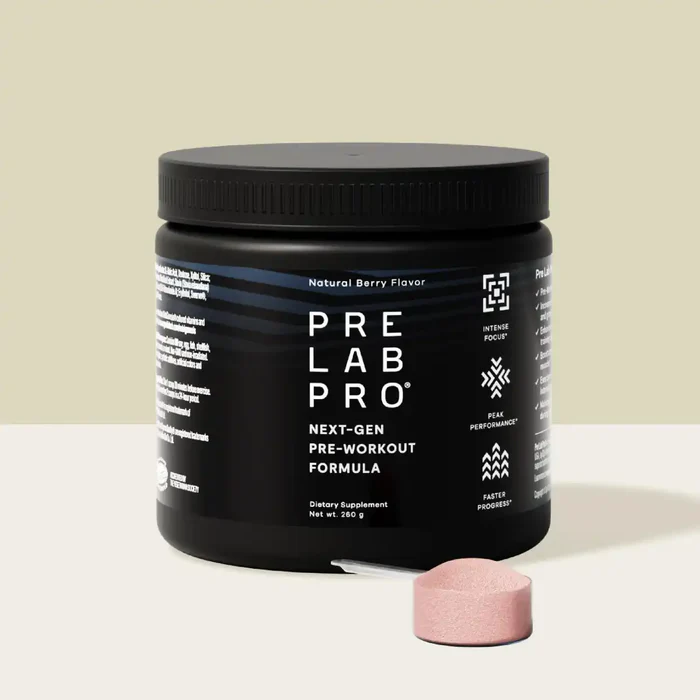
Our top pick is Pre Lab Pro®, the next-gen pre-workout supplement that combines beetroot powder, caffeine, L-theanine, L-tyrosine, L-citrulline, L-glutathione, and essential vitamins and minerals.
Pre Lab Pro® helps boost and sustain blood flow to the muscles, supporting energy, focus, and intensity without the jittery side effects, and extending post-workout recovery, pushing you to perform to your peak potential!
Frequently Asked Questions
Can Beetroot Powder Cause Diarrhea?
Beetroot powder may cause digestive discomfort in some people, including bloating, stomach cramps, nausea, or changes in bowel habits. These effects are more likely when consuming larger amounts or when introducing concentrated beetroot supplements for the first time.
Does Beetroot Powder Make Your Poop Red?
Yes. Beetroot contains pigments called betalains that can temporarily change stool color. This effect is harmless and usually resolves after reducing or stopping beetroot intake.
Can You Take Too Much Beetroot Powder?
While beetroot powder is generally well tolerated, excessive intake may increase the chance of digestive discomfort. People with kidney stone history, poor kidney function or those taking blood pressure medication should speak with a healthcare professional before using concentrated beetroot supplements.
Take-Home Message
Beetroot powder is one of the best sources of dietary nitrates, packed with a unique combination of vitamins and minerals, making this root vegetable a superfood in its own right.
Most beetroot powder side effects are mild and temporary, with red urine/stools and digestive symptoms being the most commonly reported.
While there are many health benefits associated with consuming concentrated beetroot powder or juice, those potential benefits should be weighed against side effects in people who are pregnant, have kidney disease, or take blood pressure medication, with special emphasis on individual risk factors. (Be aware that juices may also have high sugar content).
One of the best ways to take beetroot powder for enhancing athletic performance is as part of a pre-workout dietary supplement, such as Pre Lab Pro.
References
- Jones, A. M. (2014). Dietary nitrate supplementation and exercise performance. Sports Medicine, 44(Suppl 1), 35–45. https://doi.org/10.1007/s40279-014-0149-y
- Cleveland Clinic. (n.d.). Beets can turn poop and pee red: Here’s why you shouldn’t freak out. https://health.clevelandclinic.org/beets-turn-poop-and-pee-red
- Sauder, H. M., & Rout, P. (2023). Beeturia. In StatPearls. StatPearls Publishing. https://www.ncbi.nlm.nih.gov/sites/books/NBK537012/
- New York Allergy and Sinus Centers. (n.d.). Beetroot allergy. https://www.nyallergy.com/beetroot-allergy/
- Miraftabi, H., Avazpoor, Z., Berjisian, E., Sarshin, A., Rezaei, S., Domínguez, R., Reale, R., Franchini, E., Samanipour, M. H., Koozehchian, M. S., Willems, M. E. T., Rafiei, R., & Naderi, A. (2021). Effects of beetroot juice supplementation on cognitive function, aerobic and anaerobic performances of trained male taekwondo athletes: A pilot study. International Journal of Environmental Research and Public Health, 18(19), 10202. https://doi.org/10.3390/ijerph181910202
- Wang, Y., Do, T., Marshall, L. J., & Boesch, C. (2023). Effect of two-week red beetroot juice consumption on modulation of gut microbiota in healthy human volunteers: A pilot study. Food Chemistry, 406, 134989. https://doi.org/10.1016/j.foodchem.2022.134989
- National Kidney Foundation. (n.d.). Calcium kidney stones. https://www.kidney.org/kidney-topics/calcium-kidney-stones
- Lundberg, J. O., Weitzberg, E., & Gladwin, M. T. (2008). The nitrate-nitrite-nitric oxide pathway in physiology and therapeutics. Nature Reviews Drug Discovery, 7(2), 156–167. https://doi.org/10.1038/nrd2466
- Clifford, T., Howatson, G., West, D. J., & Stevenson, E. J. (2015). The potential benefits of red beetroot supplementation in health and disease. Nutrients, 7(4), 2801–2822. https://doi.org/10.3390/nu7042801
- Jajja, A., Sutyarjoko, A., Lara, J., Rennie, K., Brandt, K., Qadir, O., & Siervo, M. (2014). Beetroot supplementation lowers daily systolic blood pressure in older, overweight subjects. Nutrition Research, 34, 1–8.
- Bailey, S. J., Winyard, P., Vanhatalo, A., Blackwell, J. R., DiMenna, F. J., Wilkerson, D. P., Tarr, J., Benjamin, N., & Jones, A. M. (2009). Dietary nitrate supplementation reduces the O₂ cost of low-intensity exercise and enhances tolerance to high-intensity exercise in humans. Journal of Applied Physiology, 107(4), 1144–1155. https://doi.org/10.1152/japplphysiol.00722.2009
- Ormsbee, M. J., Lox, J., & Arciero, P. J. (2013). Beetroot juice and exercise performance. Nutrition and Dietary Supplements, 5, 27–35. https://doi.org/10.2147/NDS.S52664
- Ferguson, S. K., Hirai, D. M., Copp, S. W., Holdsworth, C. T., Allen, J. D., Jones, A. M., et al. (2012). Impact of dietary nitrate supplementation via beetroot juice on exercising muscle vascular control in rats. Journal of Physiology, 591, 547–557. https://doi.org/10.1113/jphysiol.2012.243121
- Rojano-Ortega, D., Peña Amaro, J., Berral-Aguilar, A. J., & Berral-de la Rosa, F. J. (2022). Effects of beetroot supplementation on recovery after exercise-induced muscle damage: A systematic review. Sports Health, 14(4), 556–565. https://doi.org/10.1177/19417381211036412
- Hernández, A., Schiffer, T. A., Ivarsson, N., Cheng, A. J., Bruton, J. D., Lundberg, J. O., et al. (2012). Dietary nitrate increases tetanic [Ca²⁺]i and contractile force in mouse fast-twitch muscle. Journal of Physiology, 590, 3575–3583. https://doi.org/10.1113/jphysiol.2012.232777
- Arazi, H., & Eghbali, E. (2021). Possible effects of beetroot supplementation on physical performance through metabolic, neuroendocrine, and antioxidant mechanisms: A narrative review of the literature. Frontiers in Nutrition, 8, 660150. https://doi.org/10.3389/fnut.2021.660150